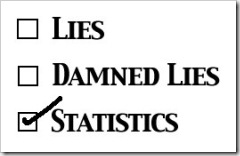
 In the past few days, there has been a disproportionate level of attention given to a somewhat academic study of the costs imposed upon the US economy by purported patent ‘trolls’, or 'non-practicing entities' (NPEs).
The study, conducted by Boston University law researchers James Bessen and Michael Meurer, is entitled The Direct Costs from NPE Disputes, and a working draft is available from SSRN.
As it has been presented in the technology media (see, e.g., US patent trolling costs $29b: study and Patent trolling cost the US $29 BILLION in 2011), the study shows that patent trolls impose a huge burden on innovation, and that this is further proof of our ‘broken’ patent system. This is great headline fodder (or click bait), but does it really add up?
Reading the full paper by Bessen and Meurer raises, for us at least, a number of issues, concerns and questions which are (unsurprisingly) absent from the bulk of the media coverage. Here are just a few…
- If it is indeed true that patent trolls exact a $29 billion ‘tax’ on the US economy, then this is certainly cause for alarm. But does this figure really pass the ‘smell test’, or is it just too implausible to take seriously? If it is wrong, then this study is adding to the hysteria around purported problems with the patent system without due cause. When the figures in the study are stacked up against the total number of technology companies operating in the US, and the total R&D expenditure, it is frankly difficult to believe that the results are a true reflection of reality.
- The raw data for the study comes from RPX Corporation, a ‘patent aggregator’ which offers ‘defensive buying, acquisition syndication, patent intelligence and advisory services’. Basically, RPX acquires patents (just like a ‘troll’), but with the stated intent of using them to remove trolls from the market, and to assist the victims of trolls. Companies pay to become RPX ‘members’ for not-insubstantial fees. The survey data used in the study is from RPX clients, or other associated firms, and the broader litigation data is from RPX’s own database, selected and compiled according to its own criteria. While the study’s authors are keen to point out that RPX had no say in how they used the data, or presented their research, they are nonetheless completely dependent on information that is unlikely to be free from selection bias.
- There is no differentiation in the study (because there is no differentiation in RPX’s data) between different kinds of NPE. RPX uses the term to encompass patent assertion entities (i.e. organisations whose primary business model is to acquire and assert patents in order to obtain settlement and license fees) as well as individual inventors, universities, and non-competing entities (i.e. operating companies asserting patents well outside the area in which they make products and compete). Not all of these entities are patent ‘trolls’. Indeed, it may be that the true ‘trolls’, i.e. those entities which make absolutely no contribution to innovation within the economy, are in a minority.
- The statistical methods employed in the study are opaque, and lacking in any sensible or meaningful assessment of error or confidence. For all we can determine from the published data, the number ‘$29 billion’ could mean ‘anywhere between $100 million and $100 billion’. Or it could mean something else entirely. People who perform these kinds of analyses need to start to understand a simple fact: if you cannot establish the ‘error bars’ on your results, they are meaningless to a statistically-informed reader, and worse than meaningless to the lay person, who may treat them as accurate and precise.
 We reported back in November 2011 on the success of Icon Plastics Pty Ltd in opposing the grant of a patent to Laurence Clifford Scott, on the basis that Scott was not entitled to the patent, because he was neither the inventor nor a legitimate assignee of the inventor. According to Icon, the invention disclosed and claimed in the application was actually devised by Icon General Manager Royston Douglas Bull (‘Bull’), had been misappropriated by Scott, and wrongfully made the subject of the application in Scott’s name. (See
  If you read articles and opinions from various online sources, or take notice of some of the recent coverage of patent-related topics in the mainstream media, you might think that criticism of the patent system is rife in the community. However, this is almost certainly not the case!
 It is actually not that easy to imagine a world without patents. At least, not if you really try. If you are the kind of person who is generally opposed to patents, or who thinks that the patent system is fundamentally ‘broken’, you might suppose that you can easily imagine a world without patents. And you might imagine it as some kind of utopia: no software patents, no ‘business method’ patents, no gene patents, no patent trolls, no ‘FRAND abuse’, no Apple v Samsung v Oracle v Google v Motorola v Microsoft v HTC v …
 Regulation 5.10 of the Australian
  Generic Health Pty Ltd will have the opportunity to appeal the decision of a single judge of the Federal Court of Australia granting a preliminary injunction preventing it from launching a generic version of the antipsychotic drug ABILIFY (see
  Samsung has filed an application with the Federal Court of Australia, under the
  Anybody filing a provisional patent application now, and waiting the full 12 months before filing complete (non-provisional) applications in Australia and/or the United States, may be subject to revised patent laws in both countries.
 The adage that ‘there are three kinds of lies:


