Showing posts with label Patent filing. Show all posts

28 October 2021

Innovation Patent System ‘Ends’ not with a Whimper, but a Bang!

BombThe innovation patent has been Australia’s second tier patent right since 2001, but it is now being phased out.  Just over two months have now passed since the final day on which new, original (i.e. not derived from an existing application) innovation patents could be filed.  As of 26 August 2021, the only way to obtain an innovation patent application is by division or conversion from an application that itself has a filing date on or before 25 August 2021.  Innovation patents have a maximum term of eight years from the initial filing date, and thus after 25 August 2029, at the latest, there will be no more innovation patents.  Predictably, the number of innovation patent applications being filed grew significantly during the weeks and months leading up to the final deadline, driven in large part by applications of dubious merit originating in China and India.

So how did filing numbers end up?  And why has it taken two months for me to get around to this analysis?  Well, to answer the second question first, the huge deluge of applications – nearly 2,800 over 25 days in August, over half of which were filed in the final six days – created a backlog that IP Australia is still clearing.  As at the time of writing, there remain around 300 innovation patent applications that are yet to be processed in any way, meaning that details of who filed them, and who the applicants are (and where they are from) remain unavailable.  At this point, however, a clear picture is emerging.  Furthermore, there is some evidence that IP Australia has been prioritising the order in which the remaining applications are being processed according to the workload involved, such that almost all unprocessed applications were filed by Indian applicants.

In the final days, Australian resident applicants filed innovation patent applications in unprecedented numbers, apparently driven primarily by those who had received advice from patent attorneys about the final deadline and the implications of the phase out of the innovation patent.  Indian and Chinese applicants continued to fleece the system for cheap patent certificates, accounting for over half of the applications filed in August.  Filings originating elsewhere in the world increased only modestly, suggesting that genuine demand for innovation patents by foreign applicants remained relatively low until the end.
18 August 2021

Chinese, Indian Applicants Go Mad for Innovation Patents as System Gets Set to Close on a (Dubious) High

Soaring numbersOver 1,000 Australian innovation patent applications were filed in July – an all-time record, ahead of 768 applications in June and 692 in May.  Between 2010 and early 2020, there were typically between 100 and 200 innovation patent applications filed each month.  But with the system set to close to new applications from 26 August 2021, filings have surged over the past year, with over 600 applications every month since October 2020 (with the exception of February 2021, when ‘only’ 482 applications were filed).  China remains the most prevalent country of origin for these applications, accounting for nearly 45% of new innovation patent filings in July.  However applications received from India have grown significantly since June 2020, with Indian applicants filing a third of applications in July.  Applications by Australian applicants have increased modestly over the past couple of months, rising to 175 in July.  Applicants from other jurisdictions seem (so far) nonplussed by the imminent demise of the innovation patent system, with no apparent recent surge in filing numbers.

It is well-known that the motivation for Chinese applicants seeking Australian innovation patents – which are subject only to a formalities examination before being granted – is to obtain government incentive payments without the delay and expense associated with substantive examination.  While these subsidy schemes are supposed to be coming to an end, clearly there are still sufficient incentives available for Chinese entities to keep filing for as long as it remains possible to do so.  It is less clear why innovation patents have recently become so popular with Indian applicants, however I have noted that many of the applications appear to be filed in the names of academic or research institutes, and/or individuals or teams including people with academic titles.  I therefore suspect that being an inventor or applicant on a granted patent may have benefits for people pursuing academic or research careers in India.

In any event, it is clear that the vast majority of innovation patent applications are currently being filed by non-resident applicants for reasons that have nothing to do with any genuine desire to obtain or commercialise intellectual property rights in Australia, and few are filed by the Australia small and medium enterprises (SMEs) that the system was intended to benefit.  Surging demand for innovation patents in the lead-up to the system being closed to new applications is overwhelmingly being driven by Chinese and Indian applicants, with Australian residents showing relatively little interest in taking advantage of the final opportunity to file new innovation patent applications.

Of course, genuine users of the patent system – including Australian applicants – are continuing to file standard applications and international (PCT) applications, and these may be converted to innovation patents in the future, or form the basis for divisional innovation patent applications, where the filing date is earlier than 26 August 2021.  While these types of applications have been a minority in the past, they will necessarily become the only sources of ‘new’ innovation patents as the system is phased out over the coming eight years.

29 January 2021

China to Cancel Patent Subsidies, and Emphasise Quality Over Quantity

Great WallAs highlighted in a report recently published by the US Patent and Trademark Office (USPTO), entitled Trademarks and Patents in China: The Impact of Non-Market Factors on Filing Trends and IP Systems, the high rate of Chinese patent and trademark filings in recent years is widely believed to have been influenced by government subsidies and other ‘non-market factors’.  Since at least 2011, some Chinese applicants appear to have been taking advantage of the Australian innovation patent system to maximise the subsidies they are able to claim for foreign patent grants.  In 2020, Chinese residents were by far the largest users of the system, filing more innovation patent applications than all other nationalities combined.

But could it be that the days of government subsidies, and an associated massive growth in patent applications originating in China, are drawing to a close?

On 27 January 2021, the China National Intellectual Property Administration (CNIPA) announced, in a notification entitled ‘Notice of the CNIPA on Further Strictly Regulating Patent Application Behaviour’ (in Chinese) (‘Notice’), that many lucrative subsidies must end by the middle of this year, with all others to be phased out by 2025.  (A brief report of the Notice can be found on the China IP Law Update blog, while a Google translation of the Chinese original is quite comprehensible.)

The Notice states that the overriding objective of the new regulations on patent application behaviour is:

In order to thoroughly study and implement Xi Jinping’s thoughts on socialism with Chinese characteristics in the new era; to earnestly implement the decisions and deployments of the Party Central Committee and the State Council; and to earnestly promote China’s transformation from a major importer of intellectual property rights to a major country of IP creation, and from the pursuit of quantity to the improvement of quality.

14 May 2019

Chinese Applicants Are Bypassing Local Patent Attorneys to Obtain Australian Standard Patents

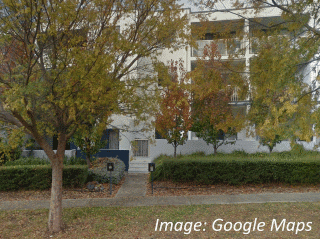
Somewhere in Canberra... According to IP Australia records, somewhere in this unprepossessing block of apartments in suburban Canberra is the Australian ‘office’ of not one, but at least 47 Chinese companies, which collectively filed 164 standard patent applications between the beginning of January and the end of April, 2019 (link to Google Sheet with full listing).  In each case, it further appears that expedited examination of the application was requested at filing.  A number of the applications have already been accepted.  In some cases, examination reports have been issued, and responses filed.  These have generally been of high quality and, but for formalities in a couple of instances, have resulted in acceptance of the applications concerned.  In no case, however, has any registered trans-Tasman patent attorney been involved.  Purportedly, each response letter has been signed by an inventor on behalf of the applicant company, i.e. presumably their employer.  The actual occupant of the Canberra address is a mystery – unnamed on any application, and seemingly uninvolved other than to assist the applicants in meeting the requirement, under regulation 22.10 of the Patents Regulations 1991 to provide an ‘address for service’ in Australia or New Zealand.

Unusual Australian patent filing behaviour by Chinese companies is nothing new.  I first wrote about the phenomenon of Chinese companies obtaining relatively large numbers of Australian innovation patents back in February 2013, a practice that – notwithstanding some limited efforts by the Patent Office to curb abuse of the system – continues largely unabated to this day.  I recently estimated that around a quarter of all innovation patent applications filed in 2018 were made by Chinese applicants (upon further analysis, I would probably now revise that number upwards, closer to one third).  It is widely believed that this behaviour is motivated by direct financial incentives provided by Chinese authorities to companies that obtain foreign patents.  In this context, the Australian innovation patent has the advantages of being cheap to apply for, fast to issue, and providing an official ‘patent certificate’ upon grant that can, presumably, be used for the purposes of claiming the Chinese government hand-outs.

These latest applications are something different, however.  First and foremost, they are for standard patents, for which no certificate will issue until and unless the applications pass substantive examination (and the opposition period).  They all claim priority from earlier Chinese national patent applications which were, in most cases, filed only shortly before the corresponding Australian applications (and certainly well within the 12-month period allowed under the Paris Convention).  And, as I have already noted, it appears that expedited examination has been requested in each case, with the applicants having a genuine intention of securing a granted Australian patent, even where objections have been raised by the examiner.

In short, these Chinese applicants are not looking merely to obtain an official patent certificate by any means available, at the lowest possible cost.  Rather, they are seeking enforceable patent rights, and in doing so they are willing to incur the additional costs of examination fees, acceptance fees, and dealing with any examination objections that may arise.

Even so, these companies do not appear to be willing to incur the costs associated with engaging Australian patent attorneys to assist them in applying for or obtaining patents.  This naturally raises the question of whether this is a problem for the applicants, for the occupant of that Canberra apartment, or for anybody else who might be involved in these filings?

25 February 2018

How Much Should a Patent Application Cost?

Juggling DollarsI recently wrote about IP Australia’s new Engaging an Attorney Toolkit, which is an online ‘guide on how, why, what and when to engage your patent attorney’ that is intended primarily to assist people and businesses with minimal knowledge and experience of the patent system in preparing to engage with an attorney.  The toolkit includes a section entitled ‘6 Myths about getting a patent’, the first of which is that ‘a patent will cost me hundreds of thousands of dollars’.  The myth-busting reality, according to the toolkit, is that ‘prices vary, but the cost of drafting and filing an initial patent application (known as a provisional application) for your invention typically costs somewhere between $3000 and $6000.’

Is this information correct?  Or – as one commenter suggested – is a price range of $3000-$6000 liable to create unrealistic expectations, particularly for those prospective clients looking to engage with a major attorney firm?

The toolkit’s estimate is not, in fact, unreasonable, in the sense that the median cost to have a patent specification drafted by an Australian patent attorney is almost certainly somewhere in the range given.  But it is also true that costs for a substantial proportion of all specifications drafted in Australia would fall outside this range.  There are individual attorneys and small firms that might be willing to draft a patent specification for a technically simple invention for as little as $2000.  At the other extreme, an experienced attorney at a top-tier firm might end up charging $12,000 or more for a specification for a complex invention in a sophisticated and challenging field of technology.  Since many attorneys charge by time, and hourly rates vary significantly with experience and across different firms, there are no hard-and-fast rules about what a patent application may cost.

There are, however, hard-and-fast rules about what a patent attorney must tell a client up-front about who they are, how they work, and how much they will charge.  It is timely to mention this, because the new Code of Conduct for Trans-Tasman Patent and Trade Marks Attorneys 2018 just came into effect, on Friday 23 February 2018.  All registered patent attorneys in Australia and New Zealand are subject to the Code, which requires (among other things) that they inform each new client, in writing:
  1. that they are, in fact, registered as a patent attorney, and are bound by the Code;
  2. that they have appropriate competency to perform the work required by the client, including suitable expertise in the technology of the invention;
  3. whether the attorney works for an incorporated firm and, if so, whether it is privately or publicly owned;
  4. whether the firm for which the attorney works is part of a group of commonly-owned firms and, if so, the identity of the other members of the group; and
  5. the procedures, timing and estimated cost of doing the work required by the client.
(With regard to registration, prospective clients should also be aware that Australian law effectively prohibits anybody who is not a registered patent attorney from drafting patent specifications on behalf of others.  In particular, under subsection 201(1) of the Australian Patents Act 1990 only a registered patent attorney or legal practitioner may act as a patent attorney in Australia, and section 202 further provides that, other than in very specific circumstances, ‘a legal practitioner must not prepare a specification, or a document relating to an amendment of a specification’.)

So any prospective client can be assured of being made aware of anticipated costs before any work commences, and can, if they wish, shop around for the best deal.  But how is a newcomer to the patent system to determine what is reasonable, given the very wide range of cost estimates that may be provided?

22 May 2016

Are Patent Attorneys Really to Blame for Overly Broad Claims?

BlameLast week Eric Sutton, who is Senior Patent Counsel at Oracle Corporation, published an open letter to the patent attorney profession on the IP Watchdog blog.  In short, he accused us – and particularly those of us who practise in the ‘software-related arts’ – of filing too many ‘extremely short’ and ‘overly broad’ patent claims.  We should stop doing this, he says, because not only is it bad form, it is costly for our clients, who end up spending more (by perhaps US$10,000) during the examination process and, in the US at least, increasing risk due to prosecution history estoppel.

Apparently Sutton’s superior knowledge of the prior art has placed him in a position to challenge many patent attorneys over the past couple of years, enabling him to inform those attorneys that – in his words – ‘you’re wrong, fix it’ when they have sought to defend their short, broad claims.  In his concluding paragraphs, Sutton calls on his own experience at Oracle to suggest that a particular source of this problem is laziness on the part of the patent attorneys.  ‘Laziness is bad,’ he says, ‘and I am calling you [i.e., the ‘Dear Patent Attorney’ addressed by the article] out on it.’

While Sutton’s piece strikes me as stunningly arrogant in its tone, this is perhaps excusable considering that he works for Oracle – a company that received over 600 US patents last year.  Although he is at pains to point out that the opinions expressed are his own, ‘and do not necessarily represent those of Oracle Corporation, its subsidiaries or affiliates’, there is no question that he is well-placed to know what he is talking about.  And there is no disputing the facts established by his analysis of the thousands of patents/applications of two large (but anonymous) software-related product/service companies:
  1. many applications in the data set were filed with remarkably short independent claims;
  2. examination (‘prosecution’) of patent applications generally (and not just those with ‘extremely short’ claims) results in amendments that lengthen the independent claims; and
  3. on average, applications filed with shorter independent claims are subject to lengthier and more costly prosecution, and to more extensive claim-lengthening amendments.
I am sure that we can generally agree that it is less than ideal to file patent claims that are so broad they have virtually no prospect of allowance without significant narrowing amendment.  But is erring on the side of breadth in the independent claims at filing really such terrible strategy?  And does the ‘blame’ for this lie so squarely with ‘lazy’ patent attorneys?

Based on my own experience, I would suggest that the answer to both of these questions could well be ‘no’.  More data is needed if we are going to understand what is truly going on here.  I doubt very much that it is as clear-cut as Sutton proposes.

04 April 2016

How to Patent Your Invention in Australia and the US

Australia-USAFor many of the Australian clients I work with, the most important markets are Australia (i.e. the ‘home’ market) and the US (because of its size and relative accessibility).  This means that when it comes to protecting their innovative technologies, obtaining patents in these two countries is at the top of these clients’ lists of priorities.  I am therefore often asked how best to achieve this objective, how much it will cost, and how long it will take.

The typical ‘lawyer’ answer is, of course, ‘it depends’!  Do you want patents only in Australia and the US, or are there other countries of interest?  When and why do you require these patents?  Do you want to obtain patents as quickly as possible, or are there strategic advantages in drawing out the pendency (and finalisation of the scope of rights) for as long as possible?  What is your budget for the patenting program, both in the short term and over the coming years?

Assuming that you are able to answer these questions, it should be possible to develop a strategy that meets all of your requirements.  In this article I will go into further detail of one fairly typical and effective approach, along with some of the relevant considerations and potential variations.

07 June 2014

What Materials Can I File With My Patent Application?

Burning CDIt is widely understood that the kinds of materials that may make up a patent application are quite strictly limited.  However, comments by the judge in a recent decision of the Federal Court of Australia suggest that IP Australia may be obliged to make reasonable efforts to access, review and take into account any materials filed by an applicant is support of a patent application or, at the very least, expressly advise the applicant if unable to do so.

When applying for a patent in Australia, it is necessary to file a specification comprising a description, claims and (where necessary or helpful to explain the invention) accompanying drawings.  Regulation 3.1(1) also requires that an abstract be filed.  Schedule 3 of the Patents Regulations 1991 sets out the general requirements for the format of these documents.

Beyond the basic application documents, the Patents Act 1990, the Regulations, and IP Australia’s Electronic Business Rules, appear to leave little scope for filing of additional materials to support a patent application.  It is possible to include such things as engineering designs, example program code for software-based systems, and other implementation details of prototypes or fully-functional implementations of an invention.  However, these are generally provided simply as annexures to the patent specification, in the form of text and/or drawings which are subject to the usual format rules as set out in Schedule 3 of the Regulations.

Gene sequence listings, which may be required to provide full disclosure of certain inventions in the field of biotechnology, are a special case, because of their sheer size.  They may therefore be filed electronically, as separate files structured in accordance with the standards specified in Annex C of the Administrative Instructions of the PCT.

Finally, microbiological materials that are not otherwise available, and which are necessary to put the invention disclosed in the specification into effect, must be deposited with an approved depository institution (see section 6 and section 41 of the Patents Act).

12 January 2014

Chinese Junk Patents Revisited: 2013 Filings Update

Chinese JunkCompanies in China are continuing to apply for Australian innovation patents – which are not subject to substantive examination before being granted – in order to take advantage of generous subsidies offered by the Chinese government to small and medium sized enterprises (SMEs) for obtaining foreign patents. 

I previously wrote about this phenomenon last February, after it came to my attention that an unusually large number of innovation patent applications had been filed by Chinese companies in 2012, via a number of agents who appeared to conduct no other Australian patent filing or prosecution work.  I far as I have been able to ascertain, none of these agents employ (or are) registered Australian patent attorneys.  It is unclear whether they have other relevant legal qualifications which would enable them to provide patent filing or acquisition services under the Australian law.

I thought it would be worthwhile to investigate innovation patent filings by Chinese companies in 2013, to see whether the practice was continuing.  I have found that it is, although at a reduced level of activity.  I have identified 110 innovation patent applications filed on behalf of Chinese companies during 2013 which appear most likely to have been obtained primarily in order to receive the government payment, rather than because of any genuine interest in obtain valid, enforceable Australian patent rights.

Some of the agents responsible for ‘Chinese junk patent’ filings in 2012 and earlier are continuing to do so, while others appear to have ceased (or, possibly, may be continuing to operate under other names).

Additionally, I have recently received reports confirming my belief that the purpose of Chinese companies in obtaining innovation patents is to claim financial benefits from the government, and not because of any genuine business interests in Australia.

15 July 2013

‘Raising the Bar’ on International Applications

GlobeMuch of the focus regarding Australia’s ‘Raising the Bar’ patent reforms has been on the substantive changes to the law, such as the higher threshold for inventive step, enhanced disclosure requirements, and the new utility standard.

However, there have been a number of procedural changes, also.  These affect all Australian applications, including those filed as the national phase of an international application under the Patent Cooperation Treaty (PCT).  Indeed, since most PCT applications are prepared to meet the substantive legal standards of a range of countries, including the US and Europe, it is probable that many international applicants will not be as much concerned about the legal reforms as about the procedural changes.

Applications filed prior to 15 April 2013 are theoretically able to proceed subject to the old law.  This includes PCT applications – for which the effective Australian filing date is the international filing date.  However, this is only the case if examination was also requested prior to 15 April 2013.  An examination request cannot be validly filed on a PCT application until after it has entered the national phase in Australia.  It therefore follows that any PCT application proceeding in Australia on or after 15 April 2013 must, by definition, be subject to the law and procedures as amended by the Raising the Bar reforms (including the implementing regulations).

The Australian National Chapter of the PCT Applicant’s Guide [PDF, 65 kB] has recently been updated to reflect the procedural changes introduced by the Intellectual Property Laws (Raising the Bar) Act 2012.  This seems like a good opportunity to inform (or remind) readers of the current requirements and processes during the national phase in Australia.

06 February 2013

Junk Patents Dumped on Australia as Chinese Subsidies Rorted

Red EnvelopeA Chinese government scheme providing financial incentives for small and medium sized enterprises, public institutions or scientific research institutions appears to be resulting in abuse of the Australian patent system, and the 'dumping' of numerous low-quality innovation patents on the Australian Register.

These ‘junk’ patents are not being examined or certified.  They therefore represent no more than potential enforceable rights.  Even so, they generate costs to companies operating legitimately in Australia, which may need to obtain advice on the likely scope and validity of these patents in order to avoid possible infringement.  In extreme cases, the existence of junk patents could result in an Australian business choosing not to take the risk of bringing a new product to market, even though the Chinese owner of a patent is not itself offering any products or services in this country.

The new Chinese patent filings, which increased significantly in number after introduction of the Chinese government ‘Measures for the Administration of Special Funds for Subsidizing Foreign Patent Applications’ in April last year, appear mainly to be handled by Australian ‘agents’ who are neither Australian, nor persons authorised under the Australian Patents Act 1990 to apply for or obtain patents on behalf of other parties.

A number of these agents have been operating in Australia for some time, although with the commencement of the Chinese subsidy scheme, business looks to be booming!  One particularly enterprising operator appears to have established two credible-looking business fronts, and has commenced development of a new, and highly professional-looking, web site for one of those businesses.

This phenomenon is already resulting in distortions of Australian patent filing and grant statistics.  I recently reported on the top Australian patent recipients of 2012, and noted that, for the first time, a Chinese company appeared in the top 10.  It turns out that every one of the 97 patents granted to Hengdian Group Linix Motor Co last year is an innovation patent filed by a single dubious agency.

20 January 2012

Australian Patent Attorneys Accused of ‘Crippling’ Entrepreneurs

Patent ApplicationsAn article appeared this week on the news and information website startupsmart.com.au under the by-line of Michelle Hammond, entitled ‘Patent attorneys under fire over “crippling” fees’.

The article opens with the allegation that:

Australia’s patent attorneys have come under attack for charging too much for patent filing, with claims that some attorneys charge as much as $150,000 to file patents overseas.

Before we turn to the substantive issues raised by the article, we note that this opening raises (at least) the questions of who has launched this ‘attack’, which attorneys are charging ‘as much as $150,000’, and what exactly are these fees covering?

The answer to the first question is pretty clear from the remainder of the article, which shows all the hallmarks of modern media release ‘journalism’.  The source of this particular story is the foreign filing service provider inovia, which is just one of a number of such companies that have emerged in recent times to compete directly with ‘traditional’ patent attorneys in the specific area of filing foreign patent applications, and particularly handling PCT national phase entry, European patent validation and patent translations.

The answers to the second and third questions are far less clear, and the StartupSmart article really serves only to muddy the waters further with claims that are in dire need of some sanity-checking.

In this article, we will look at the differences between the filing services provided by patent attorney firms, and those of companies like inovia.  We will also address some of the other assertions in the StartupSmart article.  And, despite our obvious potential for self-interest in these matters, we will endeavour to do so in a reasonably fair and balanced manner!

Copyright © 2014
Creative Commons License
The Patentology Blog by Dr Mark A Summerfield is licensed under a Creative Commons Attribution-NonCommercial-ShareAlike 3.0 Australia License.