Showing posts with label Damages. Show all posts

14 November 2018

Drafting a Patent Specification with ‘Reasonable Skill and Knowledge’ is a Collaborative Exercise Between Client and Attorney

TeamworkA recent appeal decision by a Full Bench of the Federal Court of Australia has clarified what is meant by the requirement for a patent specification to be framed with ‘reasonable skill and knowledge’, finding that this is a collective responsibility that arises among everybody involved, including inventors, patent attorneys, and any other corporate managers or intermediaries.  Under Australian law, this requirement arises in relation to the effect of amendments on the rights of a patentee.  In particular, a patent is only enforceable during the period prior to making an amendment if the specification without the amendment was ‘framed in good faith and with reasonable skill and knowledge’.

This decision should be of interest not only to Australian patent attorneys, but to patent professionals globally who are involved in drafting specifications that may ultimately be filed in Australia, and result in the grant of Australian patents.  It confirms that responsibility for ‘framing’ a specification with ‘reasonable skill and knowledge’ does not lie solely – or even primarily – with the person tasked with actually drafting the specification, but is shared between all those involved in the process.

A competent patent attorney might be expected to have reasonable knowledge of the law and practices relating to the drafting of patent specifications, and to make reasonable efforts to obtain necessary information from a client.  However, the client has a key role to play in ensuring that the patent attorney is properly instructed.  And while the patent attorney is not necessarily expected to share the level of domain-specific technical expertise of an inventor, the specification will nonetheless be assumed to have been drafted with the benefit of the client’s knowledge of the invention, including knowledge that the client reasonably should be taken to have had, in all of the relevant circumstances.  Ensuring that this is the case is at least as much the responsibility of the client as it is of the patent attorney (or other patent professional) tasked with drafting the specification.

06 August 2017

The Meteoric Rise and Spectacular Fall of Damages for Unjustified Threats of Patent Infringement

Unjustified Violent ThreatOn 19 August 2016, a single judge of the Federal Court of Australia issued a ruling awarding damages of A$1,506,859 against the Australian Mud Company Pty Ltd for making unjustified threats of patent infringement proceedings against Coretell Pty Ltd: Australian Mud Company Pty Ltd v Coretell Pty Ltd (No 7) [2016] FCA 991.  Less than a year later, however, a different judge has ‘reluctantly’ dismissed a claim for damages allegedly arising from threats of infringement proceedings made to the public at large via a trade publication: Mizzi Family Holdings Pty Ltd v Morellini (No 3) [2017] FCA 870.  This follows a decision in March of this year, by a Full Bench of the Federal Court on appeal, overturning the Australian Mud damages award.

I first wrote about the Mizzi Family Holdings litigation back in January 2014, following the initial findings in December 2013 of a single judge of the Federal Court that the respondent, Daryl Morellini, had not infringed an innovation patent for a ‘cane billet planter’ owned by Mizzi, and that all prior threats of infringement proceedings were therefore unjustified.

The first relevant threat in the Mizzi case had not been made directly to Morellini, but rather had been directed to the cane growing industry more generally through the combination of an advertisement and an article that appeared in the Canegrowers Magazine of 5 April 2010.  The advertisement had been placed by Mizzi, and included a notice of its patent application.  The article was authored by one Mr Terry Hurlock of Invention Pathways Pty Ltd, who had worked in conjunction with Mizzi’s patent attorneys, and was entitled ‘Infringement Danger’.  This juxtaposition of the advertisement identifying the patent application with the article warning about the potential consequences of infringement was found by the court to constitute ‘unjustifiable threats’, in the circumstance that the patent was not actually infringed.  A second threat was said to have been made in June 2011, after another cane grower, one Mr Girgenti, used Morellini’s planter, and Mizzi made a verbal allegation of infringement and demanded the payment of a royalty.

The initial decision in the Mizzi case was followed by a second judgment of the primary judge, on questions of costs and declaratory relief in relation to the unjustified threats (Mizzi Family Holdings Pty Ltd v Morellini (No 2) [2014] FCA 807), an appeal to a Full Bench of the Federal Court, decided in February 2016 (Morellini v Mizzi Family Holdings Pty Ltd [2016] FCAFC 13), and now the most recent decision on damages related to the threats.  Through all of this, the fundamental original finding of the primary judge – that the patent was not infringed – has remained undisturbed.

The major difficulty for Morellini in demonstrating damage was the requirement, emphasised by the Full Court in Australian Mud, to establish causation between the threats themselves and the damages claimed.  The court found (at [20]) that:

There is no direct evidence that anybody declined to deal with Mr Morellini as a result of the threats. It seems that even before the newspaper article on 5 April 2010, there was a degree of reluctance concerning any such dealings. That reluctance cannot have been attributable to the threats. Mr Morellini has not demonstrated that any adverse effect resulted from either of the threats. The newspaper article may well have been widely read within the sugar industry, but there is no reason to believe that the incident involving Mr Girgenti was a matter of common knowledge. Some people in the industry may have heard of it. In either case such knowledge may have reinforced previous perceptions, but that is largely speculative.

As we shall see, unjustified threats provisions were originally enacted to curb anticompetitive, abusive, coercive, or extortionate use of the patent system.  Yet here in Australia we have two recent cases of patentees acting apparently from a good-faith belief that their patents were valid and infringed, and with an arguable case to this effect at first instance and on appeal before a Full Court, in which the prosecution of unjustified threats claims clearly resulted in proceedings becoming significantly more protracted, complex, and costly, than they might otherwise have been.  For a brief period, we hit a high water mark for unjustified threats with a judge awarding over one and a half million dollars in damages, before this was sensibly and firmly reversed on appeal.  Ultimately, neither accused infringer received any award of damages.

How and why did this happen?  What is wrong with the Australian law in relation to unjustified threats that a Federal Court judge could make an astronomical seven-figure award of damages, when the correct sum was zero?  Or that the parties in long-running infringement proceedings would devote such resources to an argument that ultimately brought no benefit to any of them, under provisions that were not originally intended to apply in such circumstances?  And what can be done to fix this situation?

25 June 2017

Does Your Patent Attorney Possess ‘Reasonable Skill and Knowledge’?

Skills tighropeIt is a general principle of patent law that publication of a patent specification and claims serves to put the public on-notice of the existence and scope of the patentee’s rights.  In an effort to ensure that this is the case, the Australian Patents Act 1990 requires that ‘the claim or claims must be clear and succinct and supported by matter disclosed in the specification’ (subsection 40(3)), while the analogous US provision, 35 USC § 112(b) states that ‘the specification shall conclude with one or more claims particularly pointing out and distinctly claiming the subject matter which the inventor or a joint inventor regards as the invention.’  In Australia we usually refer this as the ‘clarity’ requirement, while the US courts have developed a corresponding doctrine of ‘indefiniteness’.  In its 2014 decision Nautilus, Inc. v Biosig Instruments, Inc, the US Supreme Court interpreted this to mean that ‘a patent is invalid for indefiniteness if its claims … fail to inform, with reasonable certainty, those skilled in the art about the scope of the invention’.  Other jurisdictions have similar requirements.

This is all very well, but what happens if the claims change?  It is not uncommon for a patentee to seek amendment of its patent specification, for example in preparation for, or in the course of, litigation.  Granted patent claims can only be amended in ways that do not broaden the scope of a patent, i.e. no valid amendment can result in any act becoming an infringement that would not have been an infringement prior to the amendment, so this does not provide a mechanism for a patentee to ‘capture’ a previously non-infringing activity.  However, a claim could, in principle, be narrowed by replacing unclear, vague, or ambiguous wording with clearer and more definite wording that specifically targets the actions of a competitor.

In such a case, the patentee would no doubt argue that it was simply ‘tightening up’ the language of its claims to limit the issues to be addressed during infringement proceedings, and perhaps as a pre-emptive defence against a cross-claim for invalidity.  The accused infringer, on the other hand, might argue that it was not properly on-notice of scope of the patent prior to the amendment, as a result of the ambiguity in the wording of the claims.

Fortunately, the Australian legislation anticipates this situation.  Subsection 115(1) provides that:

Where a complete specification is amended after becoming open to public inspection, damages shall not be awarded, and an order shall not be made for an account of profits, in respect of any infringement of the patent before the date of the decision or order allowing or directing the amendment:
        (a)  unless the court is satisfied that the specification without the amendment was framed in good faith and with reasonable skill and knowledge…

In layperson’s terms, if the job was not done honestly and properly in the first place, then the patentee should not expect to be able to obtain any compensation for alleged infringement that occurred prior to the amendment.

But what constitutes ‘reasonable skill and knowledge’?  Does your patent attorney (or, if you are a patent attorney, do you) possess these attributes?  And what responsibility does a patent applicant, in instructing a patent attorney, bear in ensuring that reasonable skill and knowledge are employed?  These issues were recently considered by Justice Jagot in the Federal Court decision Bayer Pharma Aktiengesellschaft v Generic Health Pty Ltd [2017] FCA 250, who confirmed that ‘the words “reasonable skill and knowledge” require the specification as framed to be in the form in which a person, with reasonable skill in drafting patent specifications and a knowledge of the relevant law and practice, would produce given the patentee's knowledge of the invention.’  The judgment also provides some interesting guidelines as to what, exactly, might be expected of a patent attorney in order to meet this standard.

The question was not merely academic, with over $25 million in damages at stake.  And it may not yet be finally settled, with various aspects of the case now in appeal to a Full Bench of the Federal Court of Australia.

04 April 2017

Justice Stephen Burley Pulls Excess Teeth from Australia’s Innovation Patent

ToothThe innovation patent is Australia’s ‘second tier’ patent right.  It is granted without substantive examination (but must be examined and certified before it can be enforced), has a maximum term of only eight years, and requires a lower level of inventiveness than a standard patent in order to be valid.  Despite this, however, a certified innovation patent gives its owner all of the same rights and remedies against infringers – including injunctions and financial compensation – as a standard patent.  And in one respect innovation patents have appeared, since September 2011, to offer a distinct advantage over standard patents in that damages have been held to accrue not just back to the date of certification, or the date of grant, but all the way back to the original effective filing date.  In the case of divisional applications, this could be many years before the actual filing and grant dates of the innovation patent.  (For more information, see Britax Childcare Pty Ltd v Infa-Secure Pty Ltd [No 3] [2012] FCA 1019, and my earlier article Innovation Patents Reach Back in Time for Infringement.)

Innovation patents are currently under attack from a number of quarters, and it is no secret that a number of authorities would like to see the system abolished altogether.  I have repeatedly argued, however, that the main criticisms of the system could be dealt with through some judicious modifications to strike a better balance between reduced patentability standards, patent term, rights of patentees, and rights of competitors and the wider public.  (See, for example, IP Australia Has the Innovation Patent In Its Sights, Again!, Five Easy Ways to Fix the Innovation Patent System, The Productivity Commission on Patents – It’s All About ‘Value’ and ‘Quality’, and Users and Abusers of the Australian Innovation Patent System.)

The strategic use of divisional innovation patents to ‘tailor’ claims targeting a competitor’s activity, and then claim compensation back to the original filing date of the parent application, was highlighted by the Australian Government’s Productivity Commission in its final report on its Inquiry into Australia’s Intellectual Property Arrangements.  In a chapter concluding with a recommendation that the innovation patent system be abolished, it presented the following diagram illustrating the discrepancy between the period during which divisional innovation patent claims are public (i.e. when infringers may be on-notice of liability) and the period over which compensation can be claimed (Figure 8.4, p 255).
PC IP Arrangements Report Figure 8.4
However, in a decision issued on 3 April 2017 and authored by Justice Stephen Burley (with whom Justices Nicholas and Jagot expressly concurred, rather than simply issuing a joint judgment), a Full Bench of the Federal Court of Australia has overruled Britax: Coretell Pty Ltd v Australian Mud Company Pty Ltd [2017] FCAFC 54. 

Accordingly, as the law now stands compensation for infringement of a divisional innovation patent cannot be claimed back to the original date of the parent application.  The correct position, according to the Full Court, is that compensation for infringement of an innovation patent (divisional or otherwise) is available only from the date of grant – which is also the date of publication – of the innovation patent.

19 March 2017

Appeals Court Annuls $1.5 Million ‘Unjustified Threats’ Damages Award

Unjustified ThreatUnder section 128 of the Australian Patents Act 1990, a person or company that has been unjustifiably threatened with patent infringement proceedings may seek an injunction to prevent the threats from continuing, and the recovery of any damages sustained as a result of the threats.  These provisions may be invoked pre-emptively by an accused infringer, for example against a patent holder that may be trying to inhibit competition by making vague or dubious claims.  However, they may also be invoked defensively, in response to the actual commencement of infringement proceedings by a patent holder that has initially made threats by way of a cease-and-desist letter.  As the law has developed in Australia, an application for relief from unjustified threats will be successful in any case in which it ultimately turns out that a patent is invalid or not infringed, regardless of how objectively reasonable the patentee’s original belief may have been.

I have written on a number of previous occasions of my concerns about the operation of the unjustified threats provisions in the Patents Act.  Most recently, in August 2016, I discussed the difficulties faced by a patentee in raising and seeking to resolve a dispute prior to commencing proceedings – as required under the Civil Dispute Resolution Act 2011without incidentally opening itself up to a subsequent unjustified threats claim.  At around the same time, a single judge of the Federal Court of Australia (Barker J) issued an 870 paragraph judgment (Australian Mud Company Pty Ltd v Coretell Pty Ltd (No 7) [2016] FCA 991) awarding damages of A$1,506,859 against the Australian Mud Company Pty Ltd (‘AMC’) for making unjustified threats against Coretell Pty Ltd, following a number of years of patent infringement proceedings in which AMC was ultimately unsuccessful.  (For earlier articles on this dispute see Innovation Patent Claims Once Again Construed Narrowly, Australian Appeals Court Further Clarifies ‘Purposive Construction’ and Australian Federal Court Considers Patent Attorney Privilege.)

If you think (as I do) that $1.5 million seems like an excessive amount of damage to have resulted from the sending of a fairly typical letter of demand, then I am pleased to report that you would be correct.  A Full Bench of the Federal Court of Australia has now wholly overturned the ruling of the original judge and ordered that, instead, Coretell’s claim for damages should be dismissed with costs: Australian Mud Company Pty Ltd v Coretell Pty Ltd [2017] FCAFC 44.  In doing so, the Full Court has highlighted the importance of establishing causation, i.e. that damage is sustained as a result of the threats.  In particular, the judgment cautions against failing to distinguish properly between damage sustained as a result of the threat of infringement proceedings and damage sustained as a result of infringement proceedings themselves.

This is, to my mind at least, a welcome development in the law.  While it does nothing to prevent the unjustified threats provisions being invoked by an accused infringer in response to proceedings commenced on the basis of a reasonably-held belief that a patent is being infringed, it significantly limits the practical impact of the provisions in such circumstances.  I imagine that it would be rare for substantial damage to be sustained merely as a result of an initial threat of proceedings in any case where infringement proceedings are actually commenced within a reasonable period of time, allowing for some efforts to resolve the dispute prior to litigation.

28 April 2015

Australian Government Seeks $60M Damages Over Invalid Patent

Gold BarsA court ruling has revealed that the Commonwealth of Australia (i.e. the Federal Government) is seeking to recover $60 million it considers has been ‘overpaid’ for the anti-clotting drug marketed by Sanofi (formerly Sanofi-Aventis) and Bristol-Meyers Squibb under the brand name PLAVIX: Commonwealth of Australia v Sanofi-Aventis [2015] FCA 384.
Sanofi was the owner of Australian Patent No. 597784, which includes claims directed to the compound having the international non-proprietary name clopidogrel.  As noted above, clopidogrel has anti-clotting activity, and is prescribed primarily to prevent heart attack and stroke in high-risk patients, such as those who have a history of these conditions.  The brand-name drug PLAVIX was immensely profitable – according to Wikipedia, it was the second best-selling drug in the world, grossing over US$9 billion in global sales in 2010.  (And, since this is the Internet, Wikipedia also reveals that clopidogrel may have beneficial uses in cats.)

In 2007, generic pharmaceutical manufacturer Apotex Pty Ltd, wanting to introduce its own clopidogrel product to the Australian market, commenced proceedings against Sanofi in the Federal Court of Australia seeking revocation of its patent.  Sanofi, in turn, accused Apotex of threatening infringement.

For the duration of the resulting proceedings, injunctions imposed by the court, along with undertakings that Apotex provided, prevented it from introducing a generic product, leaving patients, and the Australian Government, with no alternative to the premium-priced brand-name product PLAVIX.  Eventually, Sanofi’s patent was found to be invalid, implying that a cheaper generic version of the drug could have been made available all along. 

The notional difference in price between the brand-name product and a hypothetical generic alternative is the basis for the Government’s claim for $60 million in damages.

27 June 2014

Samsung Can Enforce FRAND-Committed Patents in Japan

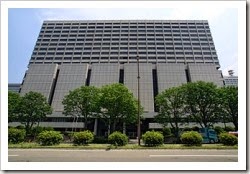
Tokyo High Court BuildingIn a dispute between Apple and Samsung, the Japanese Intellectual Property High Court has ruled that damages may be awarded for infringement of a standard-essential patent (SEP) which is subject to a commitment to licence on fair, reasonable and non-discriminatory (FRAND) terms, and that this is not an abuse of the patent if the amount claimed is within the licence fee.

The following report of this recent Japanese ruling in the long-running global dispute between Apple and Samsung has been provided by Daisuke Miyamura of the Ohtsuki Patent and Trademark Law Firm, which is based in Osaka. 

Overview

A series of lawsuits regarding smart phones are being fought between Apple and Samsung all over the world.  In Japan, Apple has filed suits against Samsung four times, and Samsung has filed suits against Apple three times.  On 16 May 2014, the Grand Bench of the Intellectual Property High Court handed down its decision in one of these cases, on an appeal by Samsung against the decision of the lower court granting declaratory judgment in favour of Apple. 

Apple had originally argued that its acts, such as production, transfer and import of products did not constitute infringement of Samsung’s Japanese patent no. 4642898, and demanded declaratory judgment ruling that Samsung had no right to an award of damages based on infringement of the patent right.

The original court decision concluded that some of Apple’s products were included in the scope of the present patent.  However the original court also determined that enforcement of an award of damages based on the Samsung patent was the abuse of the right, and granted all of Apple’s requests for declaratory judgment.

Samsung appealed against the original court decision.

The Grand Bench of the Intellectual Property High Court has now ruled that enforcement of the right to damages based on the Samsung patent is an abuse of the right if the compensation exceeds the licence fee based on the FRAND obligation, but is not an abuse of the right if the compensation is within the license fee based on the FRAND obligation.

06 November 2012

South Korea is Not a ‘FRAND Rogue State’!

KoreasOn 24 August 2012, the Seoul Central District Court issued its decision in one of the many ongoing patent cases between rivals Apple and Samsung.  We did not report on the ruling at the time because, frankly, there was very little information available in English, and we therefore did not feel that there was anything much we could add to the news reports (such as this one, from Bloomberg).

Overall, while the decision produced a rare win for Samsung, things certainly did not all go the way of the Korean company.  Of four patents which it asserted against Apple, two were found invalid, and one was found not to be infringed.  Furthermore, Apple was successful in a counterclaim, which resulted in injunctions against various Samsung products, and an award of 25 million Korean won (about US$23,000) in damages.

Samsung’s single valid and infringed patent also earned it an injunction against a number of Apple’s 3G-capable devices, and a damages award of 40 million won (about US$35,000).

One widely-read commentator, however, was willing to infer a great deal from very little.  Florian Mueller, in a FOSS Patents blog post entitled ‘Apple-Samsung ruling suggests South Korea is a FRAND rogue state’, wrote:

A couple of court decisions announced in Seoul, South Korea, this morning indicate that South Korea has decided to become a rogue state in connection with standard-essential patents, essentially telling foreign companies that in order to sell their technology products to the country's 50-million population, they must bow to extortion by Samsung and LG.

This is highly problematic and will have diplomatic repercussions. The victims of such abuse will be companies from the United States, Europe and Japan, and increasingly also Chinese companies. I don't know what Apple is going to do, but it would make sense to talk to both U.S. presidential candidates at the earliest opportunity.

So far, we are unaware of any credible allegations of ‘extortion’ having been made against any Korean companies, or of any diplomatic repercussions, or indeed of any impact on the US presidential race now drawing to a conclusion!

However, this week we have come into possession of a full English translation of the Media Report issued by the Seoul Court on 24 August in relation to its ruling on the Samsung patents, and we have to say it makes very interesting reading, with none of the hallmarks you might expect of a document issued by a ‘rogue state’.

The translation was prepared by Korean IP law firm Lee & Ko (which acted as cousel for Samsung in the case), and was circulated to delegates who had attended the AIPPI Congress in Seoul on 20-23 October 2012.  Lee & Ko have kindly provided their permission for Patentology to make the translation available in full, and it can now be viewed and/or downloaded from Google Drive.  The following is a summary of the Court's main points and reasons.

28 September 2012

Champagne Corks Popped as NZ Court Finds US Patent Infringed

Stewart v Franmara Inc [2012] NZHC 683 (26 March 2012)
Stewart v Franmara Inc no.2 [2012] NZHC 1771 (19 July 2012)

Breach of confidence – Patent infringement –Jurisdiction – whether New Zealand court has jurisdiction to decide infringement, in the US, of a US patent, where ownership and validity are not at issue

Champagne PopIn what might be described as a ‘courageous’ ruling, a judge of the New Zealand High Court in Auckland has found, in Stewart v Franmara Inc no.2 [2012] NZHC 1771, that New Zealand courts have jurisdiction to decide on infringement of a US patent, committed in the US by a US-based company, at least in cases where there is no dispute over ownership or validity of the patent rights.

Having reached this conclusion, the judge (Justice Toogood) further found that, in this particular case, infringement of the US patent in question had occurred, and that the New Zealand-based patentee was entitled to a remedy in the form of damages.  However, the judge declined to apply a multiplication of damages for wilful infringement, which would be permitted under 35 USC § 284 if the case had been brought in a US federal court.

In reaching this decision, the New Zealand court has shown a remarkable willingness to reach outside the national jurisdiction, and to decide a question arising under a foreign patent law which is, frankly, very different from the law in New Zealand.  It was no doubt of assistance to the local plaintiff that the foreign defendant did not appear.  Had it done so, it might have pointed out some of the relevant differences, such as the US approach to claim construction, the operation of the US doctrine of equivalents, and the need to refer to the US patent prosecution history to determine questions of construction and possible estoppel.

This particular ruling could be an anomaly.  Nonetheless, it may provide some encouragement for other New Zealand holders of foreign patents to consider using their local courts to enforce international rights.  Having received a favourable judgement, however, the next challenge for the plaintiff will be to enforce the High Court’s damages order against the Californian infringer.

31 August 2012

Apple v Samsung – Design Patents and ‘Damages’

DamageIn writing a few days ago about the $1.05 billion jury verdict in the US Apple v Samsung trial, we observed that there was a significant disparity between amounts awarded by the jury where it found design patent infringement and those awarded where only utility patent infringement was established.  (See Billion-Dollar Jury Verdict a Blow to Samsung – But How Bad Is It?)

We speculated that this may be due to the theory that consumers might be ‘tricked’ into buying Samsung devices which have been ‘slavishly copied’ from Apple products, resulting in greater loss of sales by Apple.

However, we have now learned that there is a very specific reason for the high awards for design patent infringement.  As explained in this article on the intellectualIP blog, written by Professor Thomas F. Cotter of the University of Minnesota Law School, there is a peculiar anomaly in the US law relating to the remedies available in cases of design patent infringement which justifies such high monetary compensation.

18 June 2011

‘Additional Damages’ Awarded for HSV Design Infringement

GM Holden Ltd v Paine [2011] FCA 569 (30 May 2011)

To Australians, at least, Holden Special Vehicles (HSV) – the official branded performance vehicle division of General Motors Holden – requires little introduction.  Whether you love them or hate them, the modified Holden vehicles with their unique body-work, alloy wheels, interiors, upgraded performance engines, brakes, transmissions and suspension are hard to miss on the roads. 

The HSV-branded performance division is operated by a company called Premoso Pty Ltd under licence from GM Holden.  Premoso only sells genuine spare parts and accessories for HSV vehicles to the network of authorised HSV Dealers, which are required to only sell spare parts and accessories to customers who provide a build and tag number to certify their ownership of a HSV vehicle.

This exclusive arrangement (which would no doubt otherwise fall foul of competition law) is supported by relevant intellectual property rights, including registered trade marks for HOLDEN and HSV, as well as relevant badges, and design registrations, all of which are owned or controlled in Australia by GM Holden Ltd and related companies.

The decision of Justice Gordon in the Federal Court of Australia in GM Holden Ltd v Paine concerns what appears to have been a particularly flagrant case of counterfeiting of HSV parts, and alloy wheels in particular.  While Her Honour also found in favour of Holden in relation to accusations of trade mark infringement and the common law tort of ‘passing off’, our interest was piqued by an award of A$10,000 by way of ‘additional damages’ under subsection 75(3) of the Designs Act 2003.  Notably, since 2007 there have been similar provisions available under subsection 122(1A) of the Patents Act 1990.

05 January 2011

Uniloc Wins Some, Loses Some, in Product Activation Litigation

Uniloc USA, Inc v Microsoft Corp _CAFC _ (Case No. 2010-1035, 4 January 2010)

Back in October last year, we reported on the status of litigation brought by Uniloc USA, Inc, in relation to a patent covering the software product activation system invented by Australian Ric Richardson.

The highest-profile case was against Microsoft, in which a jury initially awarded Uniloc damages of US$388 million, only for the presiding District Court judge to overturn the jury verdict in a "Judgement as a Matter of Law" (JMOL).  Uniloc appealed the judge's decision to the US Court of Appeals for the Federal Circuit (CAFC). 

Yesterday, the court issued its opinion in the case (penned by Judge Linn), with mixed outcomes for both Uniloc and Microsoft.

In particular, the appeals court overturned the District Court judge's JMOL ruling of non-infringement (contrary to the findings of the jury), and the grant of a new trial on infringement.  To Uniloc's benefit, therefore, its patent has been determined to be valid and infringed by Microsoft's product activation system.

However, Microsoft does not walk away empty-handed. 


Copyright © 2014
Creative Commons License
The Patentology Blog by Dr Mark A Summerfield is licensed under a Creative Commons Attribution-NonCommercial-ShareAlike 3.0 Australia License.