Showing posts with label Biotechnology. Show all posts

22 June 2021

Sequenom Down-Under – Appeals Court Finds Non-Invasive Foetal DNA Test Patent-Eligible in Australia

Double helixIn 18 June 2021, a Full bench of the Federal Court of Australia (Middleton, Nicholas, and Burley JJ) unanimously upheld a decision of a single judge of the court (Beach J), finding that a method of detecting cell-free foetal DNA (cffDNA) in maternal blood serum comprises patent-eligible subject matter (i.e. a ‘manner of manufacture’) under Australian law: Ariosa Diagnostics, Inc v Sequenom, Inc [2021] FCAFC 101.  The patent at issue is Australian patent no. 727,919, covering an invention originally developed by Oxford University researchers, and subsequently transferred to Sequenom Inc.  The patent expired in March 2018, however a live dispute remains because Ariosa Diagnostics licensed its ‘Harmony Test’ – which Sequenom says (and the Full Court has agreed) infringes the patent – for use in Australia since at least September 2015.

To my mind, the result in this case is neither particularly surprising nor contentious.  The patent claims are directed to a method of detecting cffDNA.  While the method is underpinned by the naturally occurring fact – not known until its discovery by the inventors prior to March 1997 – that cffDNA is present in maternal blood serum, a useful method of detecting a previously unknown natural phenomenon, having a practical application, has long been considered patentable.  Ariosa’s arguments that Sequenom’s claims were in substance directed to the ‘mere’ discovery itself, resulted only in the production of ‘information’, and therefore unpatentable, were unsuccessful.  And while the broad scope of the main claim in this case might raise other issues, such as obviousness or sufficiency of description, these matters have also been addressed at first instance and/or on appeal, and are separate from the question of subject matter eligibility. 

Nonetheless, this case will generate some interest, if only because the result in Australia is opposed to the outcome of equivalent litigation between Sequenom and Ariosa involving a corresponding patent in the United States.  In that case, a narrower claim than in Australia was found to be directed to an unpatentable natural phenomenon.  The result was controversial, not least because a number of judges on the US Court of Appeals for the Federal Circuit (CAFC) – including Judge Linn on the original panel (Ariosa Diagnostics, Inc.v. Sequenom, Inc. (Fed. Cir. 2015)) and Judges Lourie and Dyk in a decision refusing en banc rehearing – indicated that they felt bound by the Supreme Court precedents, but did not agree with the outcome.  There was therefore great disappointment when the US Supreme Court declined to hear an appeal.

The outcome of the Australian appeal is not all bad news for Ariosa, however, with the finding of the primary judge on infringement being partially reversed.  In particular, there were periods during which the Harmony Test was not carried out in Australia, but instead samples were sent to the US for testing by Ariosa, which the primary judge found also to be infringing actions.  The Full Court has disagreed, finding that ‘importing’ the information resulting from the tests into Australia did not comprise a relevant ‘exploitation’ of the claimed method, as it might have done were the product of the method a physical article.

10 December 2017

Pfizer Appeal Success Opens Door for Patent Litigation Over ENBREL Biosimilar

DiscoveryBack in March, I reported on a decision of Justice Stephen Burley denying Pfizer an order for preliminary discovery to confirm its belief that Samsung Bioepis AU (‘SBA’) was infringing a patent covering methods of producing Pfizer’s biological medicine for treatment of autoimmune diseases marketed under the name ENBREL.  At the time, I noted that the decision appeared to create a substantial barrier to enforcing patents relating to methods of producing biologics, since the very characteristics that make biosimilarity difficult to quantify – i.e. that similar physicochemical, biological, immunological, efficacy and safety characteristics may be observed despite variations in the structure of the complex biologic molecules – were what prevented Pfizer from convincing the court that it had a sufficient belief that infringement was occurring.  I therefore indicated that I would not be at all surprised to see the decision appealed.

Pfizer did indeed appeal, and a Full Bench of the Federal Court of Australia has now handed down its decision, with three judges unanimous in overturning Justice Burley’s decision and granting Pfizer preliminary discovery: Pfizer Ireland Pharmaceuticals v Samsung Bioepis AU Pty Ltd [2017] FCAFC 193.

The key to Pfizer’s successful appeal lies in the wording of Rule 7.23(1)(a) of the Federal Court Rules, which relates to a precondition for an order for preliminary discovery that ‘the prospective applicant … reasonably believes that the prospective applicant may have the right to obtain relief in the Court from a prospective respondent’ (emphasis added).  The primary judge had determined that evidence provided by an expert witness on behalf of Pfizer did not provide a reasonable basis for its belief that SBA was infringing the Pfizer patents, but rather amounted to ‘mere suspicion’.  On appeal, the Full Court shifted focus away from evaluating the factual correctness, or otherwise, of expert evidence (which was, inevitably, in dispute between the parties), and back to the language of the Rule.

Thus, as Chief Justice Allsop stated (at paragraph [81] of the Full Court decision), ‘[i]t was not a matter of which body of expert evidence to prefer; rather, it was whether Pfizer reasonably believed that it may have a right to relief.’  Or, as Justice Perram observed (at paragraph [134]), ‘[t]he question was not whether [SBA’s expert] Professor Gray was right and Dr Ibarra was wrong. The question was whether the belief held by Mr Silvestri, the Assistant General Counsel and directing mind of Pfizer, was reasonable’.  Both judges also criticised a tendency for applications for preliminary discovery to mutate into ‘mini-trials’, in which a form of fact-finding takes place due to a ‘perceived need to show the reasonableness of a belief that a right to relief exists rather than might exist’ (at [119]).

This decision should provide comfort to patentees of biological processes, and indeed of manufacturing and other ‘hidden’ processes more generally.  It confirms that what a prospective applicant needs to prove in order to be granted preliminary discovery is not a likelihood that infringement is actually occurring, but only that there is some reasonable basis for its subjective belief that infringement may be occurring.  This should not only make preliminary discovery easier to obtain, but also ensure that applications for preliminary discovery do not continue to turn into costly and time-consuming mini-trials.

04 December 2017

New USPTO Data Set Reveals Extent of Patent-Eligibility Confusion and Carnage

Circle of ConfusionA new research dataset released by the US Patent and Trademark Office (USPTO) reveals that since the Supreme Court of the United States (SCOTUS) issued its 2010 ruling in Bilski v Kappos, the rate at which US patent applications are rejected on subject-matter grounds (as compared with other grounds of rejection) has increased from 8% to 13%.  (A hat-tip, by the way, to Dennis Crouch at the Patently-O blog for bringing this new dataset to my attention, and using it to compare rates of anticipation and obviousness rejections over the period covered by the data.)

As interested followers of patent-eligibility (you know who you are) will be aware, during this period the Supreme Court has issued four opinions restricting the scope of patentable subject matter: Bilski v Kappos 130 S.Ct. 3218 (2010), relating to ‘pure’ business methods; Mayo v Prometheus 132 S.Ct. 1289 (2012), relating to diagnostic methods; AMP v Myriad 133 S.Ct. 2107 (2013), relating to isolated genetic materials; and Alice v CLS Bank 134 S.Ct. 2347 (2014), relating to computer-implemented business methods.  Each of these decisions resulted, at least initially, in an increase in subject-matter rejections by the USPTO in the corresponding fields of endeavour.  And while there have been subsequent declines in the rates of Bilski- and Myriad-based rejections, the signs are that rates of rejection based on Mayo and Alice are at least steady, and possibly increasing.

Notably, updates to USPTO examination guidance on subject matter eligibility in July 2015 and May 2016, which were regarded by many as providing much-needed clarification expected to reduce the rates of rejection, do not appear to have had any impact on overall subject-matter rejection rates, or on the rates in the specific fields most affected by Bilski, Alice, Myriad, and Mayo.

Overall, the SCOTUS impact since 2010 appears to have been an increase in the relative number of patent-ineligible inventions for which applications are filed at the USPTO, averaged across all fields of endeavour, of around 60%!  Another, more pragmatic, way of looking at the data is to say that for every 100 applications filed, around five (i.e. one in 20) will now be rejected on subject-matter grounds, that would not have been rejected prior to June 2010.  Of course, the retrospective effect of the Court’s determinations on eligibility means that patents previously granted are not saved by preceding the recent decisions, which is why there has also been carnage in the US Federal Courts.

This all creates additional uncertainty around the availability and value of patents in affected technology areas, to the detriment of investors, innovators, and the patent system itself.

19 November 2017

Sweet! Patent Office Finds Specification ‘Clear Enough and Complete Enough’ to Support Full Scope of Polypeptide Claims

Completing the puzzleThe Intellectual Property Laws Amendment (Raising the Bar) Act 2012 raised the standard of disclosure in a patent specification, requiring that it be ‘clear enough and complete enough for the invention to be performed by a person skilled in the relevant art’: Patents Act 1990, section 40(2)(a).  This change from the old ‘fair basis’ provision was intended to align Australian patent law with that of the UK and Europe, requiring the disclosure to be commensurate with the scope of the claims, i.e. that the description should be sufficient to enable the skilled person to perform the invention across the full width of the claims.

So far, there has been no judicial consideration of this new enablement requirement, and until recently there was just one Patent Office decision, CSR Building Products Limited v United States Gypsum Company [2015] APO 72, in which the Hearing Officer found that claims directed to light-weight, fire-resistant gypsum panels did not meet the required standard.  In particular, the panels were claimed in terms of their properties – core density, core hardness, Thermal Insulation Index, and fire resistance – however it was found that the specification did not provide a sufficient disclosure of how to achieve those properties, other than by manufacturing and testing samples.  In this particular case, there were a number of process and starting material parameters that could be varied, but no guidance in the specification on how to adjust these parameters to achieve the claimed properties with reasonable certitude.  (For more information on the CSR decision, see Disclosure and Support in Australian Patent Specifications: Raised Bar Trips Applicant in Opposition.)

As of 14 November 2017, however, we now have a second decision from the Patent Office on the ‘clear enough and complete enough’ requirement, this time in favour of the patent applicant: Evolva SA [2017] APO 57.  In this case, the claims relate to ‘methods and materials for enzymatic synthesis of mogroside compounds, and in particular to glycosylating mogrol using Uridine-5’-diphospho dependent glucosyltransferases (UGTs).’  While that might make sense to  biotechnologist, for the rest of us the invention basically covers methods of making compounds similar to those that are naturally-occurring in the fruit of the vine siraitia grosvenorii (luo han guo or monk fruit), which is native to China and Thailand.  The extract of this fruit is 300 times sweeter than sugar, and thus can be used as a low calorie sweetener.

Evolva’s claimed method involves using an enzyme (polypeptide) to catalyse a reaction resulting in the desired mogroside compounds.  Effective polypeptides are defined in the patent specification in terms of five amino acid sequence listings.  However, the claims are not limited to these sequences, but are drafted to encompass polypeptides ‘having at least 90% sequence identity’ to the sequences set out in the listings.  The examiner had objected that the specification did not provide a ‘principle of general application’ which would enable the invention across its full scope, and that the skilled person would therefore need to produce and test every polypeptide having up to a 10% difference from the listed sequences in order to determine which would work, and which would not.  Therefore – the examiner concluded – the claims were not enabled across their full scope, and the ‘clear enough and complete enough’ requirement of section 40(2)(a) was not satisfied.

While this case might seem, at first blush, to be analogous with the CSR decision, the Hearing Officer here reached the opposite conclusion, overruled the examiner’s objections, and directed that the application proceed to acceptance.  The case demonstrates how the question of what constitutes an enabling disclosure is very much specific to the technology at issue, and to the skills and abilities of the person skilled in the art.  It also provides useful further guidance, in the absence of any judicial consideration as yet, on how the Patent Office will approach application of the ‘enablement’ requirement in section 40(2)(a) of the Patents Act 1990.

17 April 2017

University of California Unsurprisingly Appeals Decision to Terminate CRISPR Patent Interference

Gavel FigureIn February, I reported the decision of the US Patent and Trademarks Office (USPTO) Patent Trial and Appeal Board (PTAB) in the patent interference proceedings initiated by the University of California (‘UC’) against the Broad Institute of MIT and Harvard (‘Broad’) in relation to CRISPR/Cas9 gene editing technology.  That decision was that there is ‘no interference in fact’, meaning that Broad’s development of the CRISPR/Cas9 system for use in eukaryotic cells (i.e. complex cells with, among other characteristics, distinct nuclei) was a non-obvious advance over UC’s development of the system for use in simpler prokaryotic cells (specifically, bacteria), and that there is thus scope for both parties to hold distinct patents.  At the time, I noted that the PTAB decision was subject to a possible appeal to a US Federal Court – most likely the specialised Court of Appeals for the Federal Circuit (CAFC) – and predicted that UC would file an appeal, in view of the substantial commercial interests at stake.

I am therefore not at all surprised to now be reporting that UC has indeed appealed to the CAFC.  In a press release announcing the appeal, UC has confirmed that it ‘seeks to have the PTAB reinstate the interference’, and quotes Edward Penhoet, a ‘special adviser on CRISPR to the UC president and UC Berkeley chancellor’ as saying that:

Ultimately, we expect to establish definitively that the team led by Jennifer Doudna and Emmanuelle Charpentier was the first to engineer CRISPR-Cas9 for use in all types of environments, including in non-cellular settings and within plant, animal and even human cells

Broad has responded with its own media statement saying, in relation to the appeal, that:

Given that the facts have not changed, we expect the outcome will once again be the same.
We are confident the Federal Circuit will affirm the PTAB decision and recognize the contribution of the Broad, MIT and Harvard in developing this transformative technology.

26 March 2017

Enforcing Patents on Processes for Producing Biologics – Easier Said Than Done?

Seeking answersA biological medicine, or biologic, is a medicine that contains one or more active substances made by a biological process or derived from a biological source.  Compared to conventional pharmaceuticals, which are made by chemical synthesis using different organic and/or inorganic compounds, biologics are generally much larger molecules that are derived from the living cells of micro-organisms or animals by utilizing the metabolic processes of the organisms themselves.  In many cases, cells are genetically engineered, using recombinant DNA technology, to co-opt their expression capabilities and turn them into tiny ‘factories’ for producing the desired biologic molecules.  The first such substance to be approved for therapeutic use was synthetic ‘human’ insulin, developed by Genentech and first marketed by Ely Lilly in 1982.  Since then, biologics have become increasingly important, and hundreds of biologic medicines are now in use, including therapeutic proteins, DNA vaccines, monoclonal antibodies, and fusion proteins.
The chemical structures of traditional ‘small molecule’ pharmaceuticals are usually well-defined.  Biologics, on the other hand, are often difficult, and sometimes impossible, to characterise structurally due to their size and complexity.  In many cases, some components of a finished biologic may be unknown.  Protecting biologics with patents can therefore be challenging, given the potential difficulty in claiming the active biologic molecule in terms that are sufficiently precise to meet legal requirements for the invention to be clearly defined, while also being broad enough to encompass variations that may have the same therapeutic properties, and satisfying the tests for novelty, inventive step and subject-matter eligibility.

The complexity of biologics also means that they are more difficult to produce than small molecule pharmaceuticals.  Minor differences in the production process, raw materials, temperature, pH, or cell line can result in a significant alteration in a medicine’s quality, efficacy, or safety.  While this creates challenges in manufacturing and quality control, it also creates opportunities for the protection of intellectual property, by securing patents on methods of producing biologic medicines either in place of, or in addition to, trying to claim the active molecules themselves in some form.

Process claims are all very well if the patentee can established that a suspected infringer is using the patented method of production.  But what happens when the suspect company keeps its manufacturing processes secret, as indeed is most commonly the case?  Well, then the patentee may need to convince a judge to issue an order for preliminary discovery, compelling the accused infringer to disclose relevant information about its processes.

This is exactly what Pfizer recently sought to do in preparation for possible patent litigation against Samsung Bioepis AU (‘SBA’) in relation to Pfizer’s product ENBREL (active ingredient etanercept), which is a biological medicine used in the treatment of autoimmune diseases such as rheumatoid arthritis, juvenile rheumatoid arthritis and psoriatic arthritis.  Unfortunately for Pfizer, Justice Stephen Burley has denied its application for discovery, ruling its evidence insufficient to establish a ‘reasonable belief’, as opposed to a ‘mere suspicion’, that SBA is infringing its patents relating to a process for producing etanercept: Pfizer Ireland Pharmaceuticals v Samsung Bioepis AU Pty Ltd [2017] FCA 285.

12 March 2017

Australia’s Biotechnology ‘Hotspots’ – An Interactive Map

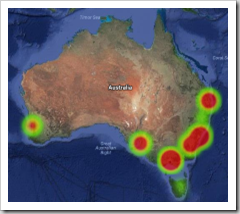
Heatmap-thumbAccording to IP Australia data covering patent applications filed during a 16-year period commencing on 1 January 2000, Melbourne is the biotechnology capital of Australia.  Sydney comes in second, followed by Brisbane.  There is significant biotechnology activity in Adelaide and, to a lesser extent, Perth.  Canberra looks to be an active area, but is something of a special case.  There is, however, very little activity in this sector in Australian regional areas. 

A ‘heat map’ highlighting the locations of organisations filing Australian patent applications relating to developments in biotechnology shows how innovation in the biological sciences thrives principally where there is an ecosystem of academic, medical and corporate organisations located in close proximity.  Melbourne’s leading position is driven primarily by the critical mass of public and private medical and bioscientific research institutes located in the ‘Parkville precinct’ and its immediate surrounds.  Similarly, the primary origins of patent applications relating to biotechnology in the other capital cities coincide with the locations of major research universities, hospitals and associated companies and institutes.

The single largest filer of patent applications over the period analysed is – as in many other fields of technology – the Commonwealth Scientific & Industrial Research Organisation (CSIRO).  In fact, CSIRO is almost single-handedly responsible for putting Canberra on the map in biotech, as a result of the fact that it uses its national capital address on all patent applications.  However, much of the actual research covered by those applications is conducted at CSIRO’s many other sites around Australia, including locations in and around Melbourne in Parkville, Clayton, Werribee and Geelong.  In all likelihood, therefore, Melbourne’s leading position in Australian biotechnology research and development is even more pronounced than the map suggests.

The top Australian patent attorney firm handling all of these applications is Davies Collison Cave – and it is so by a considerable margin.  Second-placed FB Rice has been responsible for filing only about half as many applications relating to biotechnology over the same period.

16 February 2017

USPTO Board Terminates CRISPR Patent Interference

TerminatedOn Wednesday 15 February 2017, the US Patent and Trademarks Office (USPTO) Patent Trial and Appeal Board (PTAB) handed down its much-anticipated decision in the patent interference proceedings initiated by the University of California (‘UC’) against the Broad Institute of MIT and Harvard (‘Broad’) in relation to CRISPR/Cas9 gene editing technology.  That decision, in short, is that there is ‘no interference in fact’.  That is to say, the three judges making up the PTAB panel have determined that Broad’s development of the CRISPR/Cas9 system for use in eukaryotic cells (i.e. complex cells with, among other characteristics, distinct nuclei) was a non-obvious advance over UC’s development of the system for use in simpler prokaryotic cells (specifically, bacteria), and that there is thus scope for both parties to hold distinct patents.

In its full decision [PDF, 412kB], the PTAB summarises its findings as follows:

Broad has persuaded us that the parties claim patentably distinct subject matter, rebutting the presumption created by declaration of this interference. Broad provided sufficient evidence to show that its claims, which are all limited to CRISPR-Cas9 systems in a eukaryotic environment, are not drawn to the same invention as UC’s claims, which are all directed to CRISPR-Cas9 systems not restricted to any environment. Specifically, the evidence shows that the invention of such systems in eukaryotic cells would not have been obvious over the invention of CRISPR-Cas9 systems in any environment, including in prokaryotic cells or in vitro, because one of ordinary skill in the art would not have reasonably expected a CRISPR-Cas9 system to be successful in a eukaryotic environment. This evidence shows that the parties’ claims do not interfere. Accordingly, we terminate the interference.

This is a considerable win for Broad which, subject to a potential appeal, has for now delivered a fatal blow to UC’s hopes of invalidating a number of Broad’s CRISPR-related patents and applications.  Unsurprisingly, Broad has reacted to the decision by declaring its full agreement with the PTAB, while UC maintains its belief that the evidence is on its side.  The stock market also reacted quickly to the news, adding US$200 million to the value of the Broad-connected biotech company Editas Medicine Inc.

16 December 2016

CRISPR Patent Interference Hearing – How to Define an ‘Invention’ and Why It Matters

Gene editorOn 6 December 2016, and for the first time since the University of California (‘UC’) first sought to provoke interference proceedings over CRISPR/Cas9 gene editing technology in April 2015, the parties in dispute over just who has the rightful claim to inventorship appeared at an oral hearing before three judges of the US Patent and Trademark Office (USPTO) Patent Trial and Appeal Board (PTAB).  Remarkably, considering the complexity of the scientific, technical and legal issues involved, UC and opposing claimant the Broad Institute of MIT and Harvard (‘Broad’) each had just 20 minutes to present its arguments, plus an optional five minutes for rebuttal of the other side’s submissions.  According to a journalist present at the hearing, it was all over in 45 minutes total.

It is important to understand, however, that while the judges’ decision here (which is expected within about two-to-three months) could put an end to the interference proceedings at the PTAB, the hearing was not actually about the ultimate question of who was first to invent the CRISPR technology at issue.  It was more about what each party may, or may not, have actually ‘invented’, and whether there is even any interference to be decided.

For any readers coming across this story for the first time, you could go back and read all of my articles on the topic (and the many good sources of information linked therein).  However, the key points may be briefly summarised as follows:
  1. UC Berkeley Professor of Chemistry Jennifer Doudna and her collaborator Emmanuelle Charpentier were the lead researchers on a team that, in around 2012, developed CRISPR/Cas9 – a biotechnology system consisting of an engineered RNA and a ‘cutting’ protein that can be used for highly-targeted gene editing;
  2. a US patent application is pending (serial no. 13/842,859), which is based on the UC team’s work and a series of filings beginning in May 2012;
  3. the UC team’s original work related to the discovery of the CRISPR system in relatively simple bacterial cells (examples of ‘prokaryotes’, or simple cells without distinct nuclei), but in January 2013 they were successful in applying the technology to human cells (examples of ‘eukaryotes’, or more complex cells with, among other characteristics, distinct nuclei);
  4. roughly in parallel, a team led by Feng Zhang at the Broad reported similar success using CRISPR to edit human genes;
  5. a number of US patent applications were filed, beginning in December 2012, based upon the Broad team’s work (i.e. more than six months later than Doudna’s earliest filing);
  6. the Broad requested prioritised examination under the USPTO’s Track One program and, as a result, was awarded the first patent on the basic CRISPR technology – US Patent No. 8,697,359, ‘CRISPR-Cas systems and methods for altering expression of gene products’, issued on 15 April 2015.
The UC applications, and the earliest Broad applications, were filed under the ‘old’ US system, according to which the applicant entitled to receive a patent is the first one to invent the claimed subject matter.  This differs from the ‘first-to-file’ priority system that has long existed throughout the rest of the world, and in the US since 16 March 2013.  Under the first-to-invent system, the administrative procedure used to determine who should receive a patent when there are competing claims is called an ‘interference’.

Therefore, the UC parties suggested that the USPTO should institute interference proceedings, in order to determine who is really entitled to own the patent rights to the CRISPR/Cas9 technology, which it did on 11 January 2016.  However, the purpose of the recent hearing was not to determine who was the first inventor, but rather to decide exactly what is the invention at issue, and whether the interference should proceed any further at all.

28 August 2016

Can an Early-Stage Embryo Without a Father Be Considered ‘Human’?

BlastocystUnder subsection 18(2) of the Australian Patents Act 1990, ‘human beings, and the biological processes for their generation, are not patentable inventions’.  An account of the legislative history of this exclusion may be found in the Patent Office decision Fertilitescentrum AB and Luminis Pty Ltd [2004] APO 19 at [13]-[25], which demonstrates that it was essentially the result of a political compromise between a push to exclude all genetic material and life forms from patentability, and the status quo of having no express exclusions in the Act. 

The government of the day rejected a broad exclusion on the basis that ‘it is impossible to foresee what inventions there will be in the future’ and that ‘a Patents Act which is not flexible enough to deal with the unforeseen would not serve the inventors, the public or the Government.’ 

Included with ‘the unforeseen’, however, are scientific developments that challenge the very category of ‘human’.  A Delegate of the Commissioner of Patents has recently had to deal with the question of whether the creation of a blastocyst via parthenogenetic activation of a human oocyte falls within the exclusion of subsection 18(2): International Stem Cell Corporation [2016] APO 52

No need to worry if you did not understand that last sentence.  I have done the background reading, and here is what it means in plain English.  What the inventors at International Stem Cell Corporation (ISSCO) did was to:
  1. extract an immature human egg cell (an ‘oocyte’) from the ovary;
  2. employ a technique to artificially activate the oocyte without requiring fertilisation (a process known as ‘parthenogenesis’); and
  3. allow the activated oocyte to develop to an early stage of cell division called a ‘blastocyst’.
The point of all this is to enable the production of human stem cells matched to the woman from whom the oocyte was taken.  Therapies based on the use of stem cells are considered extremely promising for the treatment of various forms of degenerative disease, diabetes, heart disease and numerous other conditions. 

As ISSCO stated in its 2007 press release announcing the breakthrough, ‘parthenogenetic stem cell lines that are genetically related to the recipient may overcome rejection problems and thus may have the potential to give significant therapeutic benefit to patients.’  Furthermore, ‘parthenogenetically-derived stem cells provide an alternative to embryonic stem cells derived from fertilized embryos or from somatic cell nuclear transfer (SCNT) technology.’  These latter techniques are highly controversial, because they involve the use of potentially viable human embryos.

What, then, is the status of a parthenogenetic blastocyst?  If it qualifies as ‘human’, then it, and the processes by which it is created, fall within subsection 18(2), and are therefore unpatentable in Australia.  Fortunately for ISSCO, and for the many patients who may ultimately benefit from continued substantial investment in these types of biotechnology, the Australian Delegate found that this is not the case.

21 August 2016

After US Loss, Sequenom Takes Its Patent Battle With Ariosa Down-Under

PregnantOne of the many benefits of genetic testing is the ability to carry out prenatal diagnosis of genetic disorders, most notably including (but certainly not limited to) Downs Syndrome.  This can be particularly valuable when one or both parents are known to be carriers of a genetic mutation such that the baby may be at significant risk of developing a serious condition or abnormality.  The conventional method of obtaining foetal DNA in order to conduct such tests is via amniocentesis, which is an invasive procedure in which a small amount of amniotic fluid is sampled from the amniotic sac surrounding the developing foetus using a needle.  Unfortunately, amniocentesis presents a risk to both foetus and mother.

A test that would enable screening of foetal DNA in a noninvasive manner would therefore be an important breakthrough.  Fortunately, just such a breakthrough was made in 1997 at Oxford University, when researchers Stephen Wainscoat and Dennis Lo discovered the presence of cell-free foetal DNA (cffDNA) in maternal blood serum, and developed techniques to isolate this DNA for testing.  Their discovery led to the grant of patents in a number of countries, including US patent no. 6,258,540 and Australian patent no. 727,919.  Oxford University, through its commercialisation arm Isis Innovation (now renamed as Oxford Innovation, for sadly obvious reasons), licensed the technology exclusively to US company Sequenom, Inc.

Last year, the US Court of Appeals for the Federal Circuit (CAFC) found the US patent to be invalid on the basis that the claimed invention was essentially the discovery of the pre-existing, but hitherto unknown, natural phenomenon of cffDNA being present in maternal blood: Ariosa Diagnostics, Inc.v. Sequenom, Inc. (Fed. Cir. 2015).  The claims were therefore considered to be directed to ineligible subject matter under the standards established by the US Supreme Court in its Myriad and Mayo decisions.  The CAFC subsequently declined to rehear the case en banc.  However a number of the Federal Circuit judges, including Judge Linn on the original panel, and Judges Lourie and Dyk in the decision refusing en banc rehearing, indicated that they felt bound by the Supreme Court precedents, but did not agree with the result in this case.  Judge Newman went further, stating her view that the case had been wrongly decided, and was distinguishable from the facts in Myriad and Mayo.

Many observers therefore felt that the Sequenom case was ripe for review by the Supreme Court, which would then have an opportunity to further develop and clarify its Myriad and Mayo guidance.  However, on 27 June 2016 the Supreme Court denied Sequenom’s petition, sealing the US patent’s demise once and for all.

However, in the meantime (on 7 June 2016) Sequenom has commenced proceedings in the Federal Court of Australia, also against Ariosa Diagnostics, Inc, for infringement of the equivalent Australian patent.  This raises the question of whether the invention that was found ineligible for patent protection in the US may nonetheless be upheld under Australian law.  This will be the second time in recent history (the other being the Myriad BRCA breast cancer gene case) that subject-matter eligibility has been considered for corresponding patents in the US and Australia.

16 May 2016

Patentable Subject Matter Continues to Confound in the US Despite Hopeful Signs

Hope - DespairThe past couple of weeks have brought some slightly brighter news for innovators in life sciences and software fields seeking patent protection in the United States.  First, the US Patent and Trademark Office (USPTO) issued an update to its Interim Guidance on Subject Matter Eligibility which provides some much needed clarification on what is expected from examiners, as well as additional examples which will give new hope to applicants with inventions relating to diagnostic methods.  Second, the US Court of Appeals for the Federal Circuit (CAFC) issued a rare decision (Enfish LLC v Microsoft Corporation, appeal no. 15-1244 [PDF, 604kB]) finding that a computer-implemented invention is not ‘abstract’, and is therefore patent-eligible.

The USPTO’s updated guidelines require examiners to provide more detail in their rejections, to provide distinct rejections for every claim, and to provide more reasoning when maintaining rejections in the fact of applicant arguments.  They also prohibit examiners from expanding the scope of unpatentable subject matter beyond the specific examples provided by court rulings.  These clarifications will hopefully create greater certainty and consistency in the approach taken by examiners across all fields in which subject matter eligibility is commonly at issue.

The new life sciences eligibility examples will also be welcomed, especially by applicants with inventions in the field of diagnostics.  At the same time, however, at least one of those examples also serves to highlight just how absurd the approach to subject matter eligibility has become in this area, thanks in large part to the US Supreme Court tying itself in knots trying to establish a consistent approach, while at the same time avoiding setting down any hard and fast rules about identifying excluded subject matter within the established categories of ‘abstract ideas’, ‘laws of nature’ and ‘mental steps’.

Interestingly, the USPTO’s ‘diagnostic’ example, and the patent-eligible computer-implemented invention in Enfish have something in common – both demonstrate that the most effective way to avoid a finding of ineligibility is to bypass the eligibility analysis altogether, by ensuring that the patent claims are not ‘directed to’ (i.e. ‘recite or describe’) any recognised judicial exception, such as a law of nature or abstract idea.

17 April 2016

CRISPR Patent Dispute – Is It Just Too Big to Settle?

Big moneyThe proceedings at the US Patent and Trademark Office (USPTO) Patent Trial and Appeal Board (PTAB), to determine who is entitled to foundational patent rights relating to CRISPR/Cas9 ‘gene editing’ technology, have been steadily progressing since my last update back in January.  As a reminder, the parties vying for ownership of these rights are a group led by Berkeley Professor of Chemistry Jennifer Doudna and her collaborator Emmanuelle Charpentier, and a group led by Feng Zhang at the Broad Institute, Inc and MIT.  Although a little reductive, it is convenient for me to refer to these two groups as ‘team Doudna’ and ‘team Zhang’ respectively. 

In a very recent development, on 11 April 2016, the ‘senior party’ in the proceedings (team Doudna) filed a notice stating that ‘in accordance with Standing Order ¶ 126, Senior Party hereby notifies the Board that the parties have discussed settlement, and have made a good faith effort to settle the interference, but no agreement has been reached at this time.’  It was necessary for the notice to be filed on or before this date, because the PTAB encourages parties to settle priority disputes between themselves where possible, and the referenced paragraph of the Standing Order in fact makes it compulsory for settlement discussions to be initiated by the ‘last named party’ (which, again, happens to be team Doudna in this case) within three months of an interference being declared.  The CRISPR interference was declared on 11 January 2016.

Interestingly, however, when the PTAB judges raised the matter of settlement discussions during a telephone conference on 10 March 2016, counsel for team Zhang stated that ‘we have not had that opportunity one way or the other to discuss settlement’ while counsel for team Doudna confirmed his understanding that ‘there has not been any formal discussions between the parties’.

So up until two months after the interference was officially declared there had been no discussions about a possible settlement.  Then, during the final month of the period for commencing mandatory discussions, suddenly ‘a good faith effort’ was made to settle the dispute, but no agreement was reached.  Pardon my cynicism, but if you believe that the timing of these events reflects a genuine effort at settlement, then perhaps I can interest you in the purchase of a nice bridge!  On the contrary, it seems pretty clear that at least team Doudna (whose obligation it was to initiate mandatory settlement discussions, and file the notice) has no desire to settle the interference.  In fact, it is quite likely that neither party has any real interest in settlement.

Although I have previously expressed the opinion that a settlement agreement may provide a better outcome for all concerned, I no longer believe that this is a viable option.  I now think it likely that the technology is just too valuable for either party to give ground, particularly at this early stage.  In all likelihood, these interference proceedings are going to run their full course.  Yes, they will be incredibly expensive, but the cost is just a drop in the ocean compared to what is at stake in the main game of commercialising CRISPR/Cas9 technology.

31 January 2016

CRISPR Interference Update

DNATwo weeks ago I wrote about the interference proceedings that have been instituted by the US Patent and Trademarks Office (USPTO) in order to determine who is rightfully entitled to fundamental patent rights in relation to CRISPR gene-editing technology, under the former ‘first-to-invent’ priority rules.  The contest is between a team led by Berkeley Professor of Chemistry Jennifer Doudna and her collaborator Emmanuelle Charpentier, and a team at the Broad Institute, Inc and MIT led by Feng Zhang.  In that article, I explained generally how interference proceedings work, the distinction between ‘senior’ and ‘junior’ parties in an interference, and what it means to be ‘first-to-invent’.

Kevin Noonan has now written about the CRISPR interference over at the Patent Docs blog.  Being both a US patent attorney, and having a background in molecular biology, Kevin is far better qualified than I to write about this topic!  Obviously, therefore, you should read his article in full, if this subject is of particular interest to you. 

I was also recently contacted by Lee McGuire, who is the Chief Communications Officer at the Broad Institute, drawing my attention to a CRISPR IP information page that is being maintained on the Broad’s website.  You will appreciate, of course, that this is not a source of unbiased information.  It is, however, a useful resource with a lot of interesting content and links covering the CRISPR ‘story’ from Broad’s perspective.  As far as I have been able to determine, Berkeley is not (at this stage) providing any similar resource.

So, what will you learn if you take the time to read these additional sources?

17 January 2016

Who Will Get the CRISPR Patent?

CrispyAs has been widely reported, the US Patent and Trademark Office (USPTO) has instituted interference proceedings to determine who is entitled to own foundational patent rights in relation to CRISPR/Cas9 ‘gene editing’ technology.  I wrote about this brewing dispute back in July 2015, when I predicted that this would be ‘the last great US patent interference’, given that the US patent system changed from first-to-invent to first-inventor-to-file on 16 March 2013. 

As the number of applications filed under the former first-to-invent system dwindles, the opportunities for new interference proceedings – which are all about figuring out who invented first when separate applications with competing claims are filed – are becoming scarce.  Even less likely is another interference over a genuinely groundbreaking and immensely valuable invention.

For the full story, you should really go back and read my earlier article.  But if you lack the time or stamina, here is the TL;DR recap:
  1. Berkeley Professor of Chemistry Jennifer Doudna and her collaborator Emmanuelle Charpentier were the lead researchers on a team that, in around 2012, developed so-called CRISPR/Cas9 – a biotechnology system consisting of an engineered RNA and a ‘cutting’ protein that can be used for highly-targeted gene editing;
  2. Doudna, Charpentier and their co-workers have a US patent application pending (serial no. 13/842,859), which is based on a series of filings beginning in May 2012;
  3. Doudna and Charpentier’s original work related to the discovery of the CRISPR system in relatively simple bacterial cells, but in January 2013 they were successful in applying the technology to human cells;
  4. roughly in parallel, however, a team led by Feng Zhang at the Broad Institute, Inc and MIT reported similar success using CRISPR to edit human genes;
  5. Zhang and his team also filed a US patent application, based on a series of their own filings beginning in December 2012 (i.e. more than six months later than Doudna’s earliest filing);
  6. to complicate matters, Zhang requested prioritised examination under the USPTO’s Track One program and, as a result, was awarded the first patent on the basic CRISPR technology – US Patent No. 8,697,359, ‘CRISPR-Cas systems and methods for altering expression of gene products’, issued on 15 April 2015, even though Doudna’s group had been the first-to-file;
  7. Doundna and Charpentier subsequently requested the USPTO to institute interference proceedings, in order to determine who is really entitled to own the patent rights to the CRISPR/Cas9 technology.
That request has now been granted.  So who will get the CRISPR patent?  Well, if I knew that I could save the USPTO a whole lot of work, and the parties a great deal of time and money.  Ultimately, only time and the evidence will tell.  But what I can do is to outline the basics of interference proceedings, and make a few tentative predictions.

18 October 2015

Proposed Australian Examination Practice Gives Narrow Interpretation to High Court’s Myriad Ruling

NarrowsIP Australia has opened a consultation on proposed changes in examination practice in light of the High Court’s ruling in D'Arcy v Myriad Genetics Inc [2015] HCA 35.  Although many people had feared (or hoped, depending upon their particular predilections) that the Australian Patent Office would follow the lead of the USPTO, and take a broad view of the High Court’s judgment, it is clear from the proposed examination practice that this will not be the case.

Indeed, it would be difficult for IP Australia to take any narrower view of the implications of the Myriad decision than the one it is proposing (except, perhaps, in relation to cDNA).  The Patent Office accepts that the High Court’s judgment establishes that ‘a claim to an isolated nucleic acid that merely represents information coding for a polypeptide is not patent eligible’, and has therefore concluded that the following are not patent-eligible:
  1. naturally occurring human and non-human nucleic acid sequences encoding polypeptides or functional fragments thereof - either isolated or synthesised;
  2. cDNA; and
  3. naturally occurring human and non-human coding RNA - either isolated or synthesised.
However, the Patent Office proposes that it will continue to treat claims directed to pretty much everything else, not addressed directly by the High Court’s decision, as patent-eligible.  This includes other forms of isolated, naturally-occurring DNA such as regulatory DNA and non-coding DNA.

This is in stark contrast to the USPTO’s response to the corresponding decision of the US Supreme Court in Association for Molecular Pathology v. Myriad Genetics, Inc, which the US Office treated as affecting the patent-eligibility of all claims directed or relating to natural products.  Initial guidance from the USPTO suggested that this would even include new and useful combinations of natural substances (using gunpowder as an example).  Updated guidance issued in December 2014 improved the situation somewhat, by clarifying the process by which claims ‘directed to’ excluded subject matter should not be subject to rejection if they recite additional elements that amount to ‘significantly more’ than the exclusion.  Even so, it remains clear that a claim which recites ‘nothing more’ than an isolated natural product generally cannot be patented at the USPTO, whereas many such claims will continue to pass muster under the proposed Australian practice.

09 October 2015

Australian High Court Nukes Biotech Industry from Orbit: “It’s the Only Way to be Sure”

Nuclear explosionThe High Court of Australia has followed the US Supreme Court in unanimously declaring that naturally-occurring DNA sequences – even when extracted from the cell nucleus and isolated by human intervention – cannot, in themselves, be validly the subject of patent protection.  In particular, all seven High Court judges found that claims 1-3 of Myriad Genetics’ Australian patent no. 686004, each of which is directed to isolated nucleic acid molecules corresponding with the BRCA mutation associated with increased breast cancer risk, are invalid because they do not define a patent-eligible ‘manner of manufacture’ under Australian law: D'Arcy v Myriad Genetics Inc [2015] HCA 35.

In arriving at this ruling, the High Court has reversed the decisions of six Federal Court judges – one at first instance (Cancer Voices Australia v Myriad Genetics Inc [2013] FCA 65), and five more on appeal to a full bench of the Federal Court (D’Arcy v Myriad Genetics Inc [2014] FCAFC 115) – all of whom found that nucleic acids, once extracted from a cell and isolated from a complete DNA molecule, are artificially-created products that are chemically, structurally and functionally different from their natural counterparts, and thus patent-eligible.

Furthermore, in reversing last year’s decision of the Full Federal Court, the High Court has (retroactively) made a liar of Australia’s Trade Minister, Andrew Robb.  For months, Mr Robb has been telling anyone who will listen that Australia does not need to extend ‘data exclusivity’ for biologic drugs, because this country provides more extensive patent protection for biological materials than some others.  This line has been followed primarily for the benefit of the US negotiators of the Trans-Pacific Partnership Agreement (TPP), who initially wanted the agreement to mandate a minimum 12 years’ data exclusivity. 

As recently as 6 October 2015, following finalisation of the TPP after seven years of negotiations, Mr Robb was talking up Australia’s patent system as a key factor in reaching agreement on the contentious issue of data exclusivity for biologics.  Yet, the very next day, the High Court dropped its nuclear bombshell on that argument, by not only replicating the action of the US Supreme Court in declaring isolated naturally-occurring DNA to be unpatentable, but going further in extending this to synthesised biologics – including cDNA – that essentially embody the same ‘information’ existing in the naturally-occurring biological molecule.

Just to be clear, nobody – not even Myriad Genetics – cares that three Australian patent claims directed to the isolated DNA comprising the BRCA mutations have specifically been declared invalid.  Quite aside from anything else, the patent has expired, having reached the end of its 20-year term on 11 August 2015.  There are also probably very few people who would be greatly concerned that isolated naturally-occurring DNA sequences are not patentable in Australia.  It is now widely regarded that the completion of the human genome project, along with the relative ease, speed and low-cost of gene sequencing nowadays, has largely rendered such claims unpatentable for lack of novelty or inventive step anyway.

The larger concern with the Australian High Court’s decision for the entire biotechnology industry is likely to be its focus on the information content of the naturally-occurring DNA as ‘an essential element of the invention as claimed’.  This reasoning will create significant uncertainty as to the circumstances under which any product – whether wholly, or partially, synthesised, and including cDNA – which essentially exists to provide a ‘medium’ for naturally-occurring information, may continue to be regarded as patent-eligible in Australia.

11 July 2015

CRISPR – Will This Be the Last Great US Patent Interference?

Duelling PistolsOn 9 November 2014, Berkeley Professor of Chemistry Jennifer Doudna and her collaborator Emmanuelle Charpentier, currently at the Helmholtz Center for Infection Research in Germany, attended an awards ceremony at NASA’s Ames Research Center in Mountain View, California.
Not only did Doudna and Charpentier – dressed to the nines, and looking more like glamour queens than the usual white-coated scientist stereotype – mingle with celebrities including Benedict Cumberbatch, Cameron Diaz and Jon Hamm, while enjoying a live performance by Christina Aguilera, they also received the 2015 Breakthrough Prize in the life sciences category.  The award, which was sponsored by Facebook’s Mark Zuckerberg and other tech billionaires, included prize money of US$3 million apiece.

To put that in perspective, had the two scientists received a Nobel Prize last year, they would have shared 8,000,000 Swedish Kronor, or about US$1 million, between them.  Of course, it is not all – or even mostly – about the money, and the prestige attached to a Nobel prize is undoubtedly greater.  And it seems to be odds-on that the discovery for which Doudna and Charpentier received the 2015 Breakthrough Prize – and which has been called ‘the biggest biotech discovery of the century’ – will one day be the subject of a Nobel Prize as well.

All of this fuss is about a technology called CRISPR/Cas9, which is essentially a DNA ‘editing’ tool that Doudna and Charpentier developed in (around) 2012, as a result of their research into a system used by bacteria to defend themselves against viruses.  Doudna has described the CRISPR/Cas9 (which stands for Clustered Regularly Interspaced Short Palindromic Repeats/CRISPR associated protein 9) tool as a ‘molecular scalpel for genomes’.  She and Charpentier demonstrated how it is possible to synthesise molecules, consisting of an engineered RNA and a ‘cutting’ protein, that can precisely target a short gene sequence within a genome, and slice the DNA open at that exact point.

Bacterial cells – in which the mechanism was first discovered – are simpler than the cells of higher organisms (known as ‘eukaryotic cells’).  However, in January 2013, Doudna and Charpentier took the next step, successfully cutting out and replacing a selected section of DNA in human cells.  In the same month, a team led by Feng Zhang at the Broad Institute, Inc and MIT reported similar success using CRISPR to edit human genes.

Which brings me to the main topic of this post.  Because, while Doudna and Charpentier have been collecting the public accolades, rubbing shoulders with the rich and famous, and banking the – doubtless well-deserved – proceeds of their success, it is Zhang who has been awarded the first patent on the basic CRISPR technology – US Patent No. 8,697,359, ‘CRISPR-Cas systems and methods for altering expression of gene products’, issued on 15 April 2015.  And that could ultimately be worth much more than $3 million!

This is now shaping up as a major battle over who will own the most basic, and potentially valuable, patent rights in relation to the CRISPR technology, and possibly the last great priority dispute of the ‘first-to-invent’ era of US patent law.

30 March 2014

In the Wake of Myriad, Gunpowder is Not Patent-Eligible: USPTO

Powder KegThe US Patent and Trademark Office (USPTO) has concluded that recent decisions of the US Supreme Court relating to patents for genes and for diagnostic methods mean that mixtures of ‘naturally-occurring materials’ are not patent-eligible – at least, not unless one or more of the components has been ‘changed’ in some way from its natural state.

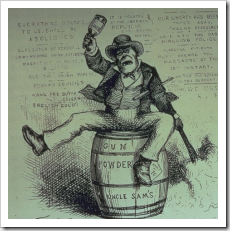
The USPTO has published an extensive (93-slide) presentation used for examiner training [PDF, 972KB] on the Supreme Court’s interpretation of section 101 of the US patent statute in Mayo Collaborative Services v Prometheus Laboratories, Inc. (2012) and Ass’n for Molecular Pathology v Myriad Genetics, Inc. (2013).  In an example to be found on slide no. 55, examiners are told that ‘gunpowder’ would not be eligible for patenting (even if it was not already known) because as ‘a mixture of three naturally occurring materials: potassium nitrate, sulfur and charcoal’ it is ‘not markedly different’ from naturally-occurring materials, ‘because none of the components have been changed.’

This will no doubt come as a surprise to many people, who would not have held any real doubts that gunpowder was ‘invented’ by the Chinese, around the 9th century C.E.  Indeed, as the quite well-researched Wikipedia entry on the History of Gunpowder explains, it took a few centuries, and a number of educational accidents, to refine the proportions of gunpowder’s constituent parts to produce maximum explosive effect.

While there is no question that effective gunpowder can be made by combining materials that occur in nature, the resulting combination is not (fortunately) naturally-occurring!  There is, to my knowledge at least, nowhere in the natural world at which dangerously flammable reserves of potassium nitrate, sulphur and charcoal can be found just lying around in wait of a serendipitous lightning strike!  (Interestingly, however, there is evidence that 17 nuclear fission reactors once formed and operated naturally for around a million years in what is now Gabon, western Africa.)

Conventional wisdom would have it that, in the case of a combination like gunpowder, the prospective invention lies in bringing the components together to create something useful.  If the combination is not previously known, and not obvious, then it should be patentable.  Apparently, the USPTO no longer believes in this conventional wisdom!

01 February 2014

Calling All Pharma and Biotech Attorneys: Survey on Filing Strategy

TJSL Research TeamAre you a patent attorney working in the life sciences sector?  Would you be interested in new research insights into international patent filing strategies for biotechnology and pharmaceutical companies?  And – most importantly – would you be willing to spare just 15 minutes to complete a short survey to assist researchers at the Thomas Jefferson School of Law to obtain those research insights?  If so, please read on…

I was contacted this week by Richard Schurman, who is one member of a team led by TJSL Adjunct Professor Randy Berholtz engaged in a year-long IP Honours Research Project with the goal of assisting bio-pharmaceutical companies and patent practitioners in deciding which countries to file for patent protection.  (Richard is second from the left in the above photo.  The other pictured are, from left to right, co-researchers Derek Midkiff, Sumant Pathak, Katherine MacFarlane and Vince Davies.)

According to a TJSL media release:

The goal of the honours research project is to provide life science companies and patent practitioners with a comprehensive guide regarding the countries where biopharma patents are filed, the countries where life science companies and patent practitioners should file for patent protection, and the factors that life science companies and patent practitioners should take into consideration when strategizing for international patent protection.

The project includes a survey of practitioners, for which each member of the team has taken on a different region of the world.  Richard is responsible for the Asia-Pacific region, which of course includes Australia and New Zealand.


Copyright © 2014
Creative Commons License
The Patentology Blog by Dr Mark A Summerfield is licensed under a Creative Commons Attribution-NonCommercial-ShareAlike 3.0 Australia License.