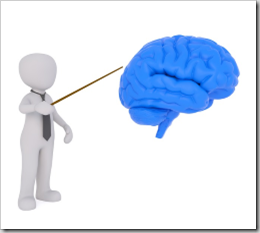
As a product of millions of years of evolution, the human brain is a remarkable organ.
Recent research indicates that a typical brain comprises somewhere in the vicinity of 80 to 100
billion neurons, and a roughly equal number of non-neuronal cells. This mass of biological matter is capable of astonishing feats – many of them simultaneously – from enabling us, consciously and unconsciously, to control the behaviour and movement of our bodies, to sensing, comprehending and interacting with the environment around us, to communicating with one another using a variety of languages and symbols, to creating, composing and inventing brand new works of science, technology, and art. In performing all of these tasks,
the brain consumes just 20 watts of power. By way of comparison,
microprocessors at the high end of Intel’s latest Core i7 range consume up to 140 watts.
One relatively recent product of the amazing human brain is the range of technologies often collectively called ‘artificial intelligence’ (AI). That is the last time I will use this particular phrase without irony in this series of articles – in my view, it is too vague a term, and tends to create an impression that computers are somehow approaching the capacity to operate on-par with human intelligence, which is simply not true. Nonetheless, such luminaries as
Stephen Hawking and
Elon Musk have piped up over the past year or so with their concerns that our machines may soon rise up and render us obsolete or, worse still, destroy us!
In a similar vein, there are some people in the field of intellectual property who are starting to ask questions about whether computers can be ‘creative’ or ‘inventive’ and, if so, whether it should be possible for a computer to be named as an inventor on a patent application – or, conversely, whether some humans should be disentitled from inventorship on the basis that their computers, rather than themselves, were the true inventors. One academic who has been making a name for himself in this emerging field of study is
Professor of Law and Health Sciences at the University of Surrey, Ryan Abbott. Professor Abbott is the author of, among other works on the topic, ‘I Think, Therefore I Invent: Creative Computers and the Future of Patent Law’,
Boston College Law Review, Vol. 57, No. 4, 2016 (
also available at SSRN), in which he argues that the law should embrace treating non-humans as inventors because this ‘would incentivize the creation of intellectual property by encouraging the development of creative computers.’
As I shall explain, however, I do not agree with Professor Abbott that computers can, or should, be regarded as inventors for the purpose of granting patents. Furthermore, while Abbott accepts claims that patents have
already been granted on what he calls ‘computational inventions’, I firmly believe that a computer is yet to ‘invent’ anything. In my view, the researchers and technologists who claim otherwise have an interest in promoting a particular perspective, and in doing so they are subtly extending the definitions of ‘creation’ and ‘invention’ to encompass the contribution of their machines, to the detriment of the human operators who are responsible for providing the true creative input in the process.
I am further concerned that, should this view of ‘machine as (co)inventor’ prevail, it will in fact be to the detriment of the patent system. I think it highly unlikely that lawmakers – whether they be legislators or common-law judges – will embrace the idea of granting patents on machine inventions. On the contrary, it seems far more probable that if the notion takes hold that computers are actually doing the ‘inventing’ in many cases, it will simply become even more difficult for humans to secure patent protection for computer-implemented, or computer-assisted, inventions.
This is a complex topic that I intend to cover in a series of three articles. In this first part, I will introduce the field of machine learning, give some examples, and then attempt to dispel some of the hype that has developed around this technology – including in Abbott’s work. My aim here is primarily to refute the argument that existing machines are capable of engaging in ‘creative’ or ‘inventive’ activity.
In part 2, I will delve into the role of machine learning in assisting with the generation of new inventions. Finally,
I will look at how to go about identifying the (human) inventors in such cases.
 In
In  In my previous article,
  Anybody who works as a patent attorney for any length of time discovers that there is no shortage of people who are perfectly happy to bend the truth a little in order to achieve their objectives. In the case of patents, such liberties with the facts tend to relate to matters of inventorship and ownership of patent rights.
 Do you know who ‘owns’ your inventions?
 Last November we wrote about a dispute between Robert Alexander and the Royal Children’s Hospital (RCH) over ownership of an invention – and corresponding patent application – relating to improvements in a medium used to inoculate and grow viruses (see


