Showing posts with label Europe. Show all posts

27 July 2022

SMEs, Universities and Research Organisations Most Disadvantaged by Lack of a Patent Filing Grace Period, says EPO Study

Seeking graceOver the past two decades or so, the number of major jurisdictions offering some form of general ‘grace period’ for filing of patent applications has grown significantly.  This has largely been driven by bilateral agreements (e.g. free trade agreements involving the United States), and regional agreements such as the Comprehensive and Progressive Agreement for Trans-Pacific Partnership (CPTPP), including provisions requiring the parties to provide a 12-month grace period.  With former hold-outs such as New Zealand, Japan and South Korea now having implemented grace periods in their national patent laws, Europe and China are currently the only two major jurisdictions in the world without a full-fledged grace period.  To my mind, it is an anomaly in this day and age of instantaneous global communication and publication that there are still countries that impose a strict novelty requirement, with the result that any public disclosure of an invention – accidental or deliberate – prior to filing remains fatal to the prospects of securing patent protection.

A new study recently published by the European Patent Office (EPO), The European patent system and the grace period: an impact analysis, is therefore a welcome contribution to ongoing debate as to whether, and how, the European patent system should harmonise with other major jurisdictions by introducing a general grace period.  Through surveys of users of the system between 2018 and 2020, the study seeks to:

  1. evaluate the impact that the lack of a general grace period in Europe has on applicants in various categories, including European companies, universities and research organisations, and foreign applicants from the US, Japan and South Korea;
  2. estimate the extent to which applicants would take advantage of any European grace period, and how this would depend upon the design of a grace period system; and
  3. compare the perceived level of legal uncertainty that would be generated by the introduction of a grace period under different design options.

The survey sample is not unbiased.  For example, it does not include, by definition, entities that did not file applications during the selected three year period due to prior disclosures that precluded obtaining European patent rights in the absence of a grace period.  Even so, it appears that many participants have experience with grace periods across different jurisdictions, and have been affected in various ways by the lack of a grace period in Europe.  The results are therefore interesting, and appear likely to be indicative of wider experience, although they may underestimate the demand for the introduction of a European grace period.

The study found that the absence of a grace period has forced many applicants to postpone disclosures, with the most heavily affected being European small and medium enterprises (SMEs) at 10.4% and European universities at 12.1%.  For these entities, around two-thirds of these postponements had adverse consequences.  Universities reported a negative impact mostly on reputation or other aspects of their operations (such as delayed research publications).  For SMEs, the negative impact was roughly equally split across development/commercialisation and reputational factors.

Nonetheless, European businesses (small and large) are generally successful in avoiding pre-filing disclosures, reporting less than 1% of cases in which an application was prevented by a disclosure.  European universities, on the other hand, reported 7.8% of European applications being prevented due to a pre-filing disclosure, presumably reflecting the difficulty of enforcing disclosure restraints in an academic environment.  US companies also reported being heavily hit by the lack of a European grace period, with 7.2% of applications prevented by a pre-filing disclosure.

The study further found that the extent to which applicants would take advantage of a grace period, should one be introduced in Europe would be substantially affected by its design.  An unrestricted (i.e. ‘US-style’) design – with no declaration requirements, or preservation of prior user rights – was estimated to result in just over 25% of all European patent applications relying on the grace period (which seems like a very high proportion to me).  On the other hand, an ‘Australian-style’ system – which preserves rights for third parties that commence use of an invention following a disclosure, but before filing of a patent application – was estimated to result in under 10% of applications relying on the grace period.

While grace periods obviously benefit applicants, they create additional uncertainty in that the maximum delay between disclosure of an invention and publication of any patent application revealing the extent to which the invention may receive legal protection is extended from 18 months to as much as 30 months.  The study found that the perception of legal uncertainty among surveyed users of the European patent system was relatively high, driven primarily by European companies which harbour the greatest concerns by a significant margin.  ‘Perception’ is a nebulous concept, however, and there are good reasons to suspect that fear of the unknown is a major driver of survey responses here.

Overall, I would suggest that this EPO study bolsters the case for the introduction of a general grace period in Europe.  The leading argument in favour remains that of international harmonisation, with most other major jurisdictions now providing some form of grace period.  Adding to this, the study indicates that the lack of any similar provision in Europe has an adverse impact on a small, but not insignificant, number of applicants and prospective applicants.  The major counter-argument is that grace periods create legal uncertainty.  However, it is mainly European businesses that – when asked – perceive this as a significant consideration.  European universities and research organisations, along with applicants of all kinds from other jurisdictions which already provide grace periods (the US, Japan and South Korea), have far fewer concerns.

28 January 2018

Loss of CRISPR Priority in Europe is a Warning to All Patent Applicants

Dark and stormyOn 17 January 2018, a panel of the European Patent Office (EPO) opposition division wholly revoked a patent co-owned by the Broad Institute (‘Broad’) relating to CRISPR/Cas9 ‘gene editing’ technology.  The European patent in question, number EP2771468, is entitled ‘Engineering of systems, methods and optimized guide compositions for sequence manipulation’, and is a European equivalent to US patent no. 8,906,616, which is one of the key Broad patents involved in the US patent interference dispute with the University of California (UC) – which is currently on appeal to the US Court of Appeals for the Federal Circuit.  As is usual with European opposition proceedings, the ruling was issued immediately at the hearing (which had originally been scheduled to continue for two further days).  A full written decision providing detailed reasons is likely to be a few weeks away.

Technically, the basis for revocation in the final decision is likely to be lack of novelty and/or inventive step of all claims of the Broad patent.  However, the underlying reason for Broad’s failure to defend its patent is a loss of priority.  In particular, the EPO panel determined that Broad was not entitled to claim priority from four of its earlier US provisional applications, including the earliest filing, US provisional application no. 61/736,527, which was filed on 12 December 2012.  This loss of priority was fatal to the patent, as a result of a number of publications – including Broad’s own – that occurred subsequently, but prior to the full application’s filing date of 12 December 2013.

While this decision is obviously pivotal in the ongoing disputes between Broad and UC over ownership of foundational patent rights relating to CRISPR/Cas9 technology, it also provides an object lesson and a timely reminder of essential requirements for valid priority claims for patent applicants around the world, in all fields of technology.  While the circumstances of Broad’s case are somewhat more complex than most patent filings, what has happened to it here is not at all specific to the particular invention at issue.  In a nutshell, the problem was that, at the time of filing international application no. PCT/US2013/074819 (from which the European patent is derived), the named applicants – Broad, MIT and Harvard – did not collectively own all of the rights necessary to claim priority from the earlier provisional applications.  More particularly, the provisional applications named a researcher from Rockefeller University as a co-inventor/applicant, yet neither the researcher nor Rockefeller was named as an applicant on the international application.  Nor had the named applicants received any assignment from Rockefeller of the right to claim priority in the international application.

In fairness to Broad, the US national law relating to ‘internal’ priority (i.e. claiming the benefit of a US provisional application in a subsequent non-provisional application) is less strict, and focusses on the substance of the invention actually claimed in the later application rather than on a distinct right of priority.  But this can hardly be an excuse for ignorance of the international position, especially when the stakes are so high.  Broad has issued a statement, arguing that the EPO decision is based on a technicality, and asserting that it is ‘inconsistent with treaties designed to harmonize the international patent process, including that of the United States and Europe’.  I disagree.  Not only is this not the first time that the EPO has applied these rules in relation to priority claims, but it is not the only adjudicating body to have determined that they are, in fact, required by the international treaties in question.

Broad has vowed to appeal.  In the meantime – and in anticipation of the likelihood that any appeal will fail – all international applicants would be well-advised to ensure that they are clear on the ownership of the right to priority at the time of filing.  At the end of this article, I set out some guidelines for avoiding the troubles that Broad has encountered, not only at the EPO but at any international patent office.

28 August 2016

Can an Early-Stage Embryo Without a Father Be Considered ‘Human’?

BlastocystUnder subsection 18(2) of the Australian Patents Act 1990, ‘human beings, and the biological processes for their generation, are not patentable inventions’.  An account of the legislative history of this exclusion may be found in the Patent Office decision Fertilitescentrum AB and Luminis Pty Ltd [2004] APO 19 at [13]-[25], which demonstrates that it was essentially the result of a political compromise between a push to exclude all genetic material and life forms from patentability, and the status quo of having no express exclusions in the Act. 

The government of the day rejected a broad exclusion on the basis that ‘it is impossible to foresee what inventions there will be in the future’ and that ‘a Patents Act which is not flexible enough to deal with the unforeseen would not serve the inventors, the public or the Government.’ 

Included with ‘the unforeseen’, however, are scientific developments that challenge the very category of ‘human’.  A Delegate of the Commissioner of Patents has recently had to deal with the question of whether the creation of a blastocyst via parthenogenetic activation of a human oocyte falls within the exclusion of subsection 18(2): International Stem Cell Corporation [2016] APO 52

No need to worry if you did not understand that last sentence.  I have done the background reading, and here is what it means in plain English.  What the inventors at International Stem Cell Corporation (ISSCO) did was to:
  1. extract an immature human egg cell (an ‘oocyte’) from the ovary;
  2. employ a technique to artificially activate the oocyte without requiring fertilisation (a process known as ‘parthenogenesis’); and
  3. allow the activated oocyte to develop to an early stage of cell division called a ‘blastocyst’.
The point of all this is to enable the production of human stem cells matched to the woman from whom the oocyte was taken.  Therapies based on the use of stem cells are considered extremely promising for the treatment of various forms of degenerative disease, diabetes, heart disease and numerous other conditions. 

As ISSCO stated in its 2007 press release announcing the breakthrough, ‘parthenogenetic stem cell lines that are genetically related to the recipient may overcome rejection problems and thus may have the potential to give significant therapeutic benefit to patients.’  Furthermore, ‘parthenogenetically-derived stem cells provide an alternative to embryonic stem cells derived from fertilized embryos or from somatic cell nuclear transfer (SCNT) technology.’  These latter techniques are highly controversial, because they involve the use of potentially viable human embryos.

What, then, is the status of a parthenogenetic blastocyst?  If it qualifies as ‘human’, then it, and the processes by which it is created, fall within subsection 18(2), and are therefore unpatentable in Australia.  Fortunately for ISSCO, and for the many patients who may ultimately benefit from continued substantial investment in these types of biotechnology, the Australian Delegate found that this is not the case.

26 June 2016

What Will ‘Brexit’ Mean for European Patents?

Brexit VoteOn Thursday 23 June 2016, around 72% of eligible UK voters turned out and decided, by a narrow margin of 52%-48%, to leave the European Union (EU).

This outcome has left the nation deeply divided, along numerous lines.  First, there is a division between England and Wales, which voted to leave, and Scotland and Northern Ireland, which voted to stay.  Then there is a socioeconomic division between the most affluent and highly educated, who are dominant in the South East and who favoured remaining in the EU, and those who feel disenfranchised by the existing system and voted for the UK to reassert its sovereignty. 

I am most concerned, however, about the generational divide.  Pre-election surveys indicated that 57% of Britons aged between 18 and 34 who intended to vote supported remaining in the EU, while that proportion rose to around 75% in voters under the age of 25.  As one 27 year-old reportedly commented, ‘we're the ones who've got to live with it for a long time, but a group of pensioners have managed to make a decision for us.’

Although I would prefer that the UK stay in the EU, I must say that I have some sympathy for those people who feel that Britain has allowed itself to become too subservient to an ‘undemocratic’ pan-European government, if the immediate reaction of the European Commission president, Jean-Claude Juncker is anything to judge by.  Juncker has said that he wants to ‘get started immediately’ on the process of separation which, he says, is ‘not an amicable divorce’.  These are more the words of a petulant child than a committed democrat, who should realise that such a close outcome is hardly a resounding endorsement of the ‘Brexit’ by the British people, and that neither that fractured nation, nor the world at large, will be well-served by rushing into what is likely to be a messy, painful and disruptive process.  There are actual, real people, as well as companies and entire nations, who are shocked, uncertain and in need of reassurance and guidance as to what an EU without the UK ‘means’.  So if this is what passes for ‘leadership’ in the EU, then maybe Britain is better off ‘out’!

But enough of the general socio-political commentary – you came here to read about patents!  So what does all this mean for patents in Europe?  There are actually two separate answers to this question. 

Importantly, for existing patentees of, and applicants for, European patents the first answer is ‘pretty much nothing’, where we are talking about the established European patent system. 

However, the second answer is ‘possibly quite a lot’, where we are talking about the nascent ‘Unitary European Patent’.

29 March 2015

Minding Your (Claim) Language: What ‘Means For’ Means

Swear BubbleA common idiom employed in patent claims is to define an element of the invention in terms of its function.  For example, a claim might recite an apparatus including a part ‘A’, and part ‘B’, and ‘means for fastening the part A to the part B’. 

The purpose – under Australian law – of this so-called ‘means-plus-function’ language is to define the invention as broadly as possible.  The patent specification might describe a number of different mechanisms for joining the two parts, e.g. nails, screws, and rivets. 

But there may be other ways to achieve the necessary connection, some of which the inventor has failed to think of, some of which might be unknown to the inventor, and some of which might not even have been developed at the time of filing the application.  By using broad, functional, language to define the fastening mechanism, the inventor gains the benefit of capturing all of these alternatives within the scope of the claim.

However, as a Full Bench of the Federal Court of Australian recently reminded everyone, there is a price to be paid, and a risk that is taken, through such broad claiming.  In Garford Pty Ltd v DYWIDAG Systems International Pty Ltd [2015] FCAFC 6, the court confirmed that ‘[a] claim to an apparatus for a particular purpose is a claim to an apparatus that is suitable for that purpose …. To establish infringement of such a claim it is not necessary for the patentee to establish that the apparatus is intended to be used for that purpose. The patentee need only show that the apparatus is suitable for that purpose’ (emphasis added).

Of course, what is true when assessing infringement after the date of the patent is also true when assessing novelty and inventive step based on information published before the priority date of the patent.  And, unfortunately for the patentee, Garford, the Full Court disagreed with the primary judge, and found that the prior art disclosed an element of Garford’s patent claims expressed in means-plus-function form, namely ‘a feed means [suitable] for supplying a multi-strand cable from a rotatable supply reel’ (at [124]).

There is nothing new in this, from a legal perspective.  It has long been established in Australian law that, when used in a patent claim, the word ‘for’ means only ‘suitable for’ and not, for example, specifically ‘adapted’ or ‘configured’ for the function.  It is, however, a handy reminder that claiming broadly is a double-edged sword.

But this decision also got me thinking about the implications for applicants operating in multiple jurisdictions, because the way in which means-plus-function language is treated is not the same everywhere.  The scope of claims using this format may be quite different, for example, in the US when compared with Australia, which has implications for both infringement and validity.  And while means-plus-function claiming is unobjectionable in itself in Australia, a European examiner might refuse to allow a claim in this form if it is able to be expressed in more concrete terms.

14 December 2014

The EPO – Dysfunctional or Just a Misunderstanding?

Locking HornsIn recent times, strange and disturbing things appear to have been afoot within the European Patent Organization.  While the goings-on within the EPO have been reported by other IP blogs, by some specialist IP media outlets and (to a much lesser degree) in the general media, I have so far chosen quite deliberately not to comment.

The primary reason for my silence on the issue has been the very great difficulty in getting at anything even vaguely resembling the ‘truth’ about what is actually causing the ructions at the EPO.  One thing that people have often said to me about this blog (and of which I am quite proud) is how well-researched the articles often are, and how much time it must take me to write them.  I can safely say that the ongoing disputes at the EPO would constitute the most heavily researched article I have never written!  This article does not even try to account for all of the material I have read in trying (and failing) to get a handle on what is going on at the EPO.

Which is not to say that I do not care.  I care very much.  And the reason I care very much is simple – if the EPO becomes dysfunctional and ineffective, it is the applicants for European patents who ultimately suffer.  Those applicants include some of my clients, the clients of dozens of other Australian patent attorneys and, perhaps, numerous other Australian applicants who are more directly represented before the EPO.  And, of course, applicants from all around the world.

So what is going on at the EPO?  Is it dysfunctional?  Is there, as some are alleging, ‘corruption’ at the top?  Or, as I am coming to suspect, is all of the recent negative publicity largely the result of a messy and increasingly vitriolic labour dispute?  (Which is, of course, not to say that all of the above are mutually exclusive.)

23 October 2013

Samsung’s European Proposal – Fair, Foul or Foolhardy?

EU LogoIt has been widely reported in the past few days that Samsung has made a proposal to the European Commission (EC) in the hope of avoiding a fine of up to $18.3 billion, following an EC investigation into the Korean company’s use of its standard-essential patents (SEPs) in ongoing litigation, particularly against Apple.

The EC opened the proceedings in January of 2012, based on Samsung’s applications for injunctive relief in various European countries against ‘competing mobile device makers’ (i.e. Apple).  While Apple has principally asserted non-standards-related patents, Samsung’s defensive strategy has been based substantially on alleged infringements of patents which it has declared as being essential to implement global mobile telephony standards.  The EC was concerned, in particular, that Samsung may have failed to honour its commitment to license any SEPs on fair, reasonable and non-discriminatory (FRAND) terms, and that such behaviour might amount to abuse of a dominant position.

Samsung is right to be concerned about the consequences of an adverse finding by the EC, which can levy fines of up to 10% of a company’s global turnover during the year preceding an investigation.  In 2004, for example, Microsoft was fined €497 million (US$794 million) over licensing, interoperability and software bundling practices.  In 2008, Microsoft was ordered to pay an additional €899 million (US$1.44 billion) for failure to comply with the 2004 decision.  And in 2009, the EC fined Intel €1.06 billion ($1.45 billion) for anti-competitive behaviour.  Samsung’s global turnover during 2011 was over $180 billion!

Samsung’s proposal has been published by the EC, which is seeking comments from ‘interested parties’.  The proposed commitment is simple enough.  As summarised in the EC press release:

Samsung has proposed to commit for a period of five years not to seek any injunctions on the basis of any of its SEPs, present and future, that relate to technologies implemented in smartphones and tablets ("Mobile SEPs") against any company that agrees to a particular licensing framework.

The licensing framework consists of: (i) a negotiation period of up to 12 months and (ii) if no agreement is reached, a third party determination of FRAND terms by either a court or an arbitrator, as agreed by the parties. If the parties cannot agree on either submitting to court or arbitration, the parties will have to submit to arbitration.

Personally, I think that this is a pretty fair compromise.  Certainly it lies somewhere between the two more extreme views expressed by IAM Magazine (that denying Samsung the ability to obtain injunctions will actually harm, rather than benefit, consumers) and by FOSS Patents’ Florian Müller (that ‘Samsung's proposals would make things worse, not better, and they would increase, not decrease, legal uncertainty’).  I do not agree with either of these positions.

19 October 2013

EPO Reverses Controversial Divisional Filing Restrictions

M132/0644The European Patent Office (EPO) has announced that, effective from 1 April 2014, the regulations relating to the filing of divisional patent applications in Europe will be amended to reverse the controversial restrictions in place since 2010, under which divisional applications can only be filed within 24 months of the earliest office action or within 24 months of a new lack of unity objection (i.e. that the claims in the application cover multiple inventions) being raised.

From 1 April 2014, it will once again be possible to file a divisional application at the EPO based on any pending application, i.e. which has not been granted or finally refused.

It will also again be possible to file ‘chains’ of divisional applications (i.e. divisionals of divisionals) regardless of the status of the original application.  However, the EPO Administrative Council has indicated that there will be additional fees for second and subsequent generations of divisional applications, and that these fees will escalate with each generation until some cap is reached.  The amount of the additional fees, and the level of the cap, are yet to be determined.

This reversal is not entirely unexpected, but appears to have (pleasantly) surprised many people in the patent professions.  The EPO conducted a consultation on the 24 month time limit earlier this year, and I understand that the issue has also been under discussion through the Standing Advisory Committee before the EPO (SACEPO).  However, it does not seem that many people expected such a complete reversal from the EPO.

25 May 2013

The Hazards of ‘Fast-Tracked’ Patents

TrackShould patent offices issue patents within 18 months from their original date of filing?
The European Patent Office (EPO) recently declined to grant a patent, even though examination had identified no grounds of objection, because it was too soon to be confident that the patent would be valid.  The applicant appealed, claiming that there is no basis in the European Patent Convention (EPC) for the Office to delay the grant of a patent which is otherwise in-order.  The Board of Appeal upheld the decision, finding that the EPO is under no obligation to grant a patent until it is satisfied that a complete examination has been conducted.

I am unaware of any other patent office having a policy of not granting patents within 18 months of the original filing (i.e priority) date.  The Australian Patent Office will do so, and quite regularly examines and certifies innovation patents within this period.  The US Patent and Trademark Office (USPTO) will also do so, as I can attest from recent experience.

There is, however, a real question as to whether other patent offices should be following the EPO’s lead.

13 December 2012

Unitary European Patent ‘A Huge Step Forward for SMEs’

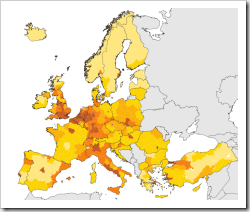
EU Population Density. Image: Wikimedia Commons.On Tuesday, 11 December 2012, Members of the European Parliament (MEPs) backed plans for a 'pan-European' patent – commonly called the ‘unitary patent’ – which will cover 25 of the 27 member states of the European Union (EU). The unitary patent will be enforceable across all participating countries via a single court action.

German MEP Klaus-Heiner Lehne reportedly described the decision as ‘a huge step forward for SMEs’, on the basis that the unitary patent will make the overall process of obtaining and enforcing European patents more affordable.

Under the current system, it is possible to apply for a patent through a central examination process in the European Patent Office (EPO), however the resulting patent must be brought into force (in a process known as ‘validation’) in each individual country required by the patentee.  The European Commission has indicated that a unitary patent could cost as little as €4,725 (referring, presumably, to the official fees only, and not the attorney costs involved in obtaining a defensible patent).  Under the current system, it would cost around €36,000 in official fees to obtain patent rights validated in every member state of the European Patent Convention (EPC).

02 December 2012

Study Shows that Patent Examiners Make a ‘Meaningful Difference’

AU-EP-US (Images by Geoscience Australia, www.ga.gov.au) On 21 November 2012, we attended a seminar in Melbourne presented by Professor Andrew Christie of the Intellectual Property Research Institute of Australia (IPRIA) on the topic of An Empirical Comparison of the Outcome of Patent Examination in the USPTO, the EPO and IP Australia.

While the title may seem dry, Professor Christie provided, as always, an intelligent, engaging and thought provoking presentation (for an earlier example, see Why IP Professionals Must Take ‘Gene Patent’ Opponents Seriously).

IPRIA researchers studied a sample of 494 patent families, on which patents had been granted by all three of the US, European and Australian patent offices in recent years, and for which the main claim of each application was identical in all three offices when originally-filed.  They compared the granted claims with the original claims in each case, to identify whether the examination process had resulted in a ‘meaningful change’ to the scope of the claims.

What the researchers found was that in a majority of cases, across all three patent offices, examination had resulted in the applicant amending its claims in some meaningful way.  This happened most commonly in the USPTO (79% of cases), while the rate of meaningful amendment in the EPO was 68%, and in Australia 57%.  Most of the amendments were what the researchers called ‘integral’ changes, i.e. the narrowing of the main claim by incorporation of additional features or limitations.

20 July 2012

Pharmaceutical Extensions of Term: Is It Time for a Fix?

Extension ladderIn light of news from Europe today, via the IPKat, it is becoming ever more clear that the law in Australia regarding the grant of extensions of term for pharmaceutical patents is flawed, and out-of-step with all of our major trading partners.

We have covered this topic before, most recently in the article Australia Slips Further Out-of-Step on Pharmaceutical Extensions, in which we highlighted the disparity between the Australian law and its Japanese counterpart.  We had previously discussed the difference in approaches between Australia and the US.  A new ruling from the Court of Justice of the European Union (CJEU) now establishes that a similar disparity exists between Australian and European law and practice.

The upshot of this is that patentees in Australia may obtain a shorter term of protection for various classes of pharmaceutical inventions, when compared with trading partners such as the US, Europe and Japan.  While some may see this as a benefit – shorter patent terms mean earlier availability of generic competitors, resulting in lower prices – the flip side is that jurisdictions with lesser protections tend to seen as less attractive for investment.  This may mean less funding for R&D to be conducted in Australia, fewer innovative drug manufacturers operating in this country, and a reduced focus on the specific needs of the Australian community and environment.

If Australia wishes to stand side-by-side with other advanced developed economies, to maintain and develop local capabilities for drug discovery and development, reduce its reliance on primary industry, and progress along the path of becoming a ‘knowledge economy’, we need to ensure that the laws protecting IP in this country are on a par with those nations against which we would compare ourselves.

As matters stand right now, this is clearly not the case when it comes to patent protection for pharmaceutical inventions.

26 February 2012

The Fraught Issue of FRAND III: Antitrust and the Future of FRAND

Trust No One... In Part I of this series, we introduced a few background concepts, namely: FRAND licensing; royalty stacking; and patent pooling. In Part II we focussed on the recent political manoeuvrings of various interested parties, in particular Google, Apple and Microsoft. In this final part, we look at the tension between patents, FRAND licensing agreements and competition law, and what this might mean for the future of FRAND and the current disputes.

On 31 January 2012, the European Commission (EC) announced that it has opened a formal antitrust investigation into whether Samsung’s use of its standards-essential patents constitutes illegal anticompetitive behaviour.  It had been conducting a ‘preliminary investigation’ for some months, as part of which the EC had requested that both Samsung and Apple provide information regarding ‘the enforcement of “standards-essential” patents in the mobile telephony sector’.  Samsung’s response at the time was that it had ‘at all times remained committed to fair, reasonable and non-discriminatory (FRAND) licensing terms’ for its wireless standards-related patents,” and was cooperating fully with the EC.

Since then, both Apple and Microsoft have filed official complaints about similar behaviour by Motorola Mobility (with Microsoft’s complaint also naming Google).

The main competition concern appears to be over holders of standards-essential patents seeking injunctions based on those patents, which they have pledged to make available on FRAND terms.  As discussed in our previous article in this series, we cannot see why a patentee should not be entitled to an injunction in appropriate circumstances, such as when another party has refused to take a license on identical terms to other licensees.  However, Europe’s competition regulator, and companies that do not have large portfolios of standards-essential patents, may well see things differently.

In this final article in our series on FRAND we look at the antitrust complaints, the effect these may have on the balance of power in the ongoing disputes, and what this may mean for future developments.

14 February 2012

The Fraught Issue of FRAND II: the Politics of FRAND

your-way-my-wayIn Part I of this series, we introduced a few background concepts, namely: FRAND licensing; royalty stacking; and patent pooling. In this article we will focus more closely on the recent political manoeuvrings of various interested parties.  Part III looks at antitrust issues and how the current disputes over standards-essential patents might be resolved. 


In particular, recent actions by Apple, Microsoft, Google and the European Commission are of interest:
  1. the reported ‘leaking’ of a letter from Apple to the European Telecommunications Standards Institute (ETSI), dated 11 November 2011, complaining about ‘a lack of consistent adherence to FRAND principles’;
  2. Microsoft issuing a statement promising to make ‘essential patents’ available to competitors at fair and reasonable licensing rates, and promising not to seek injunctions or exclusion orders against unlicensed companies making products that infringe these patents;
  3. reports that Google was informing standards setting organizations that Motorola Mobility's standards-essential patents will continue to be available on FRAND terms after its acquisition of the company, followed closely by a ‘leak’ of Google’s actual letter to the IEEE standards body; and
  4. the decision of the European Commission (EC) to open a formal antitrust investigation into whether Samsung’s use of its standards-essential patents constitutes illegal anticompetitive behaviour.
Notably, all of the companies identified above – not to mention the EC – are large, powerful and well-heeled.  They do not need to make promises or issue complaints, or launch investigations, in order to resolve their differences.  If they wished to do so, they could settle everything amongst themselves behind closed doors. 

Failing this, all of the companies involved are perfectly capable of funding the litigation necessary to have the courts decide their disputes for them.  And we should not forget that this is the role of the court in civil litigation – to reach decisions, based on the law, about disputed matters coming before it, and to make orders as to how the parties are to settle their differences.  In short, parties go to court to get an adjudication because they could not – or would not – sort their issues out for themselves.

12 February 2012

The Fraught Issue of FRAND I: A FRAND Primer

FraughtThis is the first of a three part series of articles.  Part II looks at recent political manoeuvrings of various interested parties, in particular Google, Apple and Microsoft.  Part III covers antitrust issues and how the current disputes over standards-essential patents might be resolved.

Readers who have been following the various mobile device patent disputes over the last few weeks will almost certainly have encountered the term FRAND (‘Fair, Reasonable and Non-Discriminatory’) in relation to patent licensing, and the rights of patent-holders – such as Samsung and Motorola – to sue competitors – such as Apple – for injunctions barring sales of competing products.

However, those not involved in patent licensing might never have heard of FRAND until recently.  A few time-limited Google searches for the term ‘FRAND licensing’ reveals 345,000 results for the past year, with 160,000 for the past month.  Going back, however, there are 104,000 results for the previous 12 months, and only 74,000 for the 12 months prior to that.  Additionally, while the older results are largely legal texts, academic commentary and policy documents, recent results come primarily from the media, including traditional mainstream outlets, as well as online sources such as industry, trade and technology news sites and blogs.

Thanks to some highly-publicised actions by some high-profile entities, FRAND is now pretty much mainstream, at least within the technology media.

The tenor of much recent online commentary is to the effect that the use of FRAND, or ‘standards essential’, patents as weapons in the patent ‘wars’ is at least unethical, probably unconscionable, and possibly illegal.

But before you pick sides in the debate over FRAND, we think there are a few matters you need to mull over, which are not getting the airing they deserve.  And the first, and most important, of these is that most of the current fuss over FRAND is political, not legal, and its media profile is largely the result of carefully-executed PR work by the main players, including Apple, Google, Microsoft, and even the European Commission.

16 January 2012

‘Grace Periods’ – Consequences of Disclosure Before Filing

timeoutAs most readers will be aware, one of the cardinal rules of the patent system is that you should not tell anybody about your invention before you have an appropriate patent application filed.  An invention must be novel and involve an inventive step at the date of first filing.  These requirements are tested against the ‘prior art’, which is generally all information made available to the public, by anyone, at any earlier time.  There is no general, internationally-recognised, exception to this rule just because a prior disclosure has been made by an inventor or applicant.

However, there are a number of countries in which the patent law provides for a ‘grace period’.  For the purposes of this discussion, we define this term as follows:

grace period:- a period of time, prior to the filing of a patent application, during which any disclosures, intentional or unintentional, deriving from the inventor or a subsequent owner of the invention, are unconditionally excused from consideration as prior art against the application.

Our requirement that such disclosures be excused without condition (other than as to timing) is important.  We sometimes see discussions of ‘grace periods’ which include references to provisions relating to unauthorised disclosures, or disclosures at recognised ‘international exhibitions’ or before ‘learned societies’.  The laws of many countries – including many notoriously grace-period-free European nations – contain such provisions.  We do not consider that there is much ‘grace’ in provisions that apply only in narrowly restricted circumstances.

10 January 2012

Canadian Patent Office Concedes, Allows Amazon ‘1-Click’ Claims

Raise the White FlagAfter a mere 13 years, it appears that Amazon.com, Inc is finally to receive a Canadian patent on its famous ‘1-click’ ordering system.  Although a formal notification of patent grant has yet to issue, various observers have noted status changes in Canadian application no. 2246933 in late December, indicating that the Canadian Intellectual Property Office (CIPO) has conceded defeat in its efforts to declare the Amazon claims ineligible for patenting (see, e.g., this report from Canadian intellectual property lawyer Barry Sookman).

In particular, the records show that on 22 December 2011 the status of the rejected Amazon application as ‘dead’ was reversed, and on 28 December 2011 a ‘final’ fee payment was made, which is only required once the application is found allowable.

28 August 2011

Dutch Courts Will Issue ‘Pan-European’ Injunctions: We Were Wrong!

Last Thursday we stated that reports of a cross-border injunction issued by a Dutch court were incorrect, because the European Court of Justice (ECJ) has previously ruled that national courts do not have the power to issue such injunctions in patent matters.

We could follow the lead of the mainstream media, and call this post a ‘clarification’.  But we will not.  Instead, we will call a spade a spade, and admit the simple truth – we were wrong.

Quite aside from anything else, the truth is far more interesting, and only serves to reinforce the main point of our previous article – the Netherlands is a really good place to validate a European patent relating to products that are imported to, or exported from, continental Europe.

25 August 2011

Why Apple Has Patents In The Netherlands & Maybe You Should Too

There is something we need to say right up front in this post, before taking a few steps back to explain in more detail.  Contrary to what you may have read in many places elsewhere, Apple has not obtained an injunction from a Dutch court which is effective (formally or otherwise) across all of Europe.  The injunction, based upon a patent in-force in the Netherlands, and deriving originally from a European patent application, is effective only in the Netherlands.  However, as we shall see, this does not mean that the injunction is necessarily of little significance.

For those who have not been following the story, in the past day or so, Apple has had a mixed result in a court in The Hague in its ongoing battles with Samsung.

On the positive side (for Apple, not so much for Samsung) the Dutch court made a preliminary finding that Samsung’s Galaxy S, Galaxy S II and Ace smartphones infringe an Apple patent relating to a particular ‘photo gallery’ function, and issued a corresponding injunction barring Samsung from dealing with these accused products in the Netherlands.

In many ways, however, the decision might be viewed as a setback for Apple, which was unsuccessful in the following respects:
  1. the court did not find any infringement by Samsung’s Galaxy Tab 10.1, or other tablet devices;
  2. the court also expressed an opinion that Apple’s ‘swipe-to-unlock’ patent was most likely invalid on grounds of obviousness, and therefore refused to make a preliminary finding of infringement against Samsung; and
  3. the injunction does not, in any event, go into effect until 13 October 2011, which provides Samsung with plenty of time to modify its products to remove the offending feature.

18 August 2011

‘Computer Readable Medium’ Claims – Substance Trumps Form

A recent decision of the US Court of Appeals for the Federal Circuit (CAFC) demonstrates a substantial harmony amongst the laws of jurisdictions including the US, Europe (and the UK) and Australia, regarding the determination of patent-eligibility of claims directed to computer program products (such as recorded CD-ROMs, DVDs, magnetic discs, or similar).

Specifically, in all of these jurisdictions, it is the substance of the ‘underlying invention’ which must be considered, and not the specific form (e.g. method, system, apparatus, software product) in which it is claimed.

Just last week, we reported on the recent decision of the Australian Patent Office in Discovery Holdings Limited [2011] APO 56 (see Computer-Implementation No Insurance Against Rejection).  In that case, the invention was, in essence, an insurance plan, which is not patent-eligible subject matter under the ‘manner of manufacture’ test.  The application also included ‘system’ claims, directed to a physical hardware arrangement comprising a suitably-programmed processor coupled to a memory device, and configured to implement the insurance plan.  Despite the fact that a physical apparatus is, on the face of it, patent-eligible (if also novel and inventive), the Hearing Officer applied a test by which the ‘substance’ of the invention (i.e. the insurance scheme) took priority over the form in which it was claimed.

A very similar approach has been taken by the CAFC in CyberSource Corporation v Retail Decisions, Inc (Fed. Cir. 2011, No. 2009-1358).  Here, the invention in the patent assigned to CyberSource was in essence a method of detecting fraud in online credit card transactions by analysing patterns of transactions involving particular cards against network addresses (such as an IP address) from which the transactions originate.  The court found that the method, as claimed, was ineligible for patent protection under 35 USC § 101 because it was so broad and trivial that it could be performed purely by mental steps.  Indeed, CyberSource’s CEO admitted that ‘before CyberSource created a computer implemented fraud detection system, “[w]e could see just by looking that more than half of our orders were fraudulent.”’

Copyright © 2014
Creative Commons License
The Patentology Blog by Dr Mark A Summerfield is licensed under a Creative Commons Attribution-NonCommercial-ShareAlike 3.0 Australia License.