Showing posts with label Professional conduct. Show all posts

02 January 2024

Disciplinary Decision Against Registered Attorney a Reminder of the Importance of Clear Communication and Record Keeping

Pursuit

Back in July, the Trans-Tasman IP Attorneys Disciplinary Tribunal (‘the Tribunal’) issued a decision in relation to a complaint about a registered attorney (‘the attorney’) by a client (‘the client’) in response to which the Trans-Tasman IP Attorneys Board (TTIPAB, a.k.a. ‘the Board’) commenced disciplinary proceedings, bringing nine charges against the attorney.  The full decision of the Tribunal can be found here [PDF, 364kB], while a separate ruling on the penalties to be applied can be found here [PDF, 223kB].  This decision is a ‘first’ in a couple of respects.  It is the first time the Tribunal has sat as a three-member panel (rather than a single decision-maker).  It is also the first time that charges have been brought against an attorney under the Code of Conduct for Trans-Tasman Patent and Trade Marks Attorneys 2018 (‘Code of Conduct’’).  Reference to specific provisions of the Code of Conduct has resulted in charges having a clearer basis and greater precision than may have been the case in past disciplinary proceedings.

There are, in this decision, three important messages – or, one would hope, reminders – for registered trans-Tasman patent attorneys.

First, an attorney’s obligation to ‘disclose to a client all information of which the registered attorney is aware that is materially relevant to work being undertaken for the client’ (paragraph 17 of the Code of Conduct) extends to information about the state of the law.  In this case, the attorney was obliged to inform the client about the difficulties inherent in obtaining patents for business methods (whether or not implemented using computer technology), and about the requirement to provide a sufficient disclosure of a claimed invention along with the potential adverse consequences of failing to do so.  The attorney was found to have satisfied the first of these two obligations, but not the second.

Second, an attorney’s obligation to ‘have appropriate competency’ and to carry out work that they undertake ‘with due skill and care’ (paragraph 14 of the Code of Conduct) includes ‘adequately and properly advising’ a client of anticipated legal risks or difficulties that may be encountered in obtaining IP rights.  Closely related to the first point above, in this case the attorney was obliged to properly advise the client of the significant risk that a patent application directed to a business method would be refused, and of the risks associated with failing to include a sufficient disclosure of a claimed invention in a patent application.  Here, the attorney was found to have satisfied neither of these two obligations.

Third, an attorney’s obligation to ‘maintain standards of professional practice as a patent attorney … that are courteous, ethical and well-informed’ (sub-paragraph 13(2) of the Code of Conduct) encompasses appropriate record keeping.  In this case, the attorney was obliged to keep adequate documentation of the advice that had been provided to the client, whether or not that advice was given in writing.  The attorney was found to have failed in this respect with regard to advice provided in relation to two patent specifications prepared on behalf of the client.

I recommend that all registered and prospective trans-Tasman patent attorneys read the full decision.  It is a credit to the profession that disciplinary proceedings are few and far between, but this makes the rare decisions that we do have all the more important.  What follows is my own overview and comments.

31 August 2020

Beware Unregistered Patent Practitioners!

Smooth CriminalThe title of this article is intentionally ambiguous.  Does it mean that prospective clients should beware of unregistered practitioners?  Or does it mean that unregistered practitioners should beware of getting caught out?  Ideally, it would mean both.  In practice, as things currently stand in Australia, it mostly means neither.  Unregistered practitioners are not a problem that most innovators genuinely seeking professional representation are presently at great risk of encountering.  By the same token, the number of people carrying on business, practising, or acting as patent attorneys while unregistered is so small, and the circumstances in which they are doing so are so limited, that the prospects of any enforcement action being taken against them are essentially nil.

But unregistered practise does happen, and the extent of it is worth keeping an eye on, if only to ensure that it does not become a larger problem in the future.

In this article I will discuss the legal framework around the provision if patent attorney services in Australia, including the information that clients are entitled to receive from registered attorneys.  I will provide some numbers demonstrating the relatively small scale of the problem of unregistered practitioners.  And I will explain the enforcement regime, and potential penalties that can be imposed upon people found to be acting as patent attorneys without being appropriately qualified and registered.  Additionally, I will report on some feedback I obtained from IP Australia on their current approach to unregistered practitioners, and the prospects of any change in the foreseeable future.

25 February 2018

How Much Should a Patent Application Cost?

Juggling DollarsI recently wrote about IP Australia’s new Engaging an Attorney Toolkit, which is an online ‘guide on how, why, what and when to engage your patent attorney’ that is intended primarily to assist people and businesses with minimal knowledge and experience of the patent system in preparing to engage with an attorney.  The toolkit includes a section entitled ‘6 Myths about getting a patent’, the first of which is that ‘a patent will cost me hundreds of thousands of dollars’.  The myth-busting reality, according to the toolkit, is that ‘prices vary, but the cost of drafting and filing an initial patent application (known as a provisional application) for your invention typically costs somewhere between $3000 and $6000.’

Is this information correct?  Or – as one commenter suggested – is a price range of $3000-$6000 liable to create unrealistic expectations, particularly for those prospective clients looking to engage with a major attorney firm?

The toolkit’s estimate is not, in fact, unreasonable, in the sense that the median cost to have a patent specification drafted by an Australian patent attorney is almost certainly somewhere in the range given.  But it is also true that costs for a substantial proportion of all specifications drafted in Australia would fall outside this range.  There are individual attorneys and small firms that might be willing to draft a patent specification for a technically simple invention for as little as $2000.  At the other extreme, an experienced attorney at a top-tier firm might end up charging $12,000 or more for a specification for a complex invention in a sophisticated and challenging field of technology.  Since many attorneys charge by time, and hourly rates vary significantly with experience and across different firms, there are no hard-and-fast rules about what a patent application may cost.

There are, however, hard-and-fast rules about what a patent attorney must tell a client up-front about who they are, how they work, and how much they will charge.  It is timely to mention this, because the new Code of Conduct for Trans-Tasman Patent and Trade Marks Attorneys 2018 just came into effect, on Friday 23 February 2018.  All registered patent attorneys in Australia and New Zealand are subject to the Code, which requires (among other things) that they inform each new client, in writing:
  1. that they are, in fact, registered as a patent attorney, and are bound by the Code;
  2. that they have appropriate competency to perform the work required by the client, including suitable expertise in the technology of the invention;
  3. whether the attorney works for an incorporated firm and, if so, whether it is privately or publicly owned;
  4. whether the firm for which the attorney works is part of a group of commonly-owned firms and, if so, the identity of the other members of the group; and
  5. the procedures, timing and estimated cost of doing the work required by the client.
(With regard to registration, prospective clients should also be aware that Australian law effectively prohibits anybody who is not a registered patent attorney from drafting patent specifications on behalf of others.  In particular, under subsection 201(1) of the Australian Patents Act 1990 only a registered patent attorney or legal practitioner may act as a patent attorney in Australia, and section 202 further provides that, other than in very specific circumstances, ‘a legal practitioner must not prepare a specification, or a document relating to an amendment of a specification’.)

So any prospective client can be assured of being made aware of anticipated costs before any work commences, and can, if they wish, shop around for the best deal.  But how is a newcomer to the patent system to determine what is reasonable, given the very wide range of cost estimates that may be provided?

15 January 2017

The Importance of Continuing Professional Education (And of Not Lying About It!)

StudyingIf you are the client of a patent attorney, you probably expect that your experienced (and, perhaps, expensive) professional adviser is keeping up-to-date with the latest developments in their chosen field. Indeed, in many professions some form of continuing professional education (CPE) – alternatively known as continuing professional development (CPD) – is not just an expectation, it is a mandatory requirement.

The Australian patent attorney and trade marks attorney professions are among those in which a mandatory CPE requirement exists.  Some outsiders might be surprised, however, to learn that this has only been the case since 1 July 2008, and that regular compliance audits of attorneys only commenced in 2011. It has therefore been just a little over five years that anybody has been monitoring the efforts of Australian attorneys to keep our skills and knowledge current and relevant.

The formal CPE requirements are fairly minimal, being just 10 hours per year in order to remain registered as a patent attorney or trade marks attorney only, or 15 hours for patent attorneys who wish to remain registered as both.  Even so, I am occasionally surprised to encounter attorneys who do not appear to be as familiar with recent developments that I would have expected.

I do not imagine that anyone who reads this blog regularly will be surprised to hear that I believe that CPE is incredibly important.  Since entering the profession as a trainee in 2002, I have been on a constant learning curve.  The Australian law has, of course, evolved over this time through legislative change and through interpretation and development by the courts.  Keeping abreast of developments in other major jurisdictions, including the US, Europe, and China, has also been vital, given that many Australian companies wish to pursue IP rights in key export markets.  And the patent attorney profession itself has changed considerably, with clients having an increasing expectation that their attorneys will have a sound understanding of their business strategies and objectives, and be able to tailor a IP strategy recommendation accordingly.

The reason I have been thinking about the importance of CPE is a story I read recently out of the US, about a Californian IP attorney who falsely claimed that he had completed his mandatory 25 hours of continuing legal education (CLE) – notably quite a bit more than is expected of Australian patent attorneys, but still not hugely onerous – when he had, in fact, completed none!  Which made me wonder, could it happen here?

19 June 2016

Attorneys Should Keep Clients Informed – The One Lesson From a Very Odd Disciplinary Proceeding

Speak See Hear No EvilThe Patent and Trade Marks Attorneys Disciplinary Tribunal has issued a decision finding a senior member of the Australian patent attorney profession guilty of ‘unsatisfactory professional conduct’ for failing to inform two clients in a timely manner of problems with patent applications in the United States and India.  Indeed, the attorney in question effectively pleaded guilty to the charges brought against him in this regard.  He was, however, found not to be guilty of more serious charges of ‘professional misconduct’ in relation to the same matters.  (For an explanation of the difference between the two charges, see my earlier article What To Do If You’re Unhappy With An Australian Patent Attorney.)

A copy of the Tribunal’s decision can be found on the website of the Professional Standards Board for Patent and Trade Marks Attorneys, or downloaded directly via this link [PDF, 322kB].  The name of the attorney in question is, of course, revealed in the decision.  However, for reasons that should become apparent, I will not be naming him in this article.  To quote from the Tribunal’s decision, he ‘has in my view already been through enough’ and it would be inappropriate in light of that finding to expose him to potential further embarrassment, along with the additional damage to reputation that may result from having negative information reflected disproportionately in internet search results.

I have, in fact, given very careful thought to whether I should comment of the Tribunal’s decision at all.  In deciding to do so, I have taken into account the fact that disciplinary decisions in relation to the conduct of Australian patent and trade marks are very rare (there have been only seven since the Tribunal was created), and each is therefore significant in what it may teach attorneys and their clients about expected standards of conduct.

In this case, the lesson is a simple one: when things go wrong – and things most definitely do go wrong, from time-to-time – attorneys need to think about how they communicate with their clients, and about keeping them informed of what is happening in relation to their IP rights, even if that may mean delivering potentially alarming news!

31 May 2015

What To Do If You’re Unhappy With An Australian Patent Attorney

Shouting manWhat do you do if you have a complaint about your Australian patent attorney?

The first thing to be aware of is that most Australian patent attorneys are not lawyers.  Furthermore, even if your patent attorney is one of the few who is also qualified as a lawyer, they may not be acting in that capacity when assisting you with your patent matters.  They are therefore unlikely to be subject to the disciplinary regime that applies to lawyers.  You will not advance your cause by threatening to make a complaint to the relevant regulatory body for lawyers in the state in which your attorney is practising!

The body charged with handling formal complaints against Australian Patent and Trade Marks Attorneys under the Australian Patents Regulations 1991, is the Professional Standards Board for Patent and Trade Marks Attorneys (PSB).  The PSB has the power to investigate complaints (and to compel the attorney to cooperate with the investigation), and to refer a complaint to the Patent and Trade Marks Attorneys Disciplinary Tribunal for adjudication. 

The PSB (which ought to know, since it receives a number of complaints each year) indicates that most disputes between patent attorneys and their clients fall into two categories:
  1. disputes where there is evidence that the attorney has acted inappropriately; and
  2. disputes where the client has not achieved their objectives, or there is a dispute over costs, unpaid bills or other aspects of the relationship.
If your issue falls into the first category, then you may well need to take your complaint to the PSB.  Indeed, if your attorney has engaged in ‘unsatisfactory professional conduct’ or ‘professional misconduct’ (see below), and refuses to acknowledge or address your concerns in any meaningful way, then I would encourage you to contact the PSB.  Attorneys who genuinely lack an understanding and appreciation of their professional obligations to their clients and the community at large are liable to bring the profession as a whole into disrepute.  I therefore support such cases being dealt with via the formal disciplinary mechanisms provided under the Patents Act 1990 and the Regulations.

However, the majority of Australian patent attorneys are diligent, ethical and professional.  While we are also human, and therefore not immune from the occasional lapse, for the most part we care about our clients, and want our professional relationships to be effective and mutually beneficial.  So, in most cases, the PSB should not be the first port of call for a disgruntled client.

That being said, much of this article is about what you need to know, what you can expect, and what you can realistically hope to achieve, before taking a complaint to the PSB.

10 June 2013

Professional Standards Board Releases Draft Code of Conduct

Know the RulesThe Intellectual Property Laws Amendment (Raising the Bar) Act 2012 brought major changes to the way in which Australian patent and trade marks attorneys are able to conduct business, such as permitting us to incorporate. 

One of the key changes was to make the Code of Conduct, administered by the Professional Standards Board for Patent and Trade Marks Attorneys (PSB), into a statutory instrument.  Previously, the Code was published by the PSB, and was taken into consideration in disciplinary proceedings.  However, as the Explanatory Memorandum accompanying the Raising the Bar Bill foreshadowed:

In the interests of ensuring transparent standards for attorneys and their clients, it is desirable that attorneys be legally bound by the Code and that it be clear in the primary legislation that the PSB is entitled to take a breach of the Code into account in assessing a disciplinary complaint against an attorney.

Accordingly, the amendments explicitly permit the regulations to provide for assessing attorneys’ professional conduct against standards set by the PSB. This will enable regulations to be made clarifying the obligation of all attorneys (including new incorporated attorneys) to comply with the Code.

The wording of the amendment is intended to encompass amendments to the Code as are made from time to time, to avoid the necessity of amending the legislation every time the Code is amended. The Code will be registered as a Legislative Instrument under the Legislative Instruments Act 2003 (Cth).

Since a new Code was not finalised when the Raising the Bar reforms commenced, on 15 April this year, the existing 2008 Code was simply registered under the Legislative Instruments Act, with the goal of finalising a new Code to commence on 1 August 2013.

On 7 June 2013, the PSB announced that an Exposure Draft of the new Code of Conduct [PDF, 306kB] is now available and open to public comment until 12 July 2013.

Patent and trade marks attorneys, as well as clients and other interested stakeholders, would be well-advised to review this document.  Now is the time to ensure that the Code meets everybody’s needs!

22 December 2012

‘Please Do Not Offer Equity, As Refusal Often Offends’

Offended“We can’t afford to pay a lot now, but this is going to be really big.  There will be much more work coming in the future…”
No doubt every patent attorney reading this will have heard something along these lines at some point.  Perhaps, indeed, on numerous occasions.  And we know where it is almost always leading: the prospective new client, whom we are meeting for the first time, and about whom we know nothing, is about to ask us to work for a discounted rate, or to provide a fixed quotation (no matter how much of our time they want to take up).  Then at some point they might suggest we take an equity position in their new business, in lieu of a fee.  Or work on a contingency basis, which amounts to the same thing since we would probably want to charge a premium as compensation for the fact that we will only get paid if the business does, in fact, succeed.

Here is a tip if you are a potential client thinking along these lines: we are – to paraphrase Taylor Swift – never, ever, ever going to do it.  Like… ever!

So if you want to save us both the embarrassment of refusal, the polite course is not to bring it up in the first place.

There are many good reasons for this, perhaps the most straightforward being that if we wanted to be in the business of investing in start-up companies, we would probably be working in venture capital.  Patent attorneys provide professional services, i.e. we sell our time and our expertise.  For the most part, patent attorney firms are small-to-medium enterprises (SMEs, just like many of our clients), with around 100 or fewer employees, annual revenue well within the A$20 million used by the Australian Tax Office as the definition of an SME, and for which cash flow is the lifeblood needed to pay the monthly bills (mainly salaries).  If we are not paid for the work we do, when we do it, we will not be in business in that mythical future when the work is flowing, like the Nile in flood, from your successful start-up venture!

But there is another very important reason why a patent attorney might not want to be investing in, or financing, your new business, which is that it is very likely to lead to a conflict of interest that could prevent the attorney from continuing to act for you.  How this can come about – and the fact that it is not merely some hypothetical concern of overly-conservative practitioners – is amply demonstrated by a recent case decided in the Queen’s Bench Division of the England and Wales High Court: Ford & Warren v Warring-Davies [2012] EWHC 3523 (QB) (12 December 2012).

29 November 2012

Australian Patent Attorneys Urged to Get More Ethics Training

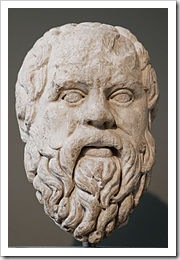
Socrates Revised guidelines for Continuing Professional Education (CPE) issued on 28 November 2012 by the Professional Standards Board for Patent and Trade Marks Attorneys (and soon to appear on the Board's web site) require registered practitioners to undertake a minimum of one hour of ethics or professional conduct CPE in each year.  Currently, the minimum total CPE requirement is 10 hours for practitioners registered as either patent attorneys or trade marks attorneys, and 15 hours for practitioners registered as both.

While one hour per year may not seem like much, this is a significant step for the profession, both practically and symbolically.

Part of the background to the new guideline is a recent decision of the Disciplinary Tribunal, which found a senior Australian patent practitioner (now retired) guilty of unsatisfactory professional conduct, for failing to resolve a conflict of interest between two clients of his Adelaide firm, both of which had developed directly competing inventions.  We reported on this decision back in April this year (see Senior Patent Attorney Found Guilty of ‘Unsatisfactory Conduct’).

One consequence of the Tribunal's decision was to turn a spotlight on the lack of agreement amongst patent and trade marks attorneys in Australia as to exactly how and when conflicts arise, and how they should be identified and resolved.  The Professional Standards Board provided evidence of one senior member of the profession who testified to his opinion that the practitioner's firm was clearly in a conflict situation at least from the time that one of the clients discovered, and complained about, the firm’s acting for the other client in August 2007.  However, two other senior members of the profession provided completely contrary evidence on behalf of the practitioner!

15 April 2012

Senior Patent Attorney Found Guilty of ‘Unsatisfactory Conduct’

Right and wrongThe Disciplinary Tribunal has found a former partner of a firm of patent and trade mark attorneys in Adelaide guilty of unsatisfactory professional conduct, for failing to resolve a conflict of interest between two clients, in breach of clause 3.2.8 of the Code of Conduct for Patent and Trade Marks Attorneys [PDF 190kB].  A second attorney – who was only recently qualified, and who had been working under the supervision of the senior attorney – was also charged by the Professional Standards Board, however that charge has been dismissed.

(For readers wanting more information about the disciplinary procedures in Australia, see our recent article So You Wish to Register a Complaint?)

Naming names?

We have avoided naming any of the parties involved in this case.  This is not to conceal the identities of the attorneys against whom the complaint was made, or their firm.  They are named in the Tribunal’s decision, which is available for all to read from the link below.

The Tribunal determined that no further orders of disciplinary action should be made.  In doing so, it took account of the fact that the powers to discipline a practitioner are intended to protect the community, rather than as a punishment.  There are, of course, inevitably punitive consequences to any adverse finding, for example damage to reputation, regardless of the extent of disciplinary action.

It is not our place to question the Tribunal on this finding, and there does not appear to be any reason to do so.  Naming the parties in a blog which tends to rank highly in web searches directed to Australian patent law and practice might result in unintended adverse – and therefore punitive – consequences for those parties.  We have therefore elected not to name names here, and trust that readers will understand and respect this decision.
Some of the key lessons from the Tribunal’s decision are:
  1. while it is common (probably unavoidable) that attorneys and firms in a market of Australia’s relatively small size may act for multiple clients which may be commercial competitors, there is no general agreement in the profession as to precisely how and when a situation of conflict arises with regard to such clients;
  2. the duty to avoid conflicts is fiduciary in nature, i.e. it arises from the duty of the attorney to give undivided loyalty to the client, and always to advise and act in the client’s best interests;
  3. a conflict therefore inevitably arises when two clients have conflicting interests, for example if advice given to one client may impact adversely on another, or if an attorney is aware of confidential information relating to one client which would influence the advice given to the other client;
  4. the duty to avoid conflicts is not limited to individual attorneys, but extends to a firm, even if there is no explicit information-exchange between different attorneys acting for the clients in question; and
  5. on a practical level, if a client decides that an attorney has a conflict, and asks for their files to be transferred to another firm, it is very likely that a great deal of trouble, expense and distress may be avoided by simply complying with the request, rather than arguing the point!
Despite the finding of guilt, no disciplinary action has been ordered against the senior attorney.  The Tribunal considered that the attorney’s conduct, ‘while serious, is at the lower end of the scale of seriousness for such misconduct’ and ‘is the only proven allegation of misconduct that has been made against [the attorney in a] very long career as a registered patent attorney.’ 

The Tribunal also concluded that the senior attorney (and presumably the junior attorney also) would now have a fuller understanding of the duty, and that of the firm, ‘to avoid situations of conflict, or possible conflict of interest and the duty to resolve any such situation.’

The Tribunal’s decision – which is available on the web site of the Professional Standards Board [PDF, 2.4MB] – should be compulsory reading for all Australian registered and trainee patent and trade marks attorneys.  It will also be useful to providers of legal and other professional services, in order to clarify the issues around conflicts of interest.

12 March 2012

So You Wish to Register a Complaint?

Norwegian Blue?What do you do if you have an issue with a Registered Australian Patent or Trade Marks Attorney?

Well, firstly you should raise it with the attorney.  The vast majority of problems which arise in the client-attorney relationship are the result of misunderstandings.  And while the attorney bears primary responsibility for keeping the client informed of actions, recommendations and anticipated costs, there are inevitably circumstances in which this is challenging, and breakdowns of communication occur.  If the relationship is otherwise on solid ground, these matters are usually easy to resolve.

But if this fails, or the concerns are more serious – typically implying a loss of the necessary trust between the client and the attorney – what recourse do you have?

If the attorney is a member of the Institute of Patent and Trade The Institute of Patent and Trade Mark Attorneys of Australia (IPTA), the matter may be brought to its Ethics and Disputes Committee, which considers complaints made to the Institute against any of its members.  However, membership of IPTA is not compulsory or universal, and the Institute has no formal powers to impose sanctions outside of the organisation.  Nonetheless, IPTA may act as an effective mediator when attorney and client have ceased to communicate productively.

The body charged with handling formal complaints against Australian Patent and Trade Marks Attorneys under the Australian Patents Regulations 1991, is the Professional Standards Board for Patent and Trade Marks Attorneys (PSB).  The PSB has the power to investigate complaints (and to compel the attorney to cooperate with the investigation), and to refer a complaint to the Patent and Trade Marks Attorneys Disciplinary Tribunal for adjudication.  The Tribunal has the power to impose sanctions of: reprimanding the attorney; suspending registration for up to 12 months; or cancelling registration.

31 July 2011

NZ High Court Clears Patent Attorneys of Negligence

The Baby Hammock Co Limited v AJ Park Law [2011] NZHC 686 (13 July 2011)

The Baby Hammock Co Limited (‘BHC’) first sought advice from New Zealand’s largest intellectual property law firm, AJ Park, after one of its principals, Mrs Sarah Hannah, got to chatting with her neighbour on a flight from Wellington to Auckland, who happened to be an employee of the firm.

This was back in August of 2004. 

That chance meeting led, in the end, to a number of days in the New Zealand High Court in February and March this year, with BHC accusing AJ Park of negligence and breach of fiduciary duty, and claiming damages for loss of profits in the astonishing amount of $53,105,743, as well as additional exemplary damages.

On 13 July 2011, Justice Rodney Hansen in the Auckland Registry of the High Court issued his judgment, finding that:
  1. AJ Park was not negligent in any advice that they provided to BHC;
  2. even if they had been negligent, any such negligence would not have been causative of the lack of success in business of BHC;
  3. while AJ Park owed a fiduciary duty both to BHC, and to another client, Hushamok, which was a competitor to BHC, it was at no time in breach of its duty to BHC;
  4. the fact that there may be a potential for future conflict between clients is not, in itself, sufficient to establish a breach of fiduciary duty;
  5. even if there had been a breach of fiduciary duty, BHC could not have demonstrated any loss that had occurred as a result of the breach;
  6. BHC’s calculations of lost profits were fanciful, being based on flawed assumptions, inconsistent with the historical performance of the market for BHC’s products, and in any event BHC had no capacity to access the market because, at the relevant time, the company was chronically under-capitalised and technically insolvent; and
  7. exemplary damages would not have been awarded because, even if AJ Park had been in breach of its fiduciary duty to BHC, its conduct would have, at worst, involved an error of judgment, whereas exemplary damages are only appropriate in cases of outrageous conduct.
We suggest that this decision should be compulsory reading, in its entirety, for all Australian and New Zealand patent attorneys.  The following is intended only as a general discussion of various issues raised by the decision, which will hopefully be of some value to attorneys, clients and others alike.

Copyright © 2014
Creative Commons License
The Patentology Blog by Dr Mark A Summerfield is licensed under a Creative Commons Attribution-NonCommercial-ShareAlike 3.0 Australia License.