Showing posts with label Validity. Show all posts

15 October 2017

Australian Patent Law Contains, Includes, and Comprises Dangers for Foreign Applicants

Balancing ActIt is the function of a patent claim to define the scope of the invention protected by the patent.  Infringement occurs when an accused system, article, or process is covered by the particular terminology used in a patent claim.  Many inventions are combinations, e.g. a system, article, or process made up of two or more elements, components, or steps that work together to provide some new and useful function or result.  Claims directed to such inventions must therefore recite the relevant combination.

A generic example of a combination claim is: ‘a widget including element A, element B, and element C.’  In this example, the word ‘including’ is a transitional term signifying that what follows is a list of elements, each of which must be present in a widget that falls within the scope of the claimed invention.

The choice of transitional terms in combination claims can be significant.  To illustrate, if I tell you that my breakfast this morning included coffee and toast, you would probably not assume that this was necessarily the entire content of my breakfast.  My statement would be true if I also had cereal and juice.  Similarly, if I were to add that my coffee contained milk, you might suppose that I could also have added sugar.  On the other hand, if I were to say that my breakfast consisted of coffee and toast, you would naturally understand me to be saying that this is all that I had for breakfast today.

But what if I were to tell you that my breakfast comprised coffee and toast?  If you are a patent attorney, and you know that I am also a patent attorney, then in all likelihood you would understand that I am not excluding the possibility that my breakfast included other elements.  If you are not a patent attorney, then you might think it odd that I would choose an uncommon and potentially confusing word like ‘comprised’, when I could just as easily have been clear and said ‘included’ or ‘consisted of’.

The fact is that in a number of major jurisdictions the transitional term ‘comprises’ (and variations, such as ‘comprising’) is essentially regarded as a ‘term of art’ in patent drafting.  The US Patent and Trade Marks Office Manual of Patent Examining Procedure, Section 2111.03, lists a number of rulings of the US Court of Appeals for the Federal Circuit (CAFC) to the effect that the term ‘comprising’ is ‘inclusive or open-ended and does not exclude additional, unrecited elements or method steps.’  In the 1997 case of Genentech, Inc. v Chiron Corp. 112 F.3d 495 the CAFC expressly stated that: ‘”Comprising” is a term of art used in claim language which means that the named elements are essential, but other elements may be added and still form a construct within the scope of the claim.’  Similarly, the European Patent Office Guidelines for Examination, Part F, Chapter 4, Section 4.21, states that: ‘While in everyday language the word “comprise” may have both the meaning “include”, “contain” or “comprehend” and “consist of”, in drafting patent claims legal certainty normally requires it to be interpreted by the broader meaning “include”, “contain” or “comprehend”.’

Internationally, then, the settled expectation of many practitioners drafting patent specifications and claims is that the words ‘comprises’ and ‘comprising’ can safely be used to indicate that the elements or steps recited in a combination are not intended to be exhaustive.  Thus a claim defining ‘a widget comprising element A, element B, and element C’ will be infringed not only by an unauthorised widget consisting only of elements A, B, and C, but by widgets including these elements along with one or more additional elements that are not essential to the functioning of the claimed invention.

Those international practitioners may therefore be surprised to learn that ‘comprises’, and its variants, enjoy no such presumption of non-exhaustiveness in Australia, as a judge of the Federal Court of Australia recently reminded us in Nichia Corporation v Arrow Electronics Australia Pty Ltd (No 4) [2017] FCA 864.

21 February 2016

‘It Is Found’ That Implying Experiments Have Been Conducted May Be Fatal to a Patent

EperimentA recent decision, in an appeal to a Full Bench of the Federal Court of Australia, provides a cautionary tale about how even the most seemingly innocuous language employed in a patent specification can ultimately bite the patentee on the backside!  (Morellini v Mizzi Family Holdings Pty Ltd [2016] FCAFC 13.)

In this case, the simple phrase ‘it is found…’ was interpreted by the court to imply that systematic experiments had been carried out in order to arrive at the stated findings.  There was, however, no evidence that anyone had ever conducted any relevant experiments.  The court was not swayed by the patentee’s argument that the ‘finding’ in question was ‘readily capable’ of interpretation as the inventor’s own personal experience and conclusions.  In a unanimous decision, the judges determined that the phrase constituted a false suggestion or misrepresentation which materially influenced the decision of the Commissioner of Patents to grant a patent which was, as a result, invalid.

The particular difficulty for the patentee in this case was that the statement at issue was relied upon to establish novelty, and the presence of an inventive step, over the prior art.  Clearly, a point of difference can be sufficient to support the grant of a patent, but only if that difference imparts some material and previously unrecognised advantage that the inventor can claim to have contributed to the art.  If (as the court seems to have concluded here) the inventor has chosen particular parameters, without taking any steps to verify their significance, a representation that there is some unprecedented new finding involved may be material to the decision to grant a patent, at least if the representation is relied upon as basis for a patentable distinction over the prior art.

There are lessons in this decision for all those involved in the preparation and filing of patent specifications, including the attorneys responsible for drafting them, and the clients responsible for reviewing drafts before they are finalised for filing.

22 March 2015

When Does ‘Novel’ Not Mean ‘New’?

News News NewsOne of the fundamental requirements for an invention to be patentable is that it must be novel.  The word derives ultimately from the Latin novus or novellus, meaning ‘new’.  It has other counterparts in modern Romance languages, including Spanish (novillo), French (nouveau), Italian (novello) and Romanian (nuia).  In English, the word tends to connote something a little more nuanced than merely ‘new’ – perhaps a note of surprise, unexpectedness or particular originality.  It also has the alternative meaning of a long-form work of fiction, contracted from the Italian novella storia.

And then there is the meaning of ‘novel’ within patent law, where it means ‘new’ in the relatively narrow sense of not having been previously publicly known or discovered in essentially the same form subsequently claimed as an invention.

The key word here, however, is ‘publicly’.  Patents can be – and have been – validly granted for inventions that had been known and used by one or more other people prior to the later inventor filing a patent application.  Basically, if an invention exists, but has not been made available to the public, then it remains available for someone else to independently invent and, if they so wish, to patent.  This could happen because the invention has been locked away in the original inventor’s basement and never disclosed or, in a commercial setting, because the company responsible for its original development made a deliberate decision to retain the invention as a trade secret.

So far this may seem quite sensible.  However, consider the following scenario.  A first person imports a product from overseas, and offers it for sale in Australia.  Samples of the product are placed on display in a showroom, where they are seen by many potential buyers, however none are actually sold.  The product has an internal mechanism that cannot be seen during normal use (or display), but which can be readily accessed for inspection or servicing, should anyone wish, or need, to do so.  The product is subsequently withdrawn from sale.

Later on, a second person develops, and files a patent application for, an equivalent product having an internal mechanism with essentially the same features as the earlier unsuccessful imported product.  A patent is granted.

The question, then: is this granted patent valid, or does it lack novelty in light of the earlier imports?  More specifically, is it enough that the imported products were on public display, such that anyone who wished to could have inspected and disassembled them (either before or after purchase), or is it necessary to show that some member of the public actually did inspect and disassemble a sample in order to show that the later patented invention is not novel?

The answer, according to a recent ruling of a Full Bench of the Federal Court of Australia, is that it is necessary to establish, by evidence, that some person was ‘in fact interested in the internal componentry’ or ‘was in fact free to examine the product as he or she pleased’, or ‘actually had the opportunity to ascertain the internal workings’ of the product: Damorgold Pty Ltd v JAI Products Pty Ltd [2015] FCAFC 31.

01 March 2015

Patentee Punished for Failing to Heed Attorney’s Recommendation

SadnessA judge of the Federal Court of Australia has denied a request by patentee Les Laboratoires Servier (‘Servier’) to amend a patent in order to avoid cancellation for failure to disclose the best method of performing the claimed invention solely because it opted not to follow a recommendation made by its Australian patent attorneys during examination of the original application back in 2004: Apotex Pty Ltd v Les Laboratoires Servier (No 4) [2015] FCA 104.
Just be absolutely clear here, the court found that the requested amendment was allowable in principle (i.e. was not precluded by any provision of the Patents Act 1990), and that in all other respects Servier had acted promptly and appropriately, such that the court would otherwise have exercised its discretion to allow the amendment.  The one and only reason given for refusing the amendment request was that the patent attorneys had suggested that a similar amendment might be made prior to grant of the patent, but that the responsible person within Servier was of the opinion that the disclosure within the patent specification was adequate, and that the amendment was therefore not necessary.  The court bluntly describes this as ‘an error on her part’ (at [180]).

I find this decision frankly extraordinary, and I fully expect that it will be appealed.  The patent in question covers the compound perindopril arginine, which is the active ingredient in the brand name drug COVERSYL, which is used to treat hypertension (i.e. high blood pressure).  This patent, and foreign counterparts, have been extensively litigated in Australia and overseas.  It is clear that there is a great deal at stake in this case, and Servier is unlikely to abandon its efforts to save a patent that has been found, in all other respects, to be valid.

I should say, at this point, that the patent attorney firm in question here was Watermark, where I work.  However, Watermark no longer acts for Servier in relation to this matter, and nothing that I shall say in this article is based on anything other than publicly available information.  Opinions, as always, are my own, and should not be taken as representing the views of Watermark, its Principals, management, other employees or clients (past or present).

10 August 2014

Rainbow Loom Patents Under Attack in Australia

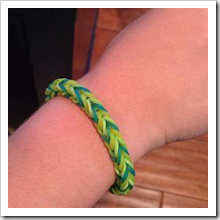
Rainbow LoomUnless you have been living under a rock, or you literally know no tween-age children (or their parents), you have probably encountered the loom band craze in some form or another.  The brightly coloured rubber bands, which are woven into wearable items such as bracelets using a small plastic loom, have reportedly become one of the top ten toys of all time, and earned their Malaysian-born and US-based inventor, Cheong Choon Ng, well in excess of $100 million.

The original loom band products are marketed by Ng's company under the brand name RAINBOW LOOM.  However, there is no shortage of imitators hoping to cash in on the loom band craze.  Late last year Ng sued Zenacon LLC, makers of FUNLOOM, LaRose Industries LLC, makers of CRA-Z-LOOM and Toys 'R' Us, distributors of CRA-Z-LOOM, alleging (among other things) that the rival products infringe his US Patent No. 8,485,565, which was granted on 16 July 2013.

In Australia, however, it appears that Ng may have a battle on his hands even to secure enforceable patent rights.  Ng's primary patent application is no. 2011324026, which is derived from international PCT application no. PCT/US2011/041553 originally filed on 23 June 2011.  And while this application is encountering some resistance from the Australian patent examiner, Ng has (so far) filed no fewer than five associated divisional innovation patents!

However, all of the innovation patents are currently under attack by various parties who have filed prior art information and corresponding submissions under the provisions of section 28 of the Patents Act 1990.  One of the five (no. 2014100245) has already even been the subject of an application to the Federal Court of Australia, following what appears to have been a rather unfortunate error on the part of the Patent Office (more on that later).

Certainly, there is big money in small coloured rubber bands, and it is unlikely that either Ng, or any of the copycat competitors, are going to give in without a fight.

06 January 2014

Patent Fails to Disclose ‘Best Method’, But Will It Be Revoked?

Apotex Pty Ltd v Servier Laboratories (Aust) Pty Ltd [2013] FCA 1426 (24 December 2013)

Coversyl ArginineAn Australian Federal Court judge has found that the specification of Australian patent no. 2003200700 does not disclose the ‘best method’ of performing the claimed invention (in this case, the compound perindopril arginine, which is sold under the name COVERSYL as a drug to treat hypertension).  The patent is owned by French pharmaceutical company Les Laboratoires Servier, and was challenged by generic drug manufacturer Apotex, which wishes to bring its own version of the drug to market.

Not surprisingly, Apotex applied to the court for revocation of the Servier patent on a number of additional grounds: lack of novelty; lack of inventive step; lack of fair basis for the claims in the description; and that the patent was obtained by false suggestion or misrepresentation.  Apotex failed on all of these grounds, succeeding only in persuading the court that the patent did not describe the best method known to Servier of performing the invention.

Lack of novelty, inventive step or fair basis is assessed on a claim-by-claim basis, i.e. for any of these grounds the patent might have been only partially invalid.  Failure to disclose the best method, on the other hand, would usually be expected to result in the patent being declared wholly invalid (I shall explain why below), making Apotex entirely successful in its application for revocation of the Servier patent.

Interestingly, however, in this case the court has stopped short of immediately ordering revocation of the patent.  The judge (Justice Rares) has instead indicated that he will hear further submissions from the parties on the question of appropriate relief, as well as on the matter of an award of costs.

18 November 2013

What’s Up Down Under With Apple and Samsung?

Smart devicesLast week, the Federal Court of Australia quietly published a further interim judgment in the ongoing litigation between Apple and Samsung.  Samsung Electronics Co. Limited v Apple Inc. [2013] FCA 1142 was officially decided in 4 November 2013, however publication was delayed to give the parties an opportunity to review the judgment and request that any confidential information be redacted. 

The new judgment is, I am afraid, not very exciting reading, particularly for the lay-person.  It is a decision on the rather dry subject of whether or not Samsung should be allowed to submit further evidence relating to ongoing negotiations conducted with Apple since the commencement of the litigation.  Any content in the judgment which would have made for interesting reading – such as, for example, the terms of proposed licensing arrangements between Apple and Samsung – has been blacked out.

The answer that the court gave to Samsung, incidentally, is ‘no’.  Samsung has already filed an application for leave to appeal the decision, and a hearing on this application will take place on 21 November 2013.

However, this seems as good an opportunity as any to review the history of the Australian Apple/Samsung litigation, and provide an update on its current status. 

As matters stand right now, it does not seem likely that any judgments will be handed down on substantive issues, such as whether Samsung or Apple infringe any of each other’s patents, or whether those patents are valid, until at least the first half of 2014.  In one of the ongoing matters (to which the latest interim decision relates) there are hearing dates set down for a further 41 days, extending into April next year.  Any judgments that are issued will almost certainly be appealed by at least one of the parties, meaning that any final determination in any of the cases is unlikely until at least the second half of 2014, and possibly not until 2015.

It is worth bearing in mind that all of these cases relate to products which are already superseded.  Indeed, some of the allegedly infringing products – such as Samsung’s original Galaxy Tab 10.1, and Apple’s iPhone 3GS – are now two or more generations old.  And, contrary to what you may read in some sections of the media, no ruling in these cases will extend to newer products merely because they appear to include similar features.  A patentee always bears the burden of proving that infringement is occurring.  A court will not ‘infer’ infringement based on a different product, no matter how similar the two may appear.

Which leaves me wondering still, as I have done before, what exactly is the purpose of all this litigation – in Australia and elsewhere – and why do Apple and Samsung seem unable to reach any kind of workable settlement?

21 June 2013

‘Raising the Bar’ Raises Its Head in Federal Court

Reckitt Benckiser Healthcare (UK) Ltd v GlaxoSmithKline Australia Pty Ltd [2013] FCA 583 (28 May 2013)

KilroyLess than two months after the majority of provisions of the Intellectual Property Laws Amendment (Raising the Bar) Act 2012 came into effect, the revised law has been considered in a decision of the Federal Court of Australia.

Two aspects of the recent patent reforms have arisen in the dispute between Reckitt Benckiser Healthcare (‘RB’) and GlaxoSmithKline Australia Pty Ltd (‘GSK’).  The first aspect relates to new provisions which are intended to prevent patents from being declared invalid on ‘technical’ grounds arising from a faulty chain of title from an inventor to an ultimate patent-holder.  The second aspect relates to raised requirements for the standard of disclosure required in a patent specification under section 40 of the Patents Act 1990.

To make matters interesting, the decision manages to wrongly interpret the effect of the reforms relating to disclosure under section 40.  Fortunately, on this occasion the error has had no impact on the outcome.  However, the fact that such a seemingly simple error could be made is cause for concern in view of the extensive amendments made to the Australian intellectual property laws, and the long time frame over which the courts will gradually come to consider each of the changes.

25 May 2013

The Hazards of ‘Fast-Tracked’ Patents

TrackShould patent offices issue patents within 18 months from their original date of filing?

The European Patent Office (EPO) recently declined to grant a patent, even though examination had identified no grounds of objection, because it was too soon to be confident that the patent would be valid.  The applicant appealed, claiming that there is no basis in the European Patent Convention (EPC) for the Office to delay the grant of a patent which is otherwise in-order.  The Board of Appeal upheld the decision, finding that the EPO is under no obligation to grant a patent until it is satisfied that a complete examination has been conducted.

I am unaware of any other patent office having a policy of not granting patents within 18 months of the original filing (i.e priority) date.  The Australian Patent Office will do so, and quite regularly examines and certifies innovation patents within this period.  The US Patent and Trademark Office (USPTO) will also do so, as I can attest from recent experience.

There is, however, a real question as to whether other patent offices should be following the EPO’s lead.

27 March 2013

High Court Declines (Again) to Weigh In on Innovative Step

Judge - gavel The High Court of Australia has turned down an opportunity to review the standard of ‘innovative step’ under the Patents Act 1990, effectively confirming once again that the Full Bench of the Federal Court in Dura-Post (Aust) Pty Ltd v Delnorth Pty Ltd [2009] FCAFC 81 correctly decided the matter back in 2009.

This latest opportunity arose in relation to a dispute over mining processes, between SNF (Australia) Pty Ltd (‘SNF’) and Ciba Specialty Chemicals Water Treatments Limited (‘Ciba’).  Ciba is the owner of a number of innovation patents covering methods for processing waste products from mining, i.e. the so-called 'tailings', which generally comprise a slurry of particles (clay, sand, dirt, etc) suspended in water.  Ciba accused SNF of infringing its patents, and SNF in fact conceded that it had been using a process which fell within the scope of Ciba's claims, and thus would be liable for infringement, if the claims were valid.

Naturally, SNF contended that Ciba's patents claims were invalid for (among other grounds) lack of novelty, and lack.of innovative step.

I wrote about another aspect of the original decision in this case (the application of the indirect infringement provisions in section 117 of the Patents Act) back in July 2011.  The issues of novelty and innovative step, which appeared to have been decided in accordance with the established legal principles, did not seem very interesting at the time.

The Story In Brief

The primary judge found in favour of Ciba, i.e. that its claims were novel, and involved an innovative step.  SNF appealed this ruling to a Full Bench of the Federal Court, which handed down its decision upholding the original judgment in June last year (SNF (Australia) Pty Ltd v Ciba Specialty Chemicals Water Treatments Limited [2012] FCAFC 95).  I did not report on that largely unremarkable decision at the time, however it has taken on new interest in view of the fact that SNF sought Special Leave to appeal to the High Court of Australia.

The Special Leave application was heard – and denied – on 15 March 2013.  SNF presented the High Court panel (comprising Chief Justice French and Justice Gageler) with an interesting proposition in relation to innovative step.  Specifically, counsel for SNF contended that if a point of difference between a claim of an innovation patent and the prior art could, in at least some circumstances, have a negative or disadvantageous effect, then this should mean that the claimed feature makes 'no substantial contribution to the working of the invention', and thus does not comprise an innovative step.

The High Court was profoundly uninterested in taking up this point.  Nor did it consider the other ground of appeal raised by SNF – regarding interpretation of the term ‘improved rigidification’ – to involve any legal principle worthy of its attention.  Indeed, the Court did not even need to hear from counsel for Ciba before refusing the application for Special Leave, with costs awarded against SNF.

16 February 2012

Bass at the End of the Line, as High Court Denies Stunning Appeal

Richard Bass Pty Ltd & Anor v Seafood Innovations Pty Ltd [2012] HCATrans 24 (10 February 2012)

HookLineSinkerIn a special leave hearing last Friday, before Chief Justice French and Justice Bell in the High Court of Australia, lawyers for Richard Bass Pty Ltd sought unsuccessfully to persuade the court to hear an appeal from a decision of the Full Federal Court handed down last July.

BACKGROUND

Regular readers of this blog may recall the previous episodes in this saga, which we first reported following the first instance decision of Justice Spender in Seafood Innovations Pty Ltd v Richard Bass Pty Ltd [2010] FCA 723 (see Innovation Patents Flop Like Stunned Mullet).

Seafood Innovations Pty Ltd is the owner of two innovation patents, nos. 2006100980 and 2008100126, which have the same descriptions but different claims, relating to to a fish stunning apparatus including a fish stunning device, a fish guide and/or a fish delivery table.

Seafood Innovations alleged that Bass infringed both patents, and that both were valid.  Bass accepted that the earlier innovation patent was valid, but argued that it was not infringed, and accepted that the second patent would be infringed if valid, but argued that it was not.

Justice Spender found in favour of Bass, agreeing that the earlier patent was not infringed, because the Bass stunning device operated according to a different principle from the claimed Seafood Innovations invention, and further that the later patent was invalid because the claims did not ‘define the invention’.

On appeal before the Full Federal Court in Seafood Innovations Pty Ltd v Richard Bass Pty Ltd [2011] FCAFC 83, the court reversed Justice Spender (see Fishy Business — Bass Baked by ‘Stunning’ Appeal).  The appeals court found that the primary judge had adopted an incorrect approach to assessing infringement, by comparing the principles of operation of the two devices, rather than focussing on the elements of the claims, and whether or not these were present (with or without additional elements) in the accused device.  It also found the claims of the second innovation patent to be valid, that the primary judge had incorrectly interpreted the claims in light of those in the first patent, and that a claim need not include ‘instructions’ for use of the invention as the judge had seemingly required.

12 November 2011

Successful Appeal Paves the Way for Generic EFFEXOR-XR

Sigma Pharmaceuticals (Australia) Pty Ltd v Wyeth [2011] FCAFC 132 (28 October 2011)
Appeal from: Sigma Pharmaceuticals (Australia) Pty Ltd v Wyeth Australia Pty Ltd [2010] FCA 1211
See also: Australian Federal Court Blocks Generic EFFEXOR-XR

Validity – ‘external’ fair basis – whether claims entitled to priority date of original US application – whether claims are novel

effexor-xrGeneric pharmaceutical manufacturers Sigma Pharmaceuticals (Australia) Pty Ltd, Alphapharm Pty Ltd and Generic Health Pty Ltd will be free to sell in Australia their own versions of an "extended release" formulation of antidepressant drug venlafaxine hydrochloride (marketed by Wyeth as EFFEXOR-XR), after a Full Bench of the Federal Court of Australia upheld their appeal against a decision issued a year ago by Justice Jagot.

Each of the three generic pharmaceutical companies had previously obtained registration of extended release formulations of venlafaxine hydrochloride on the Australian Register of Therapeutic Goods (ARTG).  According to these registrations, Sigma's product is known as Evelexa XR, Alphapharm's as Enlafax-XR and Generic Health's as "generichealth XR".

In the original case before the Federal Court, the generic manufacturers sought revocation of Wyeth’s Australian Patent No. 2003259586 ("the XR patent"), so that they would be free to market their generic products in Australia.  In response, Wyeth argued that the proposed manufacture and sale of generic drugs would infringe claims 1, 4, 5, 8, 9, 10, 15, 16 and 27 of the XR patent.  Justice Jagot dismissed the generic manufacturers' invalidity claims, and granted an injunction barring them from selling generic extended release venlafaxine hydrochloride in Australia.

On appeal, Justice Bennett, Justice Nicholas and Justice Yates have found that the relevant claims of the XR patent are invalid, and that the primary judge erred in finding that they were entitled to the benefit the priority date of United States Patent Application No 60/14006, filed on 25 March 1996.  In fact, the Full Court has found, the claims are based on amendments filed on 20 December 2006, and are not entitled to any earlier date.  As a result, they are anticipated by the sale of EFFEXOR-XR in Australia since 1999.

Justice Bennett has written the leading opinion of the Full Court, with Justices Nicholas and Yates concurring, and providing their own additional reasons in relation to selected aspects of the case.

08 July 2011

No Summary Judgment on Question of ‘Best Method’

Expo-Net Danmark A/S v Buono-Net Australia Pty Ltd (No 2) [2011] FCA 710 (23 June 2011)

Validity – best method – criteria for assessing whether patent specification describes ‘the best method known to the applicant of performing the invention’

Procedure – summary judgment – whether patentee has ‘no reasonable prospects of success’ in defending an allegation of failure to describe best method

In this decision of the Federal Court, Justice Bennett was required to consider the criteria for assessing whether a patent specification describes the best method known to the applicant for performing the claimed invention, and whether it would be appropriate to grant summary judgment revoking a patent on the ground that the best method is not described.

Her Honour found that, in this case at least, determining whether the best method was described is a complex question that requires careful consideration of a range of relevant facts and conflicting evidence of the parties.  As such, it could not be said that the patentee had no reasonable prospect of success in defending the allegation that the best method known was not described, and summary judgment was not appropriate.

We find this decision interesting firstly for its discussion of the criteria for assessing whether the best method has been disclosed in a patent specification, and also for its demonstration of the difficulties inherent in obtaining summary judgment in patent cases, which almost invariably involve complex questions of fact and law.

01 July 2011

Fishy Business — Bass Baked by ‘Stunning’ Appeal

Seafood Innovations Pty Ltd v Richard Bass Pty Ltd [2011] FCAFC 83 (30 June 2011)
Appeal from: Seafood Innovations Pty Ltd v Richard Bass Pty Ltd [2010] FCA 723
See also: Innovation Patents Flop Like Stunned Mullet

Infringement – claim construction – functional claim – whether ‘includes a pivotally moveable floor’ encompasses a mechanism in which this element is insufficient to perform a claimed function – meaning of ‘to allow’

Validityfair basis – whether a single description of an apparatus comprising several integers can provide basis for claims to multiple inventions comprising different subsets of integers – whether claims including only a subset of integers required for a working embodiment ‘define the invention’


A full bench of the Federal Court of Australia, comprising (in the sense of ‘consists of’ – more on this definition later) Justice Dowsett, Justice Bennett and Justice Greenwood, has unanimously reversed the first-instance decision of Justice Spender (retired).

The Full Court has found:
  1. claims 1 and 5 of Australian Innovation Patent No 2006100980, in the name of Seafood Innovations Pty Ltd (‘SI’) (the ‘first innovation patent’) to be infringed by Richard Bass Pty Ltd (‘Bass’); and
  2. all claims of Australian Innovation Patent No 2008100126 to be valid (and also infringed by Bass).
As we reported last July, the innovation patents (which have the same descriptions, but different claims) relate to to a fish stunning apparatus including a fish stunning device, a fish guide and/or a fish delivery table.  Justice Spender found that:
  1. claims 1 and 5 of the first innovation patent were not infringed by Bass, because the lowering of a chin plate or floor of the accused apparatus does not, in itself, allow or permit a fish to pass from the front to the exit of the device, as defined in the claims, but rather that, because additional components are involved, the mechanism in the Bass devices for achieving a unidirectional flow of fish is a substantially new or different mechanism to that of the first innovation patent (at [87]); and
  2. the claims of the second innovation patent are invalid, and do not ‘define the invention’, because they omit elements that are necessary to make the invention work, i.e. how a striker operates to stop, hold, stun and release a fish, which His Honour stated ‘is the critical point which the [second innovation patent] must address, but is silent on this point’ (at [116]).
We commented in our original report that the finding on infringement appeared to be based on a particularly narrow construction of the claims in question, and that the finding of invalidity seemed more akin to inutility, or lack of fair basis, and that it would be interesting to see what would happen on appeal.  As indeed it is!

21 June 2011

Choose Your Experts Well (or, How Not to Run a Patent Case)

VIP Plastic Packaging Pty Ltd v B.M.W. Plastics Pty Ltd [2011] FCA 660 (10 June 2011)

You might have thought that an inventor, or other employee of a patent-owning company, would make a poor ‘impartial’ expert witness in a patent infringement case.

You might also have thought that a relatively senior academic who has ‘published books and papers on engineering design theory, engineering education, the innovation process, and mechanical equipment research and development’ would make an excellent expert witness.

However, if you thought either one – or both – of these things, then you would be sadly mistaken, at least in this case, and under the law as it stands in Australia.

This Federal Court decision, of Justice Kenny, concerns a claim by VIP Plastic Packaging Pty Ltd (‘VIP’) that various claims of its Australian patent no. 2001235262 were infringed by B.M.W. Plastics Pty Ltd (‘BMW’).  For its part, BMW counterclaimed that the patent was invalid on various grounds, including lack of novelty and lack of inventive step.

The patent is entitled ‘Variable-length Dip Tube for a Fluid Transfer Container’, and the specification states that the invention relates to ‘container apparatus and more particularly relates to a variable-length dip tube suitable for connection to a pump or valve at an opening of a container.’

The technology, however, is not the aspect of the case that interests us.  Nor is the court’s entirely conventional application of the law relating to infringement and validity of the patent.  We are interested in the court’s treatment of the evidence provided by expert witnesses for the two parties, which was ultimately wholly determinative of the findings that BMW had indeed infringed the VIP patent, and that the patent is valid.

10 June 2011

Newsflash - US Supreme Court Upholds 'Clear and Convincing' Standard

Microsoft Corp. v i4i Limited Partnership et al (US Supreme Court, No. 10-290, 9 June 2011)

Overnight, Australian time, the Supreme Court of the United States issued its mch-anticipated decision in Microsoft v i4i.  And for the second time this week it has upheld a decision of the Court of Appeals for the Federal Circuit (CAFC), by ruling that section 282 of the US Patent Act, which provides that '[a] patent shall be presumed valid' and '[t]he burden of establishing invalidity . . . shall rest on the party asserting' it, requires an invalidity defense to be proved by 'clear and convincing evidence.'

For those unfamiliar with the case, i4i (and co-respondents) are the proprietors of US Patent No. 5,787,449, which claims an improved method for editing computer documents.  i4i sued Microsoft for willful infringement of the patent, and Microsoft asserted, in its defense, that the patent was invalid the claimed invention had been on sale in the United States more than one year prior to the filing of the patent application.

05 May 2011

Valid ‘Notional Claim’ Required for ‘Whole of Contents’ Novelty Test

Danisco A/S v Novozymes A/S (No 2) [2011] FCA 282 (29 March 2011)

Novelty – ‘whole of contents’ citation – requirement for drafting of ‘notional claims’

There is much to mull over in this decision of Justice Bennett, which spans 378 paragraphs plus a 40 paragraph primer.  However, in this article we wish to focus on just one aspect of the case, which we consider may have significant implications in a number of areas of Australian patent law and practice, including:
  1. the way in which patent applications are examined by the Patent Office;
  2. the way in which applications are prosecuted by applicants and their agents;
  3. the conduct of patent oppositions and revocation actions; and
  4. the effect of some of IP Australia’s proposed patent law reforms.
The issue relates to the so-called ‘whole of contents’ novelty test.  While this does not commonly arise, in our own practice we generally see a handful of applications each year where objections are raised on this basis, so it is certainly not insignificant.

A ‘whole of contents’ ground of rejection (or invalidity) of a claim arises when an Australian patent application is identified which has an earlier priority date than the claim, but which was not published until after the priority date of the claim.  Such an application is not prior art by virtue of publication, however it may represent prior rights by another applicant to claim the same invention.

According to the ‘whole of contents’ novelty rule, this type of prior application can be used as the basis for rejection of claim due to lack of novelty, but not for lack of inventive step (or obviousness).  During prosecution of applications the usual practice is simply to treat the ‘whole of contents’ reference just as any other prior art document for novelty purposes, but to disregard it for the purposes of assessing inventive step.

However, according to Justice Bennett this approach is a form of ‘shortcut’ that is not legitimate under the current law.  Rather, in order to establish lack of novelty on a ‘whole of contents’ basis, it is first necessary to establish that a valid ‘notional claim’ can be drafted in relation to the prior application that encompasses the information relied upon for the ‘whole of contents’ objection.

14 December 2010

That’s a Wrap! Kimberly-Clark Patent Valid, but Not Infringed

Kimberly-Clark Australia Pty Limited v Multigate Medical Products Pty Limited [2010] FCA 1318

Construction – meaning of ‘sheet’ – Infringement – whether claims require ‘inner wrap sheet’ and ‘outer wrap sheet’ to be initially unconnected – Validity – whether priority claim valid – novelty – whether claims fairly based on specification – Rectification of Register – whether Register of Patents should be ‘corrected’ due to non-compliance of claims with unity requirement

BACKGROUND AND SUMMARY

Kimberly Clark Worldwide Inc is the proprietor, and Kimberly-Clark Australia Pty Ltd the exclusive licensee (collectively ‘Kimberly-Clark’), of three Australian patents (nos. 695238, 715940 and  758905), all entitled ‘Single Step Sterilization Wrap System’.  The three patents are related as divisional ‘grandparent’, ‘parent’ and ‘child’, respectively.

As the court (Justice Stone) describes it (at [3]):

The patents are for a single step sterilisation wrap system.  Sterilisation wrap systems are designed to facilitate the sterilisation and storage of instruments, generally surgical instruments, and other supplies, by wrapping them before the sterilisation procedure.  After sterilisation the sterile wrap remains in place protecting the items and allowing them to be stored without contamination until required for use. Sterile wraps are designed to allow the permeation of the sterilising agent but not contaminating agents.
Kimberly-Clark alleged that Multigate Medical Products Pty Limited (‘Multigate’) was proposing to market and sell an infringing sterile wrap product in Australia.

In the usual manner, Multigate denied infringement, and asserted various grounds of invalidity of the Kimberly-Clark patents, the most interesting being that the Register of Patents should be rectified to remove the ‘child’ patent, the ground that it claims more than one invention, contrary to section 40(4) of the Patents Act 1990.

The court found the patents valid, on all counts, but not infringed by the Multigate product.  A win and a loss for each party, and much money spent on legal fees for no change in the status quo!

08 September 2010

Federal Court Again Rejects "Obvious to Try"

Abbott GMBH & Co. KG v Apotex Pty Ltd (No 2) [2010] FCA 940 (2 September 2010)

Validity – whether claims anticipated by a single example in a prior art document – whether claims lack an inventive step – whether invention not a manner of manufacture because claimed compound would come into existence in natural course – whether patent obtained on false suggestion that an amendment made during prosecution made a material difference when, in fact, it did not.

We recently reported on an update to the Australian Patent Office Manual of Practice and Procedure, which states that an "obvious to try" analysis is a legitimate approach to assessing inventive step, albeit with limitations.  In particular, we expressed the view that the High Court of Australia has, in fact, rejected the "obvious to try" or "worth trying" approach, and that the appropriate test is, rather, "whether the hypothetical addressee faced with the same problem would have taken as a matter of routine whatever steps might have led from the prior art to the invention" (full citations may be found in the previous article).

In a recent decision by Justice Jessup, it appears that the Federal Court of Australia agrees with us on this point.  Other grounds of invalidity pursued were lack of novelty, lack of patentable subject matter (ie not a "manner of manufacture", and that the patent was obtained on a false suggestion.  All grounds failed.

14 July 2010

Innovation Patents Flop Like Stunned Mullet

Seafood Innovations Pty Ltd v Richard Bass Pty Ltd [2010] FCA 723 (12 July 2010)

Australia's second-tier patent, the Innovation Patent, has been dubbed "the strongest patent in the world".   This has been as a result of court decisions that have demonstrated the very great difficulty of invalidating innovation patent claims (other than on grounds of clear anticipation) due to the very low threshold of "innovative step". 

It is now established that the innovative step enquiry is no more than a modified novelty test requiring nothing more than the presence of at least one meaningfully functional novel feature when a claim is compared to each individual item of prior art separately.  Whether or not the novel feature has any inventive "merit" is completely irrelevant to the test.

Following earlier court decisions, one of our colleagues has speculated that there may be a flip side to the low threshold of validity, namely the possibility that innovation patent claims might be interpreted relatively narrowly in order to avoid giving too much scope to these almost indestructible patent rights.  This decision of the Federal Court of Australia provides the first indication that this may indeed be the case.

Furthermore, the judge in this instance (Spender J) appears to have shown a particular willingness to find an innovation patent invalid on alternative grounds, when an attack based on lack of innovative step fails.


Copyright © 2014
Creative Commons License
The Patentology Blog by Dr Mark A Summerfield is licensed under a Creative Commons Attribution-NonCommercial-ShareAlike 3.0 Australia License.