
Showing posts with label Public policy. Show all posts

03 June 2026

Funding Quantum Hardware, Forsaking Research Talent: The Deepening Crisis in Australian Science

Image generated by Google Gemini based on author prompt.It has been just over two years since the Australian and Queensland governments announced their near-billion-dollar joint venture to fund PsiQuantum. Back in April 2024, policymakers excitedly pitched the construction of a utility-scale quantum computer at Brisbane Airport as an ‘anchor’ for the next industrial revolution. I did not write about it then.  Like many, I assumed the inevitable collision with technical and logistical reality would happen quietly, behind closed doors, perhaps eventually leading to a scaled-back scope or an extended timeline.

But here we are in mid-2026, and the wheels are visibly wobbling.  Last month, the much-touted Brisbane Airport site was unceremoniously abandoned in favour of a council-owned site at Moreton Bay Central.  Yet, despite pivoting to an empty lot at a former paper mill, it appears that neither the company nor the government has publicly walked back their foundational commitment to have the site operational by the end of 2027.  Promising to build the world's first million-qubit, fault-tolerant computer from the ground up in just 18 months is, to put it mildly, an ambitious logistical – and technical –  undertaking!

More importantly, I am writing about this now because we should not continue to ignore the sheer opportunity cost of this mega-project.  While the government plays venture capitalist with a single, highly speculative hardware gamble, the reality is that Australian science may be reaching a breaking point.

According to the Australian Bureau of Statistics (ABS), Australia’s Gross Expenditure on R&D (GERD) was a mere 1.69% of GDP in 2023-24.  This leaves us languishing far behind the OECD average, estimated at 2.93% in 2023, and significantly outpaced by peer economies that treat foundational research as critical infrastructure rather than a discretionary expense.

We are, quite literally, starving the ecosystem.

There is a profound irony at the heart of the PsiQuantum deal.  The company is headquartered in Silicon Valley, but its co-founders are products of the Australian university system.  They are the quintessential example of the ‘brain drain’ – talented innovators who left Australia when the domestic funding ecosystem failed to support their ambition.  This leaves us spending nearly a billion dollars of taxpayer money to effectively buy back our own exported talent at a massive premium.

Yet, in doing so, we are contributing to the collapse of the very STEM pipeline required to produce the next generation of innovators.  How does a government justify a near-billion-dollar bet on a speculative hardware project while simultaneously starving the foundation?  The answer, as is so often the case in technology policy, lies in a deliberate semantic conflation.  By using the word ‘quantum’ as a monolithic buzzword, policymakers have successfully blurred the lines between practical, deployable technologies and a long-term engineering marathon.

Let's dive in and look at the data.

29 November 2024

Is It Time to Talk (Again) About Reforming Australia’s ‘Best Method’ Requirement?

It's cool to be vaccinated, even if you're a pig!The recent Full Federal Court decision in Zoetis Services LLC v Boehringer Ingelheim Animal Health USA Inc [2024] FCAFC 145 has highlighted fundamental flaws in the Australian patent law’s ‘best method’ requirement.  While the court's application of existing principles appears sound, the resulting analysis reveals that the requirement is not only arbitrary in its operation, but potentially counterproductive to innovation.

The Australian Patents Act 1990 sets out requirements for patent specifications in section 40.  These include that the specification must: disclose the invention in a manner clear enough and complete enough for the invention to be performed by a person skilled in the relevant art (the enablement requirement);  disclose the best method known to the applicant of performing the invention (the best method requirement);  and that the claims must be supported by matter disclosed in the specification (the support requirement).  While failure to satisfy enablement or support might affect only certain claims, failure to disclose the best method is fatal to the entire patent.  It is, in effect, a ‘nuclear’ ground of invalidity that cannot be remedied by amendment or partial revocation.

The Zoetis case concerned three patent applications for pig vaccines that were found invalid for failing to disclose the best method of performing the inventions.  While the applications disclosed ranges of antigen concentrations that would work, they did not reveal the specific concentrations used in Zoetis's successful experimental vaccines.  The court’s analysis of why this was fatal to the applications exposes deep problems with the requirement itself.

17 August 2023

Profile of the Creator of AI ‘Inventor’ DABUS Raises More Questions About International Test Cases

A human and a robot staring at each other through a question mark (created with DALL-E 2) A profile of DABUS creator Dr Stephen Thaler, written by Tomas Weber and published by The Economist in April 2023, paints a picture of a rather isolated man – a septuagenarian, the product of a traumatic childhood, slightly paranoid, seemingly obsessed with his creation, and whose supportive wife seems resigned to the reality that he spends more time with his machines than he does with her.  To be clear, I have no way of knowing whether this is accurate.  I can only go on what is written in the article.  But assuming Weber’s account is a fair assessment, I would suggest that it raises additional questions about the ongoing global efforts – driven by Professor Ryan Abbott and his Artificial Inventor Project – challenging the legal barriers to AI inventorship and authorship.

The article, entitled The inventor who fell in love with his AI, is paywalled, so unfortunately you will need a subscription (or access to an institutional subscription) to read it.  I will try to hit some of the main points here, by way of review and commentary, but obviously copyright prevents me from reproducing large portions of the article.  The first point I would make, however, is that the title is somewhat misleading and sensationalist.  While it is liable to invoke notions of romantic love – à la Spike Jonze’ 2013 film Her – Weber in fact reports, in the depths of the article, that Thaler ‘has developed what seems like a genuine paternal affection for the AI, and recalled cooing to it gently in the early stages of its development’.  In Thaler’s words, “[i]t’s a child-and-father bond.”

More importantly, however, Weber’s profile of Thaler goes no way towards persuading me that DABUS is capable of true creativity or invention.  The article reveals that the output of the machine allegedly representing the ‘fractal bottle’ invention described and claimed in the DABUS patent applications was “food drink in fractal bottle increase surface area making faster heat transfer for warming cooling convenience pleasure”.  This is barely a coherent sentence, let alone an enabling disclosure of any kind of invention.  At best, it may serve to inspire a line of thinking that could result in the reader developing some inventive idea.  What is a ‘fractal bottle’?  How should the ‘fractal’ be deployed to ‘increase surface area’?  Would this invariably result in ‘faster heat transfer’, or are there other design considerations involved?  How does this provide ‘convenience’?  Or ‘pleasure’?  So many questions, to which a patent attorney would need answers in order to prepare a patent specification.  Who provides these answers?  Is it the machine, or is it the machine’s human owner who was the first to observe and be inspired by the machine’s output?  And, if the latter, then are they not the true inventor just as surely as someone who stumbled across inspiration by chance in the natural world?

There are, also, some more disturbing implications of Weber’s account.  Thaler is presented as someone who had a difficult childhood, and whose life experiences may have led him into a less-than-healthy relationship with technology.  Some of his beliefs about his machines, and their capabilities – and, indeed, about himself and his fellow humans – may, in Weber’s version of Thaler’s story, derive more from trauma and a search for meaning than from objective scientific evaluation.  Weber describes a man who is perhaps in failing health, who has experienced disappointments and perceived injustices, and who has a bleak view of his fellow men and a vision of a possible coming AI apocalypse. 

Yet this is the man who – with his creation, DABUS – has become the vehicle for the Artificial Inventor Project’s international campaign to achieve legal recognition for AI ‘inventors’.  The result of this campaign was only ever going to be a further series of disappointments and resentments, as jurisdiction after jurisdiction rejects DABUS’ claims to inventorship.  And for Thaler, each rejection is only further evidence of the world’s refusal to accept his claims of his machines’ profound creative capabilities.

12 June 2023

Intellectual Property is Integral to AI Regulation, and Getting it Wrong Will Hand More Power to Big Tech

Evil robot copyright aggregatorGovernments around the world are considering how they can – and should – regulate the development and deployment of increasingly powerful and disruptive artificial intelligence (AI) technologies.  Australia is no exception.  On 1 June 2023, the Australian government announced the release of two papers intended to help ‘ensure the growth of artificial intelligence technologies (AI) in Australia is safe and responsible’.  The first of these is the Rapid Response Report: Generative AI, which was commissioned by Australia’s National Science and Technology Council at the request of the Minister for Industry and Science, Ed Husic, back in February.  The Rapid Response Report assesses potential risks and opportunities in relation to AI, and is intended to provide a scientific basis for discussions about the way forward.  The second paper is the Safe and Responsible AI in Australia Discussion Paper which, according to the Minister’s media release, ‘canvasses existing regulatory and governance responses in Australia and overseas, identifies potential gaps and proposes several options to strengthen the framework governing the safe and responsible use of AI.’

The discussion paper seeks feedback on how Australia can address the potential risks of AI.  It provides an overview of existing domestic and international AI governance and regulation, and identifies potential gaps and additional mechanisms – including regulations, standards, tools, frameworks, principles and business practices – to support the development and adoption of AI.  It focuses on ensuring AI is used safely and responsibly, but does not consider all issues related to AI, such as the implications of AI on the labour market and skills, national security, or military specific AI uses.

Another key area that is expressly excluded from this consultation is intellectual property.  That is, in my view, a serious shortcoming.  It appears to presume that IP is somehow separable from the other issues covered by the discussion paper.  This is a flawed presumption, particularly in relation to business practices.  In the contemporary world, IP is at the heart of many business practices, and the laws and regulations that we make around IP can be the difference between a business practice that is viable, and one that is untenable.  And not every business practice that might be enabled by IP laws is necessarily desirable or of net benefit to society.  If we fail to consider the interplay between IP laws, business practices, and other forms of regulation, then we risk making mistakes that might prove very difficult to undo in the future.

This article is prompted by, but is not primarily about, the Australian consultation process (although I will return to that at the end).  It is about how IP rights, and other forms of regulation, could operate to concentrate increasing levels of power in the hands of the few big tech companies – such as Microsoft (through its partnership with OpenAI), Google and Amazon – that have risen in recent years as the dominant players in AI and its enabling technologies.  Based on recent developments, I believe that the stage is already being set for implementation of exactly the kinds of laws and regulations that would most benefit these companies, under the guise of protecting innovators, content creators, and the general public against the various threats said to be presented by AI.

A perfect storm is brewing.  Onerous regulation around the development, training and deployment of AI systems could combine with IP-based restraints on the use of training data, and on AI outputs, to bake-in an advantage for the world’s richest and best-resourced companies.  The storm is being fuelled by hype and fearmongering which, even though much of it may be well-intentioned, plays to the interests of big tech. 

15 May 2021

‘Patent Box’ Update – the Devil is in the Details When it Comes to Dates

Calendar datesI previously reported on the Australian government’s budget announcement that it will be introducing a so-called ‘patent box’ tax incentive for medical and biotech (and, possibly, clean energy) innovations.  Implementation details of the scheme are yet to be worked out, and the government is promising to consult closely with industry on the design of the patent box.  However, while the final form of the scheme – which will not come into effect until 1 July 2022 – may not be known for many months, there is already at least one critical issue that prospective users of the system may need to consider.

The government’s fact sheet on ‘tax incentives to support the recovery’ states that ‘…granted patents, which were applied for after the Budget announcement, will be eligible’.  There is, as yet, no clear indication of what the government means by ‘applied for’, however in its ‘What’s New’ email (to which you can subscribe here), sent on 14 May 2021, IP Australia states that ‘[t]o be eligible, the patent must have a priority date after 11 May 2021…’.  Being unable to find this detail in the budget papers, I sent out a tweet asking whether anybody else had seen it, and tagging @IPAustralia, which responded:

There is a big difference between ‘priority date’ and ‘filing date’, which hopefully will be open for discussion during the public consultation.  If the critical date is the priority date, then this means that Australian medical and biotech innovators who have already filed a priority application (e.g. a provisional application) prior to the budget announcement would not be eligible for the patent box tax incentive if they subsequently file a complete application claiming the benefit of the provisional filing date.  On the other hand, if they were now to file the same complete application in Australia without a priority claim, then they would be eligible for the scheme upon grant of any resulting patent.

The risk of dropping a valid claim to priority, of course, is there there may be intervening prior art that could invalidate or limit the scope of the claims, which has been made public after the priority date, but before the subsequent complete filing date.  To minimise this risk, the complete application should be filed as soon as possible

Fortunately, the Australian grace period protects an applicant against their own disclosures during the 12 months prior to the complete filing date.  Furthermore, the discovery of intervening prior art would not be fatal, at least up until grant of the patent (see regulation 10.2B(7) of the Patents Regulations 1991), since the patent request could be amended to include the priority claim, with the consequence that the patent box incentive would then be unavailable.

The choice to file in Australia without claiming priority would not affect the applicant’s right to claim priority in other jurisdiction, either through direct applications or via the Patent Cooperation Treaty (PCT).

But, frankly, this seems perverse.  To my mind, the logical choice for the critical date is the filing date of the complete patent application, which commences the patent term of up to 20 years during which the patent box tax incentive could be claimed.  Basing eligibility on the priority date will simply encourage strategies, such as I have outlined above, to engineer eligibility.  This does not serve anybody’s interests.  The government will not make significant savings on the operation of the patent box scheme, while applicants will feel compelled to adapt their patent filing strategies simply to comply with an arbitrary choice of eligibility criteria.

Hopefully, through the consultation process, common sense will prevail.  In the meantime, however, medical and biotech innovators with pending priority applications should probably seek advice from their patent attorneys.

13 May 2021

Australian Government Announces a (Sort of) ‘Patent Box’ Tax Incentive

BoxesThis week, the Australian government handed down its annual budget.  At the risk of sounding overly cynical, I am always sceptical about how many of the policy measures announced in the budget will actually come to fruition, given that their funding is often dependent on hazy forecasts of future economic performance, and their implementation may span many years during which future budgets – and potentially new governments – may come and go, bringing their own priorities and revised forecasts.  But even I cannot help sitting up and taking notice when patents get a mention, with all of the ensuing media coverage that brings during the budget frenzy!

So the ‘big news’ is that the government is going to introduce a ‘patent box’ tax incentive scheme in Australia… sort of.  If you are not already familiar with the concept, a ‘patent box’ – the name refers either to an actual box on a form, or to a notional box into which a company allocates a proportion of its income – is a tax incentive scheme under which income that can be directly attributed to the commercialisation of patented technology (as distinct from other attributes, such as branding, know-how, or manufacturing capability) is taxed at a reduced rate.  Other income continues to be taxed at the standard corporate rate.

The Australian patent box scheme is actually going to be somewhat limited, initially applying only to medical and biotech patents, with the possibility that it might also be made available to the clean energy sector.  The incentive will only be available on income generated from patents applied for after the budget announcement (i.e. pre-existing patents and application will not be eligible).  And it will not come into effect until 1 July 2022.  The tax rate on eligible income will be 17%, compared with the normal corporate tax rate of 30% for large companies, or 25% for small and medium enterprises (SMEs).  This discounted rate is higher than other countries that operate a patent box system, e.g. France 15%, Spain 12%, UK 10%, Belgium 6.8%, Luxembourg 5.84%, and Netherlands 5%.  Even taking into account that a number of these countries have a lower corporate tax rate than Australia, equal or larger discounts are also available elsewhere, e.g., in France (where the corporate tax rate is 32.02%), Spain (25%), Belgium (25%), and Luxembourg (24.94%).

So – true to form – the Australian patent box will be a very ‘middle-of-the-road’ affair, with limited eligibility, and relatively modest tax discounts, especially for SMEs that are already subject to a lower tax rate than larger corporates.  As it so often does, the government has decided to limit its exposure by picking winners – this time, medical and biotechnology industries – leaving other sectors (such as IT, where Australian companies such as Atlassian, Canva, Afterpay, Judo Bank, Zip Co, and AirWallex have been punching well above their weight) to fend for themselves.  Or, more likely, to move their R&D activities overseas, into more favourable jurisdictions.

On the other hand, the announcement is something of a turnaround for this government, considering that criticism among G20 finance ministers in 2014, and a 2015 review commissioned by the Office of the Chief Economist in the Department of Industry delivered negative conclusions that seemed to have killed off any prospect a patent box scheme being introduced in Australia.

07 October 2020

What Can Patent Data Tell Us About the Australian Government’s Plan for Local Manufacturing?

Building blocksThis is a guest contribution from Mike Lloyd of Patent-Insights.  Mike previously contributed an article on the impact, from an Australian perspective, of COVID-19 on international patent, trade mark, and registered designs filingsFurther details about the author can be found at the end of the article.

The Australian Federal Government on 1 October 2020 announced a renewed focus and A$1.5 billion investment in manufacturing, in particular in the following six target areas of technology:

  1. resources technology and critical minerals;
  2. food and beverages;
  3. medical products;
  4. recycling and clean energy;
  5. defence; and
  6. space.

The arguments put forward by the Government include wanting to ‘focus on areas of strength’ and wanting to avoid the lesson of ‘don't try to do everything’.

There are merits in these arguments, and there are also arguments for letting market forces rather than governments select our area of strengths.

But because this is a patent blog, I want to ask whether patent data can help to find Australia’s areas of technology strength.

There are many ways we could ask this question, and the most obvious of these might be to look at overall patent filings.  However, this is an imperfect method, as this data risks being corrupted by low quality patents, and there are many low quality patents out there.

Another approach is to look for highly-cited patents. The citing of a patent by another is generally a recognition that the cited patent has made a contribution to the patent literature, and therefore technology in general.  The number of citations for a granted patent can range from zero to over a thousand, but as a simple rule, we could say that any granted patent with 50 or more forward citations is ‘highly-cited’.  To put this into context, the commercial patent search database Patseer lists 8.4 million active and granted patent families (a family with one or more currently granted patents), but only 163,000 (1.9%) of these have 50 or more forward citations.  In contrast, 5.1 million (61%) of granted patents have no forward citations at all.

These ‘highly-cited’ patents could be regarded as the most important patents, and the filers of these patents as leading applicants, i.e. strong in their area of technology.  We could also argue that the more of these highly cited patents that companies have, the more they can be regarded as technology leaders in their space.

29 September 2020

DABUS Denied – Machines Cannot be Inventors, and the English High Court Agrees

Robot touchIn Thaler v The Comptroller-General of Patents, Designs And Trade Marks [2020] EWHC 2412 (Pat), the England and Wales High Court has dismissed an appeal by Dr Stephen Thaler from a decision of the UK Intellectual Property Office (IPO), which determined that one or more natural persons must be named as inventor(s) on a patent application and, therefore, that two UK applications naming an ‘artificial intelligence’ called DABUS as inventor were deemed to be withdrawn for failing to satisfy this requirement.  Thaler had refused to identify a human inventor on the basis that no natural person had made an inventive contribution to the inventions disclosed in the applications.  Furthermore, he had identified himself as the applicant, claiming ownership of the inventions on the basis of ownership and control of DABUS.  The court also rejected this theory, finding no legal basis for a machine either to own the intellectual property, or for rights in machine-generated inventions to be transferred to a human owner.

Attempts to name DABUS as inventor on corresponding applications have also been rejected by the European Patent Office (EPO), and the US Patent & Trademark Office (USPTO) [PDF 5.27MB].

Readers who have been following developments in this case will be aware that while Thaler is named as the applicant and developer of DABUS, the real driving force behind efforts to recognise machine inventors is Professor of Law and Health Sciences at the University of Surrey, Ryan Abbott, through his Artificial Inventor Project.  In addition to the patent applications filed at the UK IPO, the EPO, and the USPTO, there is also a single international patent application filed under the Patent Cooperation Treaty (PCT) encompassing both inventions, published as WO2020079499.  Abbott not only heads up the Artificial Inventor Project, he is also named as agent for the PCT application, he represented Thaler in the English High Court appeal, and it has been reported that he is also representing Thaler in a parallel Federal District Court appeal in the US.

The PCT application recently entered the national phase in Australia, as application no. 2019363177.  A formalities report has been issued, objecting that the application does not comply with the Patents Regulations 1991, because ‘it is the Commissioner’s understanding that inventors for the purposes of the Patents Act 1990 must be natural persons.  As DABUS is not a natural person the Commissioner is of the view that no inventor has been supplied for the purposes of Regulation 3.2C(2)(aa).’  Thaler has until 21 November 2020 to either: provide the name or names of natural persons who are the actual inventors; or provide submissions to the Commissioner explaining why DABUS, despite being an artificial intelligence, can be legitimately recorded as an inventor.  I anticipate that Thaler will take the latter option, and that his submissions will be rejected on similar grounds to the UK case, given that the scheme for establishing inventorship and entitlement to the grant of a patent under the Australian Patents Act 1990 is similar to the corresponding UK provisions.

In my opinion, Abbott’s Artificial Inventor Project is misconceived.  His arguments as to why we should recognise non-human inventors are unsupported by any evidence, and amount to little more than a personal opinion.  His methods of pushing the issue through patent offices and into the courts may be successful in generating attention, but they are doomed to fail, and wasteful of administrative and judicial resources.  Furthermore, the very idea that machines might be granted the ‘right’ to be recognised as inventors lacks credibility, and is unlikely to secure widespread public support.

In this article, I shall explain my position in more detail, while also taking the opportunity to discuss the English High Court decision, which is likely to be influential in the Australian case.

31 March 2020

Why it is Unlikely that the Australian Government Will Invoke Crown Use Provisions in COVID-19 Crisis

CrownOn 19 March 2020, Australia’s Shadow Minister for Employment, Industry, Science and Small Business, Brendan O’Connor, wrote to his counterpart, Industry Minister Karen Andrews, to ask if the government had ‘explored how Crown use of patents may be invoked, particularly for urgent manufacturing of supplies such as facial masks’.  While the country’s response to the ongoing coronavirus pandemic has been, for the most part, blessedly free of blatant political point-scoring, this action appears to have been a rare exception.  Fortunately – though not surprisingly, considering the esoteric nature of the topic – the media mostly ignored O’Connor’s primarily self-promoting announcement. 


One exception to the media silence was InnovationAus, which was happy enough to bumble ineptly through an effort to explain what it was all about, stating that ‘[u]nder the Patents Act, the federal government can use intellectual property without the permission of the copyright owner and does not have to obtain permission or provide compensation during a national emergency.’  Setting aside the tediously common confusion between patents, copyrights, and other forms of IP, this statement is also wrong in asserting that a national emergency excuses the government from providing compensation.  One thing the article does get right, however, is to note that the Crown use provisions of the Australian Patents Act 1990 have ‘virtually never been used before’.  And I do not really expect that to change in the foreseeable future.

Somewhat ironically, in this context, the name ‘coronavirus’ derives from the appearance of such viruses, which have a characteristic ‘fringe’ of rounded or petal shaped projections – reminiscent of the solar corona, the name of which is itself derived from the Latin ‘corona’, meaning ‘wreath’ or ‘crown’.  But no matter how linguistically apposite it might be to invoke Crown use in the fight against the SAR-CoV-2 coronavirus, and the disease COVID-19 that it causes, this is unlikely to happen.  The reason for this is that, in practice, there are at least three circumstances that would need to combine before the government would have any basis to engage ‘emergency’ Crown use provisions:
  1. there would have to be a patent or pending application, in Australia, covering a product required for the country’s response to the COVID-19 pandemic;
  2. the owner of the patent/application would need to be unwilling to meet the requirement by supplying the product itself, and/or by voluntarily licensing other manufacturers or importers to do so; and
  3. for the emergency provisions to apply, the requirement would also need to be so urgent that there was insufficient time for the government to engage in any discussions with the owner to secure the required supplies of the product.
The following discussion relates to the new Crown use provisions that only recently came into effect, on 27 February 2020.

14 May 2019

Chinese Applicants Are Bypassing Local Patent Attorneys to Obtain Australian Standard Patents

Somewhere in Canberra... According to IP Australia records, somewhere in this unprepossessing block of apartments in suburban Canberra is the Australian ‘office’ of not one, but at least 47 Chinese companies, which collectively filed 164 standard patent applications between the beginning of January and the end of April, 2019 (link to Google Sheet with full listing).  In each case, it further appears that expedited examination of the application was requested at filing.  A number of the applications have already been accepted.  In some cases, examination reports have been issued, and responses filed.  These have generally been of high quality and, but for formalities in a couple of instances, have resulted in acceptance of the applications concerned.  In no case, however, has any registered trans-Tasman patent attorney been involved.  Purportedly, each response letter has been signed by an inventor on behalf of the applicant company, i.e. presumably their employer.  The actual occupant of the Canberra address is a mystery – unnamed on any application, and seemingly uninvolved other than to assist the applicants in meeting the requirement, under regulation 22.10 of the Patents Regulations 1991 to provide an ‘address for service’ in Australia or New Zealand.

Unusual Australian patent filing behaviour by Chinese companies is nothing new.  I first wrote about the phenomenon of Chinese companies obtaining relatively large numbers of Australian innovation patents back in February 2013, a practice that – notwithstanding some limited efforts by the Patent Office to curb abuse of the system – continues largely unabated to this day.  I recently estimated that around a quarter of all innovation patent applications filed in 2018 were made by Chinese applicants (upon further analysis, I would probably now revise that number upwards, closer to one third).  It is widely believed that this behaviour is motivated by direct financial incentives provided by Chinese authorities to companies that obtain foreign patents.  In this context, the Australian innovation patent has the advantages of being cheap to apply for, fast to issue, and providing an official ‘patent certificate’ upon grant that can, presumably, be used for the purposes of claiming the Chinese government hand-outs.

These latest applications are something different, however.  First and foremost, they are for standard patents, for which no certificate will issue until and unless the applications pass substantive examination (and the opposition period).  They all claim priority from earlier Chinese national patent applications which were, in most cases, filed only shortly before the corresponding Australian applications (and certainly well within the 12-month period allowed under the Paris Convention).  And, as I have already noted, it appears that expedited examination has been requested in each case, with the applicants having a genuine intention of securing a granted Australian patent, even where objections have been raised by the examiner.

In short, these Chinese applicants are not looking merely to obtain an official patent certificate by any means available, at the lowest possible cost.  Rather, they are seeking enforceable patent rights, and in doing so they are willing to incur the additional costs of examination fees, acceptance fees, and dealing with any examination objections that may arise.

Even so, these companies do not appear to be willing to incur the costs associated with engaging Australian patent attorneys to assist them in applying for or obtaining patents.  This naturally raises the question of whether this is a problem for the applicants, for the occupant of that Canberra apartment, or for anybody else who might be involved in these filings?

19 September 2018

How Can an Innovative National IP Office Balance Its Roles as Technology Examiner and Technology Developer?

BalancingIP Australia incorporates the Australian Patent, Trade Marks, Designs, and Plant Breeder’s Rights (PBR) Offices, the core ‘business’ of which is to provide services to their ‘customers’ in respect of the administration and registration of Australian IP rights.  Indeed, IP Australia may be seen as a significant ‘exporter’ of such services considering that, for example, over 90% of applicants for Australian patent rights are foreign residents, as are over 50% of applicants for design registrations and PBRs.  In respect of its core services, IP Australia holds a true monopoly – no other government or private sector service provider can grant, or otherwise administer, enforceable IP rights in Australia.  IP Australia operates these services on a cost-recovery basis, i.e. it aims to fully recover the costs of service-provision through the official fees that it charges to its ‘customers’.

The scare quotes around the business-oriented terminology in the opening paragraph reflect my scepticism of the fashion for modelling government service provision as a form of business enterprise.  I am not alone in this scepticism.  Writing in the Harvard Business Review last year, Canadian business and management expert Henry Mintzberg noted that ‘[r]unning government like a business has been tried again and again, only to fail again and again’.  He also called the portrayal of citizens as customers a ‘misguided, overworked metaphor’, going on to observe:

Business is essential – in its place. So is government, in its place. The place of business is in the competitive marketplace, to supply us with goods and services. The place of government, aside from protecting us from threats, is to help keep that marketplace competitive and responsible.

Consistently with Mintzberg’s view on the appropriate role of government, IP Australia has a single Outcome under the Australian Government’s budget and accountability framework, which is:

Increased innovation, investment and trade in Australia, and by Australians overseas, through the administration of the registrable intellectual property rights system, promoting public awareness and industry engagement, and advising government.

Recently, however, we have seen IP Australia extending its services into areas that are, arguably, beyond this core mission, and engaging in activities in which it – again, arguably – positions itself in competition with private enterprise.  Examples include:
  1. the TM Headstart service and Trade Mark Assist tool which, despite disclaimers that they are not substitutes for legal advice, compete directly with services provided by trade marks practitioners; and
  2. the Patent Analytics Hub, which provides analysis, visualisation and interpretation of patent data, and competes directly with various patent search and analytics service providers, albeit ‘only’ for clients in the government and public research sectors – which actually includes some of the largest potential customers for these services in Australia.
Additionally, as I noted just last week, IP Australia is now engaged in its own internal IT development projects, applying machine learning techniques to patent classification and assessment of trade mark applications.  Its Chief Data Officer was also quoted last week by the online IT news outlet ZDNet, speaking on IP Australia’s efforts in relation to improving its business intelligence and analytics capabilities through internal ‘agile’ software development projects.

Just to be clear, I am not saying that all – or any – of this is necessarily a ‘bad’ thing.  IP Australia may, indeed, be the best-placed agency to be delivering these projects.  And, as I also pointed out in my article last week, it has by any standards – public or private sector – demonstrated over the past few years an impressive capability to deliver IT projects in a timely and cost-effective manner.  Certainly, IP Australia is not the only IP authority in the world to be engaging in such activities, with materials from the World Intellectual Property Organization (WIPO) May 2018 Meeting of Intellectual Property Offices (IPOs) on ICT Strategies and Artificial Intelligence (AI) for IP Administration revealing various projects ongoing at WIPO, the European Patent Office, the Russian Patent Office (Rospatent), the German Patent and Trade Mark Office, and others.

Even so, there is an argument to be made that IP Australia, as the agency responsible for regulation of registered IP practitioners (i.e. Australian patent and trade marks attorneys) is, at the same time, competing with those practitioners, albeit in a very limited capacity.  Furthermore, as the agency responsible for examining and registering (or refusing) IP rights in relation to new inventions – including software-based and machine learning technologies – IP Australia is also now itself engaged in developing such technologies.  This raises the question of whether any conflicts of interest arise as a result?  And, if so, what is the nature of those conflicts, and how should they be managed?

10 April 2018

With Second-Tier Patent Rights in Retreat in Australia, Are They Making an ‘Advancement’ in New Zealand?

Dr Parmjeet ParmarWhile the second-tier innovation patent may be out-of-favour with the Australian government (a late stay of execution notwithstanding), there is at least one New Zealand parliamentarian who is bold enough to stand up for the rights of incremental innovators.  Dr Parmjeet Parmar is a list member for the opposition National Party in New Zealand, who has drafted and submitted a private member’s bill titled the Patents (Advancement Patents) Amendment Bill.  The bill proposes the introduction of a new second-tier patent right which has many similarities with – and a few differences from – the Australian innovation patent, and Dr Parmar suggests that it would fill a gap in the availability of intellectual property rights in New Zealand that was widened by the enactment of the Patents Act 2013.

Generally speaking, the proposed ‘advancement patent’ would – like the innovation patent – provide for a shorter-term patent right, permit fewer claims, and feature a bifurcated system of registration and optional examination and enforceability.  Some of the major differences from the innovation patent would be:
  1. terminology, i.e. ‘advancement’ rather than ‘innovation’, and ‘advancement step’ rather than ‘innovative step’;
  2. maximum term, i.e. up to ten years, rather than eight years; and
  3. lifecycle, i.e. an ‘advancement patent’ would be considered ‘provisional’ initially, and only have the status of ‘granted’ following examination/certification.
Reading Dr Parmar’s maiden speech in the New Zealand parliament, it is not hard to see where she finds her enthusiasm for innovators and innovation.  Born, raised and originally educated in India, she moved to be with her husband in New Zealand where she completed a PhD in biological sciences at the University of Auckland.  She subsequently worked in both academic and commercial science and research, before establishing a business manufacturing natural health products.  Clearly this is a level of hands-on experience with research, innovation, business and entrepreneurialism to which few – if any – of the politicians, bureaucrats and economists currently gunning for the Australian innovation patent can lay claim.

Many people will be surprised to see this new bill introduced in New Zealand at the same time that Australia is looking to abolish the innovation patent.  A common theme in the long gestation of the New Zealand Patents Act 2013 and the recent review of Australia’s IP arrangements by the Productivity Commission was the view, held particularly by certain economists, that for net importers of intellectual property and technology, such as Australia and New Zealand, intellectual property rights tend to be owned predominantly by foreign entities, and that it is therefore not in our interests to grant such rights improvidently, or too easily.

My own analysis of innovation patent data over a nine-year period showed that while the target community of Australian small and medium enterprises (SMEs) were indeed, by filing numbers alone, the dominant users of the system, too many of these were ‘self-filers’, who generally gain no value from their patents, while many of the largest individual users of the system are foreign entities that filed innovation patents for strategic reasons (e.g. Apple, Inc), or merely to take advantage of economic incentives in their own home countries (e.g. many Chinese companies).  While probably not enough to justify abolition – rather than improvement – of the innovation patent, this is not a great look, and is hardly a glowing endorsement of the domestic benefits of a second-tier patent system.

Considering these current concerns with the innovation patent, I decided to take the opportunity to reach out to Dr Parmar and ask her about her motivations for drafting her bill, and why she believes that a New Zealand ‘advancement patent’ would fare better than the Australian innovation patent.  She was kind enough to take the time out of her busy schedule to answer my emailed questions, and I am pleased to be able to present her views in her own words.

12 November 2017

Compelling Applicants to Identify ‘Technical Features’ of Inventions Claimed in Australian Patent Applications

Technical featuresAs I have reported previously, a consultation process in currently underway in relation to a number of recommendations accepted by the Australian Government following the Productivity Commission’s Report on its Inquiry into Australia’s Intellectual Property Arrangements (‘PC Report’)IP Australia has issued a number of consultation papers, and written submissions from interested stakeholders are due by this Friday, 17 November 2017.

The primary concern of the economists making up the PC committee that conducted the IP inquiry, with regard to patents in particular, is that rights are granted too readily in Australia, resulting in an excessive number of ‘low-value’ patents being granted.  When the PC economists refer to ‘low-value’, what they mean is that the innovations protected by the patents have low social or additional value.  The Report explains these characteristics in the following terms (see pages 200-1 of the Report):
  1. innovations are of greater social value where they result in new goods, services, or production methods that improve the allocation of society’s limited resources, particularly where those innovations advance human knowledge and create knowledge spillovers into other areas of the economy;
  2. innovations are additional where they would not have been developed or commercialised (or development would have been delayed) absent patent protection – noting that (at least according to some economic theories of the patent system) patents for innovations that are not ‘additional’ impose net costs on the community even if the innovation is socially valuable.
As a result of these concerns, the PC wants Australian patents to be harder to obtain (or, in the case of innovation patents, impossible to obtain).  The primary mechanism proposed by the PC for achieving this objective is to raise the standard of inventive step, possibly by imposing conditions that are unique among the world’s patent systems, such that the requirements in Australia are at least as high as, and preferably higher than, those existing in other jurisdictions.

To this end, the PC has recommended that applicants for patents in Australia should have to identify the technical features of the invention in the patent claims.  It has conceived of this as a new obligation, over and above existing legal requirements for patent claims in Australia, having a goal of improving the information available to examiners for identifying relevant prior art and assessing inventive step.  Furthermore, the PC believes – and IP Australia appears to have accepted – that this is an existing additional requirement under European patent law, and that it will impose a minimal burden upon most applicants.

In my view, however, the PC’s proposal is fundamentally misconceived.  In saying this, I mean no disrespect to the Commissioners.  They were handed an impossible task by the Government – given just 12 months to understand, review, and recommend reforms to Australia’s IP arrangements across the whole gamut of relevant rights, including patents, copyright, trade marks, registered designs, plant breeder’s rights, and circuit layout rights.  Consider, however, that after focussing primarily on patent law and practice continuously for over 15 years of my working life, I still find inventive step to be a difficult and constantly shifting topic.  When looked at from this perspective, the PC did a remarkable job.  But it would be wrong to think that all of its pronouncements are authoritative and beyond reproach.

IP Australia has offered three alternative proposals for implementing the PC’s recommendation, one of which requires change to substantive legal requirements for patent validity, while the other two would primarily involve changes in examination practice.  Unfortunately, because the recommendation itself is flawed, I do not consider any of these proposals to be acceptable.  Legislative change would create uncertainty and have possible unintended consequences, whereas changes in practice without the backing of legislation would be liable to challenge as being inconsistent with existing law.

05 November 2017

New Online Register Exposes IP Australia’s Policy Concerns

Online engagementA few weeks ago, following the release of the Government’s response to the Productivity Commission inquiry into Australia’s intellectual property arrangements, IP Australia published a beta version of its ‘policy issues register’ online.  Publication of the register is an initiative by IP Australia under the Open Government National Action Plan, and is intended to enhance public participation in government decision-making.
While many interested stakeholders in the Australian IP system would be aware of active enquiries, consultations, and legislative reform – such as the ongoing consultations into various matters, including raising the standard of inventive step under the Australian patent law, and on the proposed draft Intellectual Property Laws Amendment (Productivity Commission Response Part 1 and Other Measures) Bill and Regulations 2017 – up until now there has been little insight available into other issues and concerns that may have been occupying the policy wonks at IP Australia.

This is changed by the new online register, which is a list of issues that IP Australia is considering or working on for policy action or legislative amendment.  The issues may relate to any of the IP rights administered by IP Australia, i.e. patents, trade marks, designs and plant breeder’s rights (but, notably, not copyright, which falls within the responsibilities of the Department of Communications and the Arts). 

Issues listed in the register may come to the attention of IP Australia as a result of:
  1. government priorities;
  2. recommendations from IP related reviews;
  3. stakeholder suggestions;
  4. international developments; or
  5. internal proposals.
The current beta release of the online policy issues register will run until 16 March 2018, after which IP Australia plans to conduct a review in response to any input from the public.  In the meantime, it is possible to provide feedback on each individual issue via an accompanying form, to submit new policy issues for consideration, and to submit comments on the beta policy issues register itself.

Below, I highlight just a few of the patent-related areas in which IP Australia’s ongoing policy concerns are revealed by the online register.

29 October 2017

The Impending Extinction of the Australian Innovation Patent

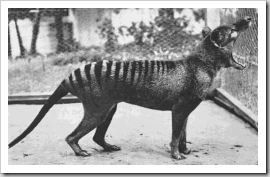
Last ThylacineThe photograph accompanying this article is of ‘Benjamin’, the last known thylacine (commonly known as the Tasmanian tiger), which died in captivity in the Hobart zoo, most likely as a result of neglect, on 7 September 1936.  Benjamin had been captured in 1933, three years after the last thylacine known to have been shot in the wild was killed by a farmer.  Indeed, a major contributor to the thylacine’s extinction was its inconvenience to farmers.  As the largest carnivorous marsupial of modern times, the thylacine was blamed for the slaughter of livestock, and between 1888 and 1909 the Tasmanian government paid £1 per head for dead adult animals and ten shillings for pups – which was a lot of money at the time.

The innovation patent is another unique Australian creature that is about to become extinct at the hand of government policy.  Unfortunately for the innovation patent, it has become a great inconvenience to economists, within IP Australia and at the Productivity Commission, who believe that the system, and in particular the low threshold for the innovative step, contributes to low value patents, which they blame for the imposition of unacceptable costs on the community.  IP Australia has now published draft legislation and rules (the Intellectual Property Laws Amendment (Productivity Commission Response Part 1 and Other Measures) Bill and Regulations 2017) including measures to implement aspects of the Government’s response to the Productivity Commission’s inquiry into Australia’s Intellectual Property arrangements.  These measures include the abolition of the innovation patent which will, if the draft legislation becomes law in its current form, go out like the thylacine, not with a bang but a whimper, dwindling slowly away over eight years after the last shot has been fired against it. 

Of course I am aware that the extinction of an entire species is a tragedy of criminal proportions, and that comparison with the mere repeal of a second-tier patent system is hyperbole of the highest order.  But I am using this rhetorical device to highlight the analogous manner in which government policy is driven in each case by a single perspective on the problem at hand.  Both the thylacine bounty and the abolition of the innovation patent are the result of governments acting on input provided by particular interest groups, i.e. farmers and economists respectively.  Just as the 19th century was a different time, when there would have been little public interest in, or opposition to, the culling of a unique native animal to protect farmers’ livelihoods (and the food supply), there is today very little interest from the broader community in challenging economists’ views on what is best for Australia’s innovation and intellectual property systems.

Economic modelling has become one of the primary drivers of so-called evidence-based policy-making, despite the fact that very few people (including most, if not all, politicians) could claim to understand the economists’ models, assumptions, or the statistical methods used to produce their ‘evidence’.  In fact, economic models rarely make reliable predictions, even when they fit past data well.  Just this past week, the deputy governor of the Reserve Bank of Australia has conceded that the Bank can only ever predict even the most basic economic indicators within a wide margin of error and that, ‘not surprisingly, forecast misses are more common than not’.  If the country’s top central bankers cannot predict headline figures like economic output and inflation with any precision, what prospects do economists have of predicting the long-term impact of different options within the Australian patent system on national innovation and productivity?

Sadly, we will never know if there was a solution better than ‘termination with extreme prejudice’ to the problems posed by either the thylacine or the innovation patent.  But, once we accept that the innovation patent must and will die, IP Australia’s current proposal seems like a soft option.  I say that if we are going to abolish the innovation patent, it should be done as swiftly and decisively as possible!

11 September 2017

Australian Government Commences Consultation on Proposed Patent Law Reforms

OptionsThe Australian Government recently issued its response to the Productivity Commission’s final report on its Inquiry into Australia’s Intellectual Property Arrangements, indicating support for a number of the Commission’s recommendations.  IP Australia has now published a set of consultation papers discussing proposed implementation of the Government’s response to a number of recommendations in the report, as well as a 2013 report by the Commission on Compulsory Licensing of Patents.  Four of the five consultation papers that have been released relate to patents, and address: amending inventive step requirements; introducing an objects clause into the Patents Act 1990; amending the provisions for Crown use of patents (and designs); and amending the provisions for compulsory licensing of patents.  (Additionally, a fifth paper addresses introducing divisional applications for international trade marks.)

Written submissions in response to questions presented in the consultation papers are due by Friday 17 November 2017, and should be sent via email in Word, RTF, or PDF format to consultation@ipaustralia.gov.au.

It is presently intended that legislative amendments relating to the issues discussed in the consultation papers be included in a Bill for introduction to Parliament in 2018.  Prior to this, it is expected that there will be further consultation on an Exposure Draft of the proposed amendments.

IP Australia will conduct further consultation on other measures covered by the Government’s response to the Productivity Commission’s report – including  phasing out of the innovation patent system – later in 2017, with a view to introducing corresponding further amendments in a Bill as soon as possible.

28 August 2017

Vale Innovation Patent – Australian Government Responds to Productivity Commission IP Report

Sad sackThe Australian Government has issued its response to the Productivity Commission’s final report on its Inquiry into Australia’s Intellectual Property Arrangements, indicating its support for a number of the Commission’s recommendations.  In the area of patents in particular, the Government intends to implement recommendations to further amend the law in relation to inventive step, introduce an ‘objects clause’ into the Patents Act 1990 and ‘phase out’ (i.e. abolish) Australia’s contentious second-tier right, the innovation patent.  It has also indicated its support for a proposal that ‘IP Australia should reform its patent filing processes to require applicants to identify the technical features of the invention in the set of claims’, although it is unclear at this stage exactly what form the implementation of the recommendation will take.

The Government has largely rejected recommendations of the Productivity Commission to set patent fees to promote broader intellectual property policy objectives (as opposed to the current objective of recovering the costs of running the Patent Office), and to restrict the availability of extensions of term for patents relating to pharmaceutical products.  It has, however, indicated support ‘in principle’ for the introduction of a system for transparent reporting and monitoring of settlements between originator and generic pharmaceutical companies to detect potential ‘pay for delay’ agreements, modelled on the US system.

As I will discuss further in this article, the demise of the innovation patent has been on the cards for some time, and is now all but inevitable.  Adding an objects clause to the Patents Act may be little more than window-dressing.  Much will depend on how it is worded (and the Productivity Commission’s proposal will not be popular), and then how much weight it is given by the courts (which might, I would suggest, be very little).  Further enhancing the inventive step standard, which the Productivity Commission has suggested should be based upon the European model, is not hugely controversial, in my opinion. 

As I shall endeavour to explain, however, if there is to be a fight over any of the proposed reforms it is most likely to be over the requirement to identify ‘technical features’ in patent claims.  In combination with raising the inventive step standard to the highest possible level, I believe that this recommendation reflects the Productivity Commission’s general antipathy to the idea that the patent system provides any net economic benefit to Australia, and its belief that patents should therefore be as difficult to obtain as is practicable.  But the potential consequences of a new, and unique, requirement for Australian patent claims could be far-reaching, and detrimental to Australian innovators.

18 August 2017

Extensions of Term for ‘Swiss-Style’ Claims Involving Recombinant DNA Technology? Federal Court Says ‘No’!

Matterhorn SunsetA Full Bench of three judges of the Federal Court of Australia has overturned an earlier decision of the Administrative Appeals Tribunal, and has ruled that extensions of patent term are not available for second and subsequent medical uses of pharmaceutical substances that are produced by recombinant DNA technology: Commissioner of Patents v AbbVie Biotechnology Ltd [2017] FCAFC 129 (AbbVie).  In particular, the court found that so-called ‘Swiss-style’ claims are not directed to pharmaceutical substances, and therefore cannot be the subject of a term extension, even if they involve the use of pharmaceutical substances that have been ‘produced by a process that involves the use of recombinant DNA technology’ (to use the terminology of section 70(2)(b) of the Patents Act 1990).

In Australia, the normal maximum term of a patent, i.e. 20 years from its original filing date, can be extended by up to five years in the case of certain pharmaceutical products, to compensate for the time that is typically required to complete trials and obtain the regulatory approvals necessary to actually commence marketing of a commercial drug.  Generally, extensions are available only for patents covering the pharmaceutical substances themselves – patents on methods of making or using the substances are not extendible (section 70(2)(a)).  The one exception to this rule relates to the use of recombinant DNA technology in the production of a pharmaceutical substance (section 70(2)(b)).

The term ‘recombinant DNA’ (rDNA) refers to a process of bringing together genetic material from multiple sources to create gene sequences that are not present in nature.  One well-established medical application of rDNA technology is the production of human insulin for the treatment of diabetes.  By inserting the human insulin gene into a bacterium (such as E. coli) or yeast, the resulting organism becomes a biological insulin factory.  Insulin produced in this way has almost completely replaced the use of insulin from animal sources, such as pigs and cattle. 

The Australian extension of term provisions implement a policy under which even though a pharmaceutical substance (such as insulin) may already be known, a patent directed to the (known) substance when made by a new process involving the use of rDNA technology can nonetheless be awarded an extension of term.  This provides an additional patent incentive for companies to invest in research and development of recombinant techniques for production of medications.

AbbVie Biotechnology Ltd (‘AbbVie’) owns a number of Australian patents relating to a pharmaceutical substance known as adalimumab, marketed under the name HUMIRA, which is produced by a process of rDNA technology.  The drug was originally approved in Australia in 2003, for treatment of rheumatoid arthritis.  It was subsequently demonstrated to be effective for the treatment of rheumatoid spondylitis, Crohn’s disease and ulcerative colitis, and was approved for use in treating these further conditions in 2006, 2007 and 2013, respectively.  AbbVie has patents covering these further medical uses of HUMIRA, each of which includes ‘Swiss-style’ claims.

AbbVie applied to the Australian Patent Office to extend the terms of its three further medical use patents, however a Deputy Commissioner of Patents determined that they were not eligible for extensions of term under section 70(2)(b).  AbbVie appealed to the Administrative Appeals Tribunal of Australia (‘Tribunal’), which reversed this aspect of the Deputy Commissioner’s findings, deciding that Swiss-style claims can form the basis for an extension of patent term.  Nonetheless, AbbVie’s applications for extension of term were still rejected, because the Tribunal agreed with the Deputy Commissioner that they had not been filed within the applicable time limits.

The Commissioner of Patents appealed the Tribunal’s findings in relation to the eligibility of Swiss-style claims to the Federal Court, which has allowed the appeal, and affirmed the Deputy Commissioner’s original decision.  This does not surprise me greatly – when I wrote about the Tribunal’s decision last year, I said that I believed it to be wrong, and that I thought it quite likely that the Commissioner would appeal.

04 June 2017

Private R&D Expenditure Positively Impacted by Clustering and Academic Research Spending, New Study Finds

Network effectsThe Australian Government’s Office of the Chief Economist recently published a new research paper entitled The role of spillovers in research and development expenditure in Australian industries (which I will refer to as ‘the Spillover paper’).  The paper describes an econometric model that uses data from Australian companies that conduct research and development (R&D), and looks at how R&D activity of other firms and public institutions affect a firm’s own R&D expenditure, i.e. the effects of ‘spillover’ of R&D being conducted elsewhere.  The paper also examines the impact of geographical proximity and clustering on these R&D spillovers.

Overall, the model indicates that there are positive effects on R&D expenditure due to spillovers from peers and clients to companies that are located nearby (within 25 or 50km).  Furthermore, R&D expenditure by academia also has a positive influence on a company’s R&D expenditure within state boundaries.  However, R&D spending by government bodies appears to have the opposite effect, seemingly ‘crowding out’ private R&D spending.

The study has important policy implications, because it suggests that public support for R&D, whether to private firms through grants and/or tax incentives, or through funding of research in universities and other public institutions, results in benefits not only to the organisation receiving the direct support, but also to other firms and institutions more broadly.

Significantly, the modelling provides further evidence that Australia’s reputation for having a woefully low level of industry/research collaboration (which is based on one rather dubious OECD data point) is largely undeserved.  I have previously observed that Australian companies clustered geographically close to major academic institutions tend to file more patent applications, while research by IP Australia has shown a healthy rate of patent applications naming industry and research partners as co-applicants from Australia when compared with other OECD nations.  The Spillover paper supports this by showing a positive correlation between academic and industry R&D spending, particularly for companies and institutions located within the same state (and, in practice, probably more closely than this, although the paper does not break down academic R&D expenditure below state level).

I discuss further details of the model, and the paper’s key findings, later in this article.  If this is all you are interested in, feel free to skip ahead.  But first I would like to take the opportunity to explain the general process of econometric modelling for readers who may be interested in better understanding how economists think about the kinds of questions addressed by this paper, and how to interpret their results.

14 May 2017

How IP Australia Has Been Quietly Curbing Abuse of the Innovation Patent System

Stop guyUpdate, 16 May 2017: The Commissioner of Patents, Fatima Beattie, has responded to this article in the comments.

While working with the new 2017 release of the Intellectual Property Government Open Data (IPGOD) I noticed something unusual – in October 2016, IP Australia refused 101 innovation patent applications.  Adding to the mystery, in 53 of these cases the refusal was retrospective, in the sense that innovation patents had already been granted, in one case as far back as April 2015.  Not only is refusal something that can only happen to a pending application (a granted patent can, however, be revoked), but it is something that generally does not happen to an application for an innovation patent.  As at the time of this writing, there are 23,387 innovation patent records in IP Australia’s AusPat system.  Never before, nor (as yet) since, these 101 cases has an innovation patent application been refused.

The one thing that all 101 of these applications have in common is that they name a Chinese resident company or individual as applicant.  I have written on a number of previous occasions about suspected abuse of the Australian innovation patent system by Chinese applicants (see Junk Patents Dumped on Australia as Chinese Subsidies Rorted, Chinese Junk Patents Revisited: 2013 Filings Update and, most recently, Users and Abusers of the Australian Innovation Patent System).  IP Australia’s Australian Intellectual Property Report 2017 (‘IP Report’) observed that:
 
Although Australian residents remain the main users of the innovation patent system, for the first time since its inception, non-residents made up the majority of innovation patent applicants with 54 per cent of the total in 2016.
 
The increase in international applications is attributable almost exclusively to an increase of some 142 per cent in applications from Chinese residents to 871 applications. This accounts for around 93 per cent of the overall increase in non-resident applications, and represents 38 per cent of total filings.


It is my belief that the primary motivation for Chinese applicants to obtain Australian innovation patents is to secure government subsidies that are paid upon the grant of foreign patent rights.  An innovation patent is granted following a check only of certain formalities, and without substantive examination as to novelty and inventive step (or, rather, the lower standard of innovative step).  Although the resulting patent must pass examination and be certified before it can be enforced, the applicant nonetheless receives a certificate that conveys (at least to anybody who is insufficiently familiar with the workings of the Australian innovation patent system) the impression of a full patent grant .

It is clearly undesirable, to say the least, for the Australian Register of Patents to be cluttered with dubious registrations, and for these Chinese ‘junk’ patents to cloud our ability to assess how effectively the innovation patent system is serving the small-to-medium Australian enterprises for which it was primarily designed.  I therefore welcome any legitimate steps that may be taken to curb this activity.  However, the statutory basis for these ‘refusals’ is not clear to me.  It may be that the Commissioner of Patents is stepping outside the bounds of the Patents Act 1990.  If so, then it would not be the first time!

Copyright © 2014
Creative Commons License
The Patentology Blog by Dr Mark A Summerfield is licensed under a Creative Commons Attribution-NonCommercial-ShareAlike 3.0 Australia License.