
The Australian and New Zealand patent filing landscape in 2025 was marked by the continuation of established market trends alongside a striking new development that has potentially significant implications for both the patent system and the patent attorney profession. Total standard patent applications filed in Australia decreased marginally by 0.4% to 30,327, representing the third consecutive year of modest decline following a pandemic-era peak. New Zealand complete applications fell more substantially, by 4.4% to 5,538. However, these figures were eclipsed by a dramatic surge in provisional patent filings driven by what appears to be widespread use of generative AI tools by self-represented applicants, a phenomenon that resulted in a near-tripling of self-filed provisional applications.
Market share dynamics continued to evolve in ways that present ongoing challenges for firms within the IPH Limited group. Independent firms collectively surpassed the 50% filing share threshold for the first time, accounting for 51.7% of Australian patent filings, while IPH's share declined further to 32.7%, down from 35.0% in 2024. Meanwhile, QANTM IP firms maintained relatively stable positioning at 15.6% filing share under private equity ownership. This continuing divergence reinforces the conclusion that ownership structure alone cannot explain firm performance, with factors including geographic market exposure, client demographics, and strategic positioning all playing significant roles.
Analysis of the 2025 data reveals a market navigating multiple concurrent trends: declining US-originating applications (down 5.1%), growing Chinese filings (up 13.5%), and the emergence of AI as both a potential disruptor and, paradoxically, a possible source of future work for patent attorneys.
Let’s dive in and look at the data.
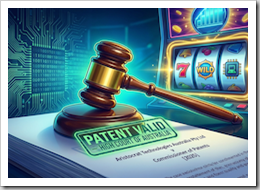 The High Court of Australia has denied an application by the Commissioner of Patents for special leave to appeal a decision of the Full Federal Court in which claims to a computer-implemented invention (CII), in the form of an electronic gaming machine (EGM), were found to be patent-eligible in Australia. This brings to an end the long-running dispute over patentability of Aristocrat’s claims, and marks the first time since 1991 (IBM v Commissioner of Patents


