24 April 2012

Apple v Android Part I: Shall We Play a Game?

War Games - United Artists (1983)
Patentology recently contributed a long piece to IAM Magazine entitled ‘Apple vs Android – The Struggle for IP Supremacy in the Mobile Market’, which was published as the cover story of issue no. 52, March/April 2012.  We published an edited extract back in February as Apple vs Android – IP Supremacy and the Mobile Market, while some early results of the patent landscape mapping ultimately used in the article were previewed in How Apple Punches Above Its Weight in Smartphone Disputes in November 2011.

With issue no. 53 of IAM Magazine now on the shelves, we are free of our undertaking not to republish the full article.  We are therefore pleased to present the complete piece for readers of the Patentology blog.  Due to its length, we will be publishing it in five parts.

In this first part, we look at the present state of the complex relationship between Apple and Samsung: bitter rivals in the courts on one hand, multi-billion dollar supplier and customer on the other.

Shall we play a game?

In the 1983 film War Games a teenage computer whiz – played by a young Matthew Broderick – inadvertently sets the world on a path to Armageddon when he hacks into a top-secret military supercomputer and challenges it to a game of “Global Thermonuclear War”. Fortunately, the computer – named “Joshua” by its creator – is equipped with cutting-edge artificial intelligence, programmed to develop improved battle strategy by repeated simulation. When directed to play tic-tac-toe against itself, Joshua discovers that the game cannot be won by either player and, by extending the principle to the nuclear war scenarios that it has devised, learns the concepts of futility and mutually assured destruction (MAD). Disaster is averted and the world returns to the status quo of the Cold War standoff.

21 April 2012

Bar Raised, as IP Law Reforms Signed Into Law

ShieldLast Sunday, 15 April 2012, the Governor General of Australia, Ms Quentin Bryce AC CVO, signed into law the Intellectual Property Amendment (Raising the Bar) Act.

The majority of amendments to Australia’s intellectual property laws do not come into effect for another year, i.e. on 15 April 2013.  We have covered most of the major changes affecting patents in a number of previous articles (see, e.g., ‘Raising the Bar’ Moves Another Step Closer to Law, Major Australian Patent Reform Passes in Senate, Australian Patent Reform – Wrap-Up.) 

No doubt we will return to these provisions over the coming months, particularly with accompanying amendments to the regulations yet to be drafted.  IP Australia is promising that it will soon release draft regulations for public comment, ‘covering important aspects of the Act’s implementation including a shorter time period for examination, and other procedural changes for patents.’

There are, however, two changes which came into effect immediately the Act was signed into law.  These are new exemptions (i.e. defences) from patent infringement in specific circumstances:
  1. use of a patented invention in satisfying regulatory requirements for non-pharmaceutical products; and
  2. use of a patented invention for experimental purposes.

19 April 2012

Could Apple and Samsung CEOs Reach a Global Settlement?

MediationAs has been widely reported over the last 24 hours, United States District Court Judge in the Northern District of California, Lucy H. Koh, has issued orders for Apple and Samsung to participate in a ‘Magistrate Judge Settlement Conference’.  (See, e.g., US judge sends Apple, Samsung to settlement talks, via Reuters.)

On the face of it, the two companies are going willingly to mediation, although it is quite likely a case of Judge Koh having made clear that they could either attend voluntarily, or else she would make them go!  Nonetheless, the discussions will be taking place at the absolute highest levels of the two companies, with each being represented by their respective CEOs (i.e. Tim Cook of Apple, and Choi Gee-Sung of Samsung) and General Counsel. 

While pre-trial mediation is frequently unsuccessful, top executives of large corporations are not known for wasting their time on pointless exercises, and the fact is that the people in the room will actually have the power to make decisions which could terminate, or dramatically alter, the course of litigation between the two companies not only in the US, but in the other eight countries (including Australia) in which they are suing one another for infringement of patents and other intellectual property rights.

15 April 2012

Senior Patent Attorney Found Guilty of ‘Unsatisfactory Conduct’

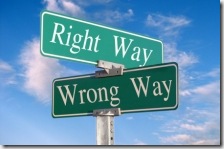
Right and wrongThe Disciplinary Tribunal has found a former partner of a firm of patent and trade mark attorneys in Adelaide guilty of unsatisfactory professional conduct, for failing to resolve a conflict of interest between two clients, in breach of clause 3.2.8 of the Code of Conduct for Patent and Trade Marks Attorneys [PDF 190kB].  A second attorney – who was only recently qualified, and who had been working under the supervision of the senior attorney – was also charged by the Professional Standards Board, however that charge has been dismissed.

(For readers wanting more information about the disciplinary procedures in Australia, see our recent article So You Wish to Register a Complaint?)

Naming names?

We have avoided naming any of the parties involved in this case.  This is not to conceal the identities of the attorneys against whom the complaint was made, or their firm.  They are named in the Tribunal’s decision, which is available for all to read from the link below.

The Tribunal determined that no further orders of disciplinary action should be made.  In doing so, it took account of the fact that the powers to discipline a practitioner are intended to protect the community, rather than as a punishment.  There are, of course, inevitably punitive consequences to any adverse finding, for example damage to reputation, regardless of the extent of disciplinary action.

It is not our place to question the Tribunal on this finding, and there does not appear to be any reason to do so.  Naming the parties in a blog which tends to rank highly in web searches directed to Australian patent law and practice might result in unintended adverse – and therefore punitive – consequences for those parties.  We have therefore elected not to name names here, and trust that readers will understand and respect this decision.
Some of the key lessons from the Tribunal’s decision are:
  1. while it is common (probably unavoidable) that attorneys and firms in a market of Australia’s relatively small size may act for multiple clients which may be commercial competitors, there is no general agreement in the profession as to precisely how and when a situation of conflict arises with regard to such clients;
  2. the duty to avoid conflicts is fiduciary in nature, i.e. it arises from the duty of the attorney to give undivided loyalty to the client, and always to advise and act in the client’s best interests;
  3. a conflict therefore inevitably arises when two clients have conflicting interests, for example if advice given to one client may impact adversely on another, or if an attorney is aware of confidential information relating to one client which would influence the advice given to the other client;
  4. the duty to avoid conflicts is not limited to individual attorneys, but extends to a firm, even if there is no explicit information-exchange between different attorneys acting for the clients in question; and
  5. on a practical level, if a client decides that an attorney has a conflict, and asks for their files to be transferred to another firm, it is very likely that a great deal of trouble, expense and distress may be avoided by simply complying with the request, rather than arguing the point!
Despite the finding of guilt, no disciplinary action has been ordered against the senior attorney.  The Tribunal considered that the attorney’s conduct, ‘while serious, is at the lower end of the scale of seriousness for such misconduct’ and ‘is the only proven allegation of misconduct that has been made against [the attorney in a] very long career as a registered patent attorney.’ 

The Tribunal also concluded that the senior attorney (and presumably the junior attorney also) would now have a fuller understanding of the duty, and that of the firm, ‘to avoid situations of conflict, or possible conflict of interest and the duty to resolve any such situation.’

The Tribunal’s decision – which is available on the web site of the Professional Standards Board [PDF, 2.4MB] – should be compulsory reading for all Australian registered and trainee patent and trade marks attorneys.  It will also be useful to providers of legal and other professional services, in order to clarify the issues around conflicts of interest.

12 April 2012

Instagram, AOL … Are We Headed for an Intangible Meltdown?

‘Those who cannot remember the past are condemned to repeat it’ – George Santayana, Reason in Common Sense (1905)

Bubble burstingIn March 2000, Facebook co-founder Mark Zuckerberg was 15.  Instagram founders Keven Systrom and Mike Krieger were 16 and 14 respectively.  In the past week these three people – all still under 30 – have done a deal in which Zuckerberg’s company has acquired Systrom and Krieger’s for a cool US$1 billion.

At almost the same time, Microsoft has acquired 800 patents from AOL for just over US$1 billion.

These deals follow hot on the heels of last year’s acquisition of Motorola Mobility by Google for US$9.8 billion, and the purchase of 6000 former Nortel patents by the Rockstar Bidco consortium (Apple, Microsoft, RIM, EMC, Ericsson and Sony) for US$4.5 billion.

All of these deals have in common the fact that the entire valuation is based on intangible assets.  How do you put a price on a bundle of patents?  On a team of great employees?  On a loved brand?  Or on the future potential of a technology?

Are the recent valuations justified, or are we heading for another industry meltdown similar to the ‘dot-com’ bust of March 2000?  After all, the Zuckerbergs, Systroms and Kriegers of the world could be excused for failing to learn the lessons of history – they were little more than kids at the time!

Copyright © 2014
Creative Commons License
The Patentology Blog by Dr Mark A Summerfield is licensed under a Creative Commons Attribution-NonCommercial-ShareAlike 3.0 Australia License.