29 November 2012

Australian Patent Attorneys Urged to Get More Ethics Training

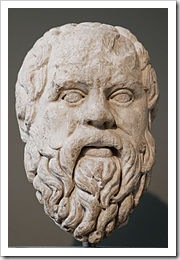
Socrates Revised guidelines for Continuing Professional Education (CPE) issued on 28 November 2012 by the Professional Standards Board for Patent and Trade Marks Attorneys (and soon to appear on the Board's web site) require registered practitioners to undertake a minimum of one hour of ethics or professional conduct CPE in each year.  Currently, the minimum total CPE requirement is 10 hours for practitioners registered as either patent attorneys or trade marks attorneys, and 15 hours for practitioners registered as both.

While one hour per year may not seem like much, this is a significant step for the profession, both practically and symbolically.

Part of the background to the new guideline is a recent decision of the Disciplinary Tribunal, which found a senior Australian patent practitioner (now retired) guilty of unsatisfactory professional conduct, for failing to resolve a conflict of interest between two clients of his Adelaide firm, both of which had developed directly competing inventions.  We reported on this decision back in April this year (see Senior Patent Attorney Found Guilty of ‘Unsatisfactory Conduct’).

One consequence of the Tribunal's decision was to turn a spotlight on the lack of agreement amongst patent and trade marks attorneys in Australia as to exactly how and when conflicts arise, and how they should be identified and resolved.  The Professional Standards Board provided evidence of one senior member of the profession who testified to his opinion that the practitioner's firm was clearly in a conflict situation at least from the time that one of the clients discovered, and complained about, the firm’s acting for the other client in August 2007.  However, two other senior members of the profession provided completely contrary evidence on behalf of the practitioner!

25 November 2012

Pharma Patents Review Releases Issues Paper, Launches Blog

Copyright (c) 123RF Stock PhotosOn 21 November 2012 the Australian Government’s Pharmaceutical Patents Review panel released a ‘Background and Suggested Issues Paper’ [PDF, 609kB], which outlines the panel’s initial impressions of the key issues for the review.  This review was originally announced by the Parliamentary Secretary for Industry and Innovation, Mark Dreyfus QC, on 15 October 2012 (see Yet Another Patent System Review – Pharmaceutical Patents).

According to the panel’s announcement, the paper seeks to ‘begin engaging with anyone who has an interest in this area [i.e. pharmaceutical patents] and to provide a stimulus for written submissions.’

The paper includes a number of specific questions, however it is said said that these are intended only to provide ideas for developing submissions.  The panel is seeking a broad spectrum of views, and does not want anyone to feel constrained by its suggested questions!

There are two aspects of the announcement which we find quite interesting, at least from our own personal perspective.  Firstly, the review does not merely have a web page – as is now absolutely standard – but has set it up as a blog at pharmapatentsreview.govspace.gov.au.  The panel intends to use the blog to explore the relevant issues with stakeholders, and interested parties will be able to interact directly with the panel throughout the review process by commenting on individual posts (including the announcement of the issues paper itself).

Secondly, Patentology’s article Pharmaceutical Extensions of Term: Is It Time for a Fix? is cited in the issues paper (footnote 20), which came as a pleasant surprise!

Written submissions are due by 5pm on 21 January 2013.  This is actually quite a tight deadline, considering that the month between Christmas and the end of January is the main summer vacation period for many Australian stakeholders.

17 November 2012

The Australian Apple/Samsung 2013 Year Planner is Here!

2013 Apple-Samsung ThumbnailWith 2012 drawing to a close, Patentology is pleased to announce the availability of the Australian Apple/Samsung 2013 year planner.

This handy reference is an absolute must-have for the wall or desktop of numerous Australian IP lawyers, patent attorneys, Federal Court employees, tech journalists, patent litigation enthusiasts and – of course – Federal Court Justice Annabelle Bennett.

Justice Bennett recently timetabled a number of new hearing dates in the second half of 2013, bringing the total number of court days set down next year in the Australian Apple v Samsung case to 123.  Yes, you did read that correctly – one hundred and twenty-three.  This is in addition to the 46 days of hearings which will have taken place by the end of this year, not including last year’s interlocutory proceedings, and various dates that have been set down for administrative purposes (e.g. management conferences and directions).

Our 2013 year planner – a larger version of which is available by clicking on the thumbnail above – should therefore prove invaluable to to the many individuals involved in this gargantuan case.  It will help senior counsel to organise the expenditure of their substantial fees on European sojourns during the northern summer, while less-experienced articled clerks and junior associates will be able to plan when they might be able to grab a few hours of sleep, or invest a little time in any surviving relationships they may have outside of work!

It does not appear that any of the dates that have been reserved by Justice Bennett are speculative, or merely for contingency.  By all accounts, she has been meticulous in time-tabling the trial, and every set of dates is scheduled for hearing of a specific aspect of the case.

15 November 2012

SMEs – You and IP Australia Need to Talk!

Round TableA contingent of key staff from IP Australia, led by Director General Philip Noonan, is currently engaged in a tour of mainland capital cities, where they have been consulting with members of the IP professions on the draft amendments to the Australian Patents Regulations 1991, which are open for comment until 21 November 2012 (see Draft Regulations Reveal Applicants to be Slugged with Search Fee and Timeframes Slashed in Second Stage of Proposed Regulations).  We were fortunate to have the opportunity to attend the Melbourne discussion on Wednesday, 14 November 2012.

A small but highly-engaged contingent of about 20 patent attorneys, trade marks attorneys and lawyers attended either one, or both, of the two 90 minute sessions.  The format was basically a ‘round table’ discussion (though the actual table was rectangular), which ranged across a number of the issues raised by the draft regulations.  The IP Australia representatives generally seemed receptive to the various views expressed by the participants, and equally willing to explain and defend their position on the proposed regulations.  It is fair to say that there was fairly robust discussion on a small number of the more contentious issues!

The Australian IP law reforms, and the accompanying amendments to the regulatory regimes, encompass trade marks, designs and copyright matters, as well as changes to the regulations governing the patent and trade marks attorney professions.  However our interest, as always, is primarily in relation to the patent reforms.

In this article, we cover a few of the topics discussed.  However, we wish to highlight particularly the potential impact of the proposed search and examination fee regime on Australian small-to-medium enterprises (SMEs).  While there are certainly people within the patent profession who will be advocating a rethink of this regime, on behalf of our local SME clients, it is equally important that SMEs ensure that their own voices are heard directly.  Otherwise, there is a real risk that some Australian SMEs will be effectively priced-out of their own patent system!

11 November 2012

Patent Pools – Some Not-So-Frequently Answered Questions

Pool rulesIn our previous article, Fragmented Patent Pools Will Not End Smartphone ‘Wars’, we wrote about two separate initiatives intended to make patent licences more easily available, and affordable, for companies wishing to implement standard mobile communications technology.

These initiatives are known as ‘patent pools’.  This is not a new concept, and the notion of companies ‘banding together’ to share access to patented technologies, sometimes with anticompetitive effects, has existed for well over a century.

However, the contemporary structure of patent pools, generally intended to facilitate access to patents required to implement an industry standard or some other widely-desired technology, is a relatively recent development.  Modern pool operators are mindful of the anticompetitive potential of patent pools, and are careful to establish legal structures and agreements which do not fall foul of competition or antitrust laws and regulators.

Patent pool arrangements began to gain official sanction from competition regulators back in the 1990s.  In 1995, the US Department of Justice (DoJ) and the Federal Trade Commission (FTC) issued the Antitrust Guidelines for the Licensing of Intellectual Property (PDF, 230 kB), which highlighted the potential pro-competitive benefits of pools.  On 26 June 1997, the DoJ Antitrust Division issued a Business Review Letter in response to a request by the MPEG LA group, which was proposing to establish a pool to license patents essential to the implementation of the MPEG-2 digital video coding standards, which were in the process of being widely adopted for a range of commercial applications, including DVD-video, digital video transmission and broadcast, and digital video recording and storage.

The DoJ gave its stamp of approval to the proposed MPEG LA pool arrangements, and these have become a template for subsequent patent pools seeking to avoid violating antitrust and unfair competition laws.

While the idea of pooling patents seems simple, there are a number of subtleties that are perhaps not so readily appreciated.  With this in mind, we ask and answer a few basic questions about modern patent pooling arrangements.

Copyright © 2014
Creative Commons License
The Patentology Blog by Dr Mark A Summerfield is licensed under a Creative Commons Attribution-NonCommercial-ShareAlike 3.0 Australia License.