24 February 2013

Attorneys Slam Australian Pharmaceutical Patents Review

Pills and GavelIn a submission to the Governments Pharmaceutical Patents Review [PDF], the peak body representing Australian registered patent attorneys, the Institute of Patent and Trade Mark Attorneys of Australia (IPTA) has accused the Terms of Reference for the review, and the composition of the review panel, of being biased towards the interests of generic drug manufacturers.  IPTA has also criticised the timing of the review and the short period provided for public submissions, and alleged that the overall conduct of the review sends a ‘negative message to the research-based pharmaceutical industry’.

IPTA’s complaints have been fully supported by a submission [PDF] made on behalf of the Australian Federation of Intellectual Property Attorneys (FICPI Australia).

I have written about this latest review of the patent system on two previous occasions – firstly when it was initially announced, and then again when the ‘Background and Suggested Issues Paper’ was released.  I expressed similar concerns to those of IPTA regarding the limited two-month period for public submissions, particularly considering that this spanned Christmas and the New Year, when many Australians take annual holidays and some companies – and all Australian universities – have official ‘close-down’ periods.

I was also concerned about the impact of yet another review, when it seems that the Australian patent system has been under incessant review and reform for a number of years, and particularly considering that the broad Terms of Reference for the Pharmaceutical Patents Review overlap with other recent and ongoing enquiries relating to patentable subject matter, the use of innovation patents, gene patenting, and compulsory licensing.  One might form the impression that somebody is determined to keep reviewing the system from different angles until they eventually get the answers they want, whatever those might be!

23 February 2013

4 Tips for the Coming Australian Patent Law Reforms

Four balloonsRegular readers of this blog will be aware that it was almost a year ago now that the Intellectual Property Amendment (Raising the Bar) Act 2012 was signed into law.  All Patentology articles relating to the patent law reforms in the Act are marked with the tag ‘Raising the bar’.

The majority of changes in the law – which will generally raise standards so that patents will be harder to obtain and defend than is currently the case – come into effect on Monday, 15 April 2013.  As a result, Friday, 12 April 2013 will be the final day on which to act if you have an application which you wish to be examined and granted under the existing law.

Here, therefore, are four things you may wish to consider in the final weeks leading up to the big changes.

20 February 2013

Myriad Revisited – Morality and the Patent Law

Got EthicsLast week’s decision by Justice Nicholas, in the Federal Court of Australia, regarding a patent covering the BRCA1 ‘breast cancer gene’, raises important questions about our patent laws, but has been much misunderstood, and misreported in the media.
Even sources which one might expect to provide a more informed and balanced view of the case, such as this article at The Conversation, have contributed to the general level of confusion and misinformation.  For example, the article quotes Cancer Council CEO, Professor Ian Olver, stating that ‘[d]iscovering and isolating genetic materials is not inventive, yet the current law gives licence to biotechnology companies to claim ownership of naturally occurring substances.’  However, the court was not asked to address the question of whether the processes of discovery and isolation were inventive.

Professor Dianne Nicol of the University of Tasmania is quoted as saying that Justice Nicholas ‘has given a broad reading of the “invention” requirement in Australian law (referred to as manner of manufacture).’  While the Professor’s desire to simplify the legal language of the Patents Act 1990 is understandable, this statement does little to help clarify what the case was actually about – which was not ‘invention’, in the everyday sense of the word, but more correctly the appropriateness of isolated genes as subject matter for a potential invention, independently of any assessment of inventiveness. 

Had the case been about the wheel, rather than an isolated gene, the question for the court would not have been whether a particular wheel, or even wheels in general, are patentably new and inventive.  Rather, the question would have been whether, as a general proposition, a wheel is the kind of thing for which a patent might be granted if it is also shown to be new and inventive.  And it is no answer to this analogy to say that genes are different in that they are naturally occurring, while wheels are not.  The end result of isolating a gene is no more ‘natural’ than the end result of cutting away all of the wood from a tree that is ‘not wheel’ in order to leave behind a wooden wheel!  Both processes result in a product that simply does not arise in the absence of human intervention, skill and effort.

17 February 2013

Patents, Invention, Employment and Slavery

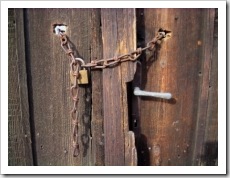
Lock and ChainDo you know who ‘owns’ your inventions?

I read a fascinating story last week, entitled ‘How the Patent Office Helped to End Slavery’.  It has all the elements a good story needs – celebrity (Jefferson Davis, the future Confederate president), adversity (the denial of the rights of a slave, Benjamin Montgomery), conflict (the Union versus the Confederate patent offices), and the triumph of good over evil (emancipation, and victory of the Union patent laws).

In a nutshell, the question arose as to who ‘owned’ inventions made by slaves, and was thus entitled to ownership of any resulting patent.  It will come as no surprise to learn that slave-owners, such as Jefferson Davis’ brother Joseph, considered that they were entitled to the fruits of the ingenuity of their human chattels. 

However, the US Commissioner of Patents, Joseph Holt, disagreed.  In 1857 he ruled, essentially, that since slaves had no legal rights, they could not possess rights as inventors, and therefore they had no recognisable intellectual property that could be transferred to their owners.  Since neither Jefferson nor Joseph Davis was the first and true inventor of the improved riverboat propeller invented by Joseph’s slave Benjamin Montgomery, and nor could they be the legitimate assignees of any purported ‘rights’ to the invention (since no such rights ever existed), the USPTO simply refused to grant patents to either one of the brothers, or indeed to any other slaveholders who sought to claim ownership of inventions devised by their slaves.

Although the Confederate enacted its own patent law which secured ownership by slaveholders of inventions developed by their slaves, it appears that no such patents were ever granted (and if they had been granted, they would not have been in force for very long).

While ownership of inventions by slave owners is no longer an issue in developed nations, the right of one party to claim ownership of an invention made by another, remains very much a live issue.  We are fortunate that, nowadays, all free women and men are entitled, the the first instance, to ownership of the products of their own ingenuity, should they choose to capitalise on that right.  However, it remains the case that many inventions for which patent rights are sought are made by employees in the course of employment, and are claimed as the property of their employers.

16 February 2013

Australian Federal Court Declares Isolated Human Genes Patentable

Cancer Voices Australia v Myriad Genetics Inc [2013] FCA 65 (15 February 2013)

LaboratoryIn a landmark decision, a judge of the Federal Court of Australia has upheld a patent granted to Myriad Genetics Inc, confirming that claims directed to isolated genetic materials – such as DNA or RNA sequences – are in principle patent-eligible.

As I reported at the time, the hearing in this case took place almost exactly a year ago, making the judgment one of the most long-awaited in recent memory, certainly within the patent field.  The issue of ‘gene patents’ has been hotly contested in Australia in recent times, with opponents successfully attracting substantial media attention, and introducing proposed legislation to the Australian Parliament (which was subsequently rejected by a Senate inquiry).  A further draft bill, again seeking to amend the Patents Act 1990 to expressly exclude genetic materials from patentability, is still drifting somewhere around the corridors of Parliament House.  We might expect that this bill will re-emerge in the near future, following the current failure to ban gene patents through the courts.

The Federal Court application seeking revocation of three claims of the Myriad patent (‘the disputed claims’) directed to isolated genetic materials was originally filed back in June 2010 (when this blog was in its infancy).  The isolated genes in question are known as BRCA1, which have been found to exhibit certain mutations in women having an enhanced risk of developing breast and ovarian cancer.  They are therefore useful in identifying individuals having an increased cancer risk, and can play a role in early detection and treatment of cancers.

The applicants for revocation were the non-profit advocacy group Cancer Voices Australia, and Queensland breast cancer survivor Ms Yvonne D’Arcy (‘the Cancer Voices parties’).

The Federal Court has completely rejected the application for revocation of the disputed claims, finding all three to be eligible for patent protection under the Australian ‘manner of manufacture’ patentability test.

Copyright © 2014
Creative Commons License
The Patentology Blog by Dr Mark A Summerfield is licensed under a Creative Commons Attribution-NonCommercial-ShareAlike 3.0 Australia License.