
13 September 2015

Australian Patent Office Rejects ‘Free Energy’ Application for Lack of Utility

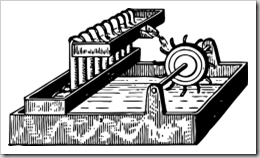
PerpetualBack in April I published an article about patenting perpetual motion and free energy machines.  One of the points I made in that article was that prior to the passage of the Intellectual Property Laws Amendment (Raising the Bar) Act 2012 it was actually possible to obtain a patent in Australia for such a device, even though it could not work because it would violate fundamental laws of physics.
As I explained, the Raising the Bar reforms made it possible, for the first time, for Australian patent examiners to object to the grant of a patent on the basis that the claimed invention is not useful.  At that stage, however, I was unable to identify any case of a ‘perpetual motion’ application to which such an objection had been raised.

On 31 August 2015, however, an examination report was issued in relation to Australian patent application no. 2011201103, which is entitled ‘Perpetual Productive Motion Device’.  Among other matters raised in the report, the examiner has objected that ‘the claimed invention does not achieve the use promised by the patentee in the specification, and have a credible use.’  This may be the first time that this type of objection has been raised in Australia against a ‘perpetual motion’ or ‘free energy’ apparatus.

06 September 2015

The ‘Skilled Person’ is a ‘Pale Shadow’ and a ‘Tool’ – Australian High Court Rules on Obviousness

ShadowmanLast week I predicted that the High Court would affirm the finding of five judges of the Federal Court of Australia that AstraZenenca’s patents covering low-dosage forms of the cholesterol-lowering drug marketed as CRESTOR (having the active ingredient rosuvastatin) are invalid on grounds of obviousness.

In the much-anticipated decision in AstraZeneca AB v Apotex Pty Ltd (et al) [2015] HCA 30, five judges of the High Court, in four distinct concurring opinions, have unanimously fulfilled that prediction.  In doing so, they have successfully disappointed anybody who was hoping for some interesting developments in the law of obviousness in Australia, and gladdened the hearts of those who value certainty and stability in the law, notwithstanding that there may be opportunities for improvement.

There were two issues before the High Court.  Firstly there was what I have previously called the ‘selection’ question.  The law applicable to the rosuvastatin patents permits the use of a single prior art document as the basis for assessing obviousness, and has nothing to say about the process by which that document is identified, other than that it must be information that would be ‘ascertained, understood and regarded as relevant’.  The High Court has confirmed that the fact that a selected document might be just one of many that would meet this requirement, and that all of the others would result in the skilled person heading off down a different path, does not expressly enter into the inquiry.  As a result, the Federal Court panel was correct in finding the rosuvastatin low-dose patents invalid for obviousness.

Secondly, there was the ‘starting point’ question, which addresses whether the perspective from which the contribution of the invention should be viewed is that of the inventor, as stated in the patent specification, or some other perspective determined on the basis of evidence and/or the prior art.  This was potentially the more interesting and controversial issue, because there have (arguably) been inconsistent findings on this question at the Federal Court level.  The High Court dodged the issue, by finding it unnecessary to address the ‘starting point’ question in view of its finding on the first question.  As a result, the decision of the Federal Court panel, that the starting point is determined objectively, and not from the subjective position of the inventor, remains undisturbed.

In an effort, perhaps, to keep things interesting, Chief Justice French provided some additional characterisation of the ‘person skilled in the relevant art’.  While it is not news that this is not a real person, but rather a hypothetical construct created for the purposes of patent law, we can now add to the list of dehumanising qualities that he or she is but a ‘pale shadow of a real person’ and a ‘tool of analysis’!
30 August 2015

Australian High Court to Rule on Obviousness

Scales of JusticeAt 10.15am this coming Wednesday (2 September 2015) the Australian High Court will hand down its decision in the appeal by AstraZeneca AB against last year’s ruling, by a a special five-judge panel of the Federal Court of Australia, that its two patents relating to the cholesterol-lowering drug marketed as CRESTOR (having the active ingredient rosuvastatin) are invalid.

The decision will be significant in clarifying the law relating to obviousness in Australia.  There are potentially two questions at stake in this regard:
  1. What is the appropriate ‘starting point’ for assessing whether or not a claimed invention is obvious?
  2. Does the Australian law limit or prohibit ‘selection’ of a favourable prior art document from a potentially large field of candidates as a basis for finding an invention obvious?
We will soon know what the High Court thinks on these two questions.  This article provides a background on the issues before the court, and some of the arguments that it has been weighing up in coming to its decision.

23 August 2015

Australia’s Productivity Commission to Examine ‘IP Arrangements’, but Hands Will Be Tied on Patents

BeesThe Australian Government has directed its Productivity Commission to undertake a 12 month public enquiry into the intellectual property system, including its effect ‘on investment, competition, trade, innovation and consumer welfare.’

The enquiry has been established in response to Recommendation 6 of the Competition Policy Review (a.k.a. the ‘Harper Review’) which issued its final report on 31 March this year.  The Harper Review’s recommendation stated, in relevant part, that:

The Australian Government should task the Productivity Commission to undertake an overarching review of intellectual property. …

The review should focus on: competition policy issues in intellectual property arising from new developments in technology and markets; and the principles underpinning the inclusion of intellectual property provisions in international trade agreements.

The Terms of Reference for the Productivity Commission Review into Intellectual Property Arrangements require the Commission to:
  1. examine the effect of the scope and duration of protection afforded by Australia's intellectual property system on
    1. research and innovation, including freedom to build on existing innovation
    2. access to and cost of goods and services
    3. competition, trade and investment;
  2. recommend changes to the current system that would improve the overall wellbeing of Australian society, which take account of Australia's international trade obligations.
The review will look at all aspects of Australia’s intellectual property system, including patent, trade mark, registered design and copyright laws and regulations.  I anticipate that copyright, in particular, will receive close scrutiny.  There are a number of aspects of Australian copyright law – including the treatment of unpublished and ‘orphan’ works, as well as issues relating to technology-neutrality – where substantive reforms may be both desirable and feasible.

Of course, my primary interest is in the patent system.  And here, in particular, the Productivity Commission will find that its hands are largely tied by Australia’s commitments under long-standing international agreements.  Options such as targeting local innovators for preferential treatment,  reducing the term of patents, limiting the scope of patentable subject matter and restricting the rights of patent-holders are all substantially off-the-table as a result of Australia’s existing international obligations.  In any case, none of these things would solve the real problem, which is the lack of an effective innovation ecosystem in Australia which can support the development of new home-grown technologies, and assist Australian innovators to take them to the world.

17 August 2015

Five Easy Ways to Fix the Innovation Patent System

FiveAs I reported last week, IP Australia has opened a consultation on the belated recommendation by the now-defunct Australian Advisory Council on Intellectual Property (ACIP) that the government consider abolishing the innovation patent system.

The consultation, and ACIP’s recommendation, arise as a result of IP Australia’s report entitled The Economic Impact of Innovation Patents, which concluded that the innovation patent system is failing to achieve its original objective of encouraging innovation by Australian inventors and small-to-medium enterprises (SMEs).

Specifically, IP Australia is seeking ‘feedback’ on:
  1. the ACIP recommendation that the innovation patent system be abolished; and 
  2. any alternative suggestions to encourage innovation among SMEs.
I believe that the concept behind the innovation patent – providing a second-tier patent right that is easier and more cost-effective for individuals and SMEs to obtain, but which has a shorter term of protection than a standard patent – is a good one, although it has become clear that the execution of that concept has left much to be desired.  However, the fact that the system is imperfect is no reason to abandon it without some attempt at revision.

With this in mind, I would like to present five simple proposals to address many of the concerns that have arisen in relation to innovation patents.  Readers familiar with recent Australian politics will be aware that nothing gets done in this country unless it can be encapsulated in a three-word slogan.  I have therefore reduced each of my proposals to a simple three-word headline:
  1. Raise the Step;
  2. Limit the Damages;
  3. Reduce the Term;
  4. Stop the Injunctions; and
  5. Force the Examination.
Further explanation of each of these proposals, and the potential benefits, are set out in the remainder of this article.

Copyright © 2014
Creative Commons License
The Patentology Blog by Dr Mark A Summerfield is licensed under a Creative Commons Attribution-NonCommercial-ShareAlike 3.0 Australia License.