30 April 2012

Apple v Android Part V: Open standards, IP strategy, Resolution?

Chess knight. Photo: Petr Novák, Wikipedia
The patent landscape maps in part four of this series showed that the key Android advocates – including Samsung and Motorola/Google – are massively superior to Apple in terms of the sheer numbers of patents in their portfolios.

But, as we explain in this fifth and final part, many of these patents are encumbered by licensing obligations arising from their relationship to industry standards.  While the scope of these obligations is yet to be fully tested in court – and may differ from country to country – it is already clear that such encumbrances can significantly complicate the deployment of patents for both offensive and defensive purposes.

With neither Apple nor any of its Android-supporting rivals having clearly established an upper hand, we can no doubt look forward to more strategic manoeuvring on all sides before any final resolution of the ongoing disputes.

Samsung’s FRAND dilemma

Samsung’s patent portfolio is by far the largest in the mobile communications space. It is common wisdom now that one justification for building a portfolio is to provide a strategic defence against infringement suits brought by competitors – a.k.a. the MAD (mutually-assured destruction) theory of patent stockpiling. However, the ongoing litigation with Apple is revealing a strategic weakness of Samsung’s portfolio, in the form of the company’s involvement in the setting of industry standards for mobile communications protocols and technology. Samsung has been extensively involved with the 3rd Generation Partnership Project (3GPP), which is responsible for maintaining and developing standards for mobile communications from GSM onwards. Over time, it has developed and contributed many technical solutions to the various challenges and problems encountered in the implementation of workable, robust and widely supported standards. The R&D effort involved in making such contributions is not insubstantial, but also not without reward.

27 April 2012

Apple v Android Part IV: The IP Landscape

Lunar landscape. Photo - (c) NASA, Apollo 17We concluded Part III in this series with a chart showing the relative sizes of the relevant patent portfolios of some of the major players in the mobile marketplace.  This showed Apple to be substantially out-gunned by the likes of Samsung, Motorola and Microsoft, in terms of patent numbers.

But there is more to a patent portfolio than the sheer number of patents it contains.  It is also important to look at what the patents cover, since some will be strategically more valuable than others.  Of course, it is completely impractical to read nearly 60,000 patents to determine what each one of them is about.  Fortunately, there are visualisation tools, such as the ThemeScape mapping capabilities of the Thomson Innovation package, which allow us to get a view of the big picture, without the need to drill down into all the details.

Overview

The figures in the sections below show the results of patent landscape mapping based on the portfolios of mobile patents held by Samsung, Motorola, Microsoft, the Rockstar Bidco consortium, Apple, Oracle, HTC and Google, which were identified in the search described in Part III. 

The maps reveal the strengths and weaknesses of each company’s portfolio. In summary:
  1. The starkest contrast is between Microsoft and Samsung, which dominate completely different regions of the landscape, reflecting their strengths in software and hardware respectively.
  2. Google’s acquisition of Motorola Mobility will give its portfolio a profile that is very similar to Samsung’s, albeit on a smaller scale.
  3. While Apple’s portfolio is smaller, it has significant concentrations of patents in the critical region between the Microsoft-dominated software zone and the hardware zones which are heavily populated by Samsung, Motorola and Nortel.
The strength of Apple’s portfolio therefore appears to lie in areas that are essential to the user experience, including touch-screen and display technologies, image and audio processing, and user interaction – literally, as well as in the virtual geography of the map, at the interface between software and hardware. This is certainly an area in which Apple has contributed significant innovation and may well represent a strategic sweet spot in the mobile device space.

26 April 2012

Apple v Android Part III: The IP Armoury

Nuclear gravity bombs. Photo - Paul Shambroom
In the previous article in this series, we looked back at the struggle between Apple and Microsoft for ‘ownership’ of the desktop.  We argued that this was a confrontation between opposing ‘closed’ and ‘open’ models – not only of the software and hardware platforms, but also of the fundamental way in which the two companies do business.

There is no question that Microsoft was the clear winner, despite some of the uglier consequences of trying to support a huge range of different hardware and software configurations.  Yet despite this loss, Apple – and Steve Jobs – have persisted with the closed platform model.  So what did they learn from history?

25 April 2012

Apple v Android Part II: Old Rivals – Apple v Microsoft

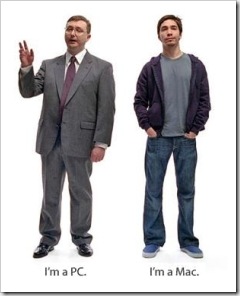
Mac v PC CommercialIn the first part of this series of articles we introduced the current state-of-play between Apple and its Android rivals, particularly Samsung. 

This is not the first time that Apple has engaged in litigation with a competitor over who would gain a dominant place in consumers’ lives.

We are all familiar with the sometimes bitter rivalry between Apple and Microsoft.  But it is worth looking back at history to see what it might tell us about the origins of Apple’s apparent great animosity towards Android.


Background – the struggle for control of the desktop

Apple is no stranger to litigation over IP rights – or to accusations of copying. In 1982 Apple filed a copyright complaint against Franklin Computer Corp, alleging that Franklin’s ACE 100 personal computer included unauthorised copies of the Apple II operating system and ROM. In those days the reach of copyright law in relation to computer software was unclear and it was only on appeal that Apple was vindicated, with the Court of Appeals for the Third Circuit ruling that executable object code, as well as human-readable source code, was protected by US copyright law.

24 April 2012

Apple v Android Part I: Shall We Play a Game?

War Games - United Artists (1983)
Patentology recently contributed a long piece to IAM Magazine entitled ‘Apple vs Android – The Struggle for IP Supremacy in the Mobile Market’, which was published as the cover story of issue no. 52, March/April 2012.  We published an edited extract back in February as Apple vs Android – IP Supremacy and the Mobile Market, while some early results of the patent landscape mapping ultimately used in the article were previewed in How Apple Punches Above Its Weight in Smartphone Disputes in November 2011.

With issue no. 53 of IAM Magazine now on the shelves, we are free of our undertaking not to republish the full article.  We are therefore pleased to present the complete piece for readers of the Patentology blog.  Due to its length, we will be publishing it in five parts.

In this first part, we look at the present state of the complex relationship between Apple and Samsung: bitter rivals in the courts on one hand, multi-billion dollar supplier and customer on the other.

Shall we play a game?

In the 1983 film War Games a teenage computer whiz – played by a young Matthew Broderick – inadvertently sets the world on a path to Armageddon when he hacks into a top-secret military supercomputer and challenges it to a game of “Global Thermonuclear War”. Fortunately, the computer – named “Joshua” by its creator – is equipped with cutting-edge artificial intelligence, programmed to develop improved battle strategy by repeated simulation. When directed to play tic-tac-toe against itself, Joshua discovers that the game cannot be won by either player and, by extending the principle to the nuclear war scenarios that it has devised, learns the concepts of futility and mutually assured destruction (MAD). Disaster is averted and the world returns to the status quo of the Cold War standoff.


Copyright © 2014
Creative Commons License
The Patentology Blog by Dr Mark A Summerfield is licensed under a Creative Commons Attribution-NonCommercial-ShareAlike 3.0 Australia License.